When the developer Novva first announced that it was building Utah’s largest data center campus just south of Salt Lake City, the company’s CEO touted the many advantages of the region: among them a low risk of disasters, an expanding international airport, no sales tax on equipment, and the high altitude cold of the desert landscape, which would help keep cooling costs down. Perhaps most importantly, power would be cheap. Utah has some of the lowest electricity costs in the country.
“We believe Utah is a hidden gem for one of the largest wholesale colocation campuses in the United States,” CEO and founder Wes Swenson said in a 2020 press release.
But the company quickly ran into trouble. Rocky Mountain Power, the local utility, was not able to provide the full amount of energy that the data center needed until 2031 — and even then it wasn’t guaranteed. How exactly that power would be transmitted to the remote facility was also uncertain.
Locked out of options with Rocky Mountain, Novva decided to build its own natural gas plant near its data center to provide 200 megawatts of power. But even that would take until 2027. By 2025, with the generative artificial intelligence explosion in full swing, Novva had secured a contract with a so-called hyperscaler — the tech industry term that refers to one of the massive companies building out global cloud computing. That undisclosed customer wanted to use the facility as soon as possible. So Novva turned to a solution that, despite being inefficient and highly polluting, could be deployed much more quickly: a fleet of diesel- and gas-fired generators.
To operate these generators — which produce nitrogen oxides, carbon monoxide, and far morecarbon dioxide emissions than a typical natural gas plant per unit of energy — Novva would need permission from the state. The permits it received from the Utah Division of Air Quality came with strict limits. They capped the volume of emissions the gas-fired generators could produce, and the diesel generators could only be operated 42 hours a year.
With these limits on its ability to satisfy the hyperscaler’s extreme demand for power, in March of last year, Novva appealed to a higher authority: President Donald Trump.
The EPA had just announced that it would consider providing so-called presidential exemptions to companies requesting reprieves from environmental regulations, and Novva jumped at the opportunity. A company representative wrote to the EPA arguing that exempting the data center from Clean Air Act standards was in the United States’ national security interests. (The federal agency had created a special email account just to field the companies’ requests.) As one of the largest data center clusters, it could help the administration with its stated goal to ensure that AI is responsibly developed, the representative noted. At the time, DeepSeek-R1, China’s answer to ChatGPT, had recently been released, fueling concerns that the U.S. adversary’s AI capabilities were rapidly catching up.
“We ask that you provide this exemption to assist in ensuring the United States’ Al supremacy,” the letter reads.
Novva’s plea was one of hundreds submitted to the EPA’s presidential exemption inbox last spring. Grist obtained copies of these letters by filing a records request under the Freedom of Information Act. The vast majority were submitted by coal-fired power plant operators, refineries, petcoke plants, medical sterilizers, and steel manufacturers. Novva was one of two data center developers that requested exemptions. The other, Thunderhead Energy Solutions, requested exemptions for 11 data centers consuming a combined 23 gigawatts of energy across Texas, Montana, and Illinois.
Thunderhead’s request was far more brazen than Novva’s. It proposed building a 5,000-megawatt gas-fired plant in Winkler County in West Texas — a facility far larger than the state’s largest power plant, the roughly 3,700-megawatt W.A. Parish Generating Station. So far, the company has only publicly announced plans for a 250-megawatt plant in neighboring Ector County.
Novva sought a two-year exemption to run 96 diesel generators without any limits while it finishes construction of its natural gas plant, which already has approval from the Utah Department of Environmental Quality. But company CEO Wes Swenson told The Salt Lake Tribune and Grist that he never heard back from the feds and wasn’t granted the exemption. Whatever power it currently uses is primarily sourced from the grid.
But these exemption requests demonstrate some of the challenges that data center developers eager to capitalize on the AI boom are facing — and the steps they’re considering to circumvent regulatory hurdles. In the rush to secure power, many companies are installing solar arrays and batteries on-site in addition to building their own natural gas plants and deploying fleets of inefficient generators. This type of “behind-the-meter” generation is becoming increasingly common, with at least 54 data centers using this approach, according to one analysis.
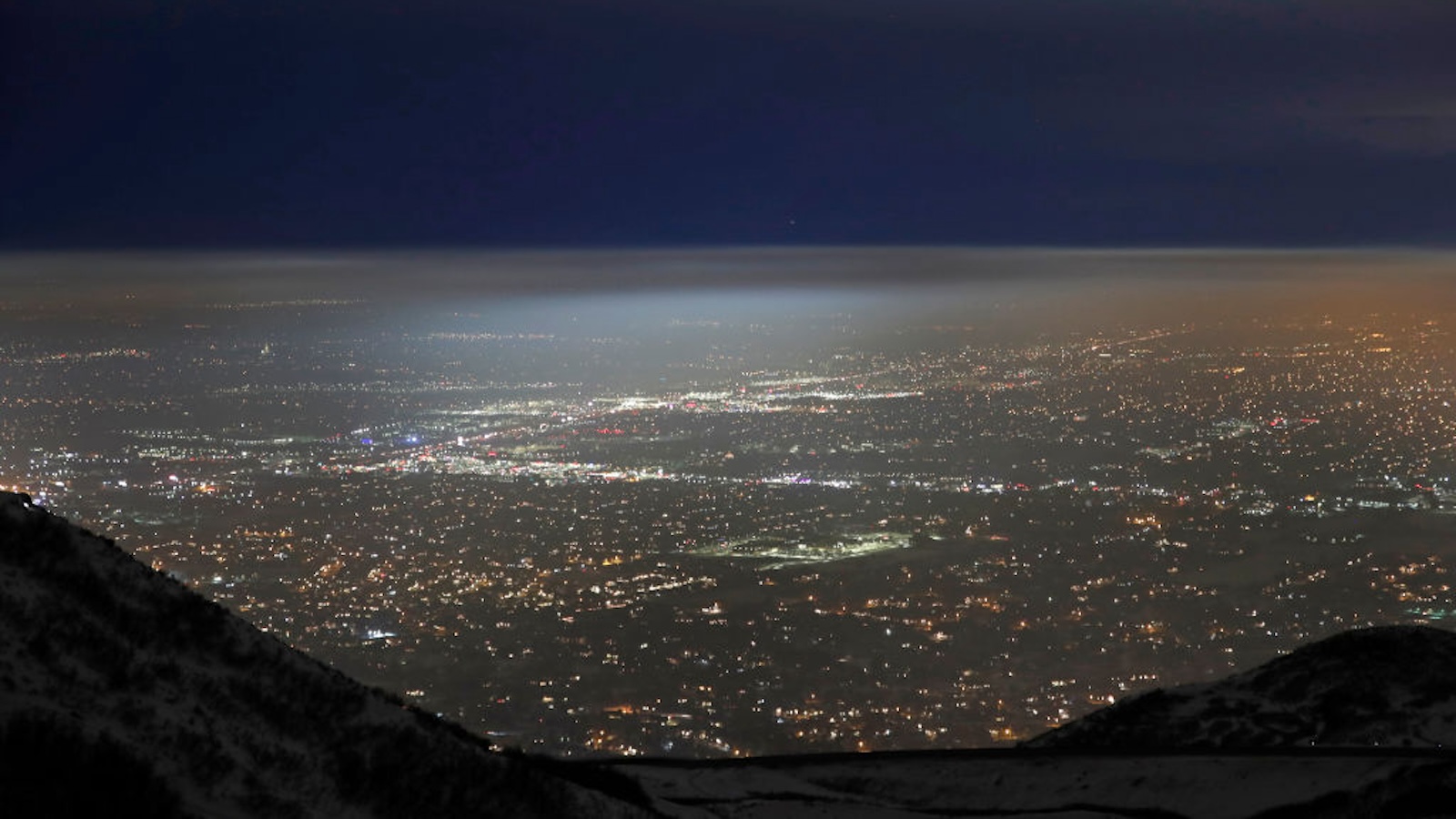
Novva’s data center campus lies in the greater Salt Lake City metropolitan area, which is regularly plagued by so-called wintertime inversion pollution, an event where warm mountain air traps colder air and pollution in the valley. The area also grapples with summertime ozone smog, which forms when pollutants get baked by the sun. A spokesperson for Utah’s air quality regulator said the agency wasn’t aware of Novva’s attempt to obtain relief from federal regulations, which the state is charged with enforcing.
Swenson said he learned of the possibility of Clean Air Act immunity after his “webcrawlers picked it up.” He asserted that Trump created the presidential exemption for Elon Musk, after the billionaire built a data center in Memphis and was granted exemptions from permitting requirements. (In fact, it’s not clear if Musk’s company ever applied for federal relief, and it may be unlikely given that it was granted a separate exemption by local regulators.)
“To fast track it, they created that exemption,” Swenson said. “Why wouldn’t we apply?”
Though Novva did not receive its exemption, an analysis by the Environmental Defense Fund found that of the more than 500 exemption requests that the organization was able to obtain records for, roughly a third were granted. (The group did not have complete information for an additional one-third of requests.)
The ultimate status of Thunderhead Energy’s request is uncertain; a representative for Thunderhead did not respond to requests for comment. A spokesperson for the EPA said the agency “played no role” in determining whether to grant the exemptions and directed questions to the White House. The White House directed questions back to the EPA.
The EPA required that companies applying for exemptions meet two criteria: establish that the technology to comply with the Clean Air Act rule in question is not available, and that the facility’s operation is in the national security interests of the country. The data center developers claimed they met both criteria. Novva claimed that by granting the exemption, “the United States makes a significant step forward to ‘tackl[ing] some of the world’s most pressing challenges’” while Thunderhead made the argument that its projects were “significantly accelerating national security-related computing capacity.”
“Almost everybody would claim it’s some kind of national security issue,” Swenson said in an interview. “American data should stay in America.”
Both companies also claimed that they had installed the best available technology to curb emissions but still needed an exemption to emit above allowable limits. Novva’s air quality permit from the state sets strict caps on emissions of nitrogen oxides, carbon monoxide, and volatile organic compounds. The technology to meet those requirements while installing additional generators just wasn’t available, the company claimed in its letter.
“For Novva to be able to install any additional diesel-fired generators, the associated control technologies would have to be so effective that each additional generator would effectively have zero emissions,” the company noted. “Currently, a control technology this effective is not available.”
Novva’s natural gas plant is expected to be operational in the coming months. The company is currently working on upgrading its state air quality permit. If the company is able to secure the updated permit, it will likely be allowed to increase its emissions.
Leia Larsen contributed reporting to this story.
Editor’s note: Environmental Defense Fund is an advertiser with Grist. Advertisers play no role in Grist’s editorial decisions.