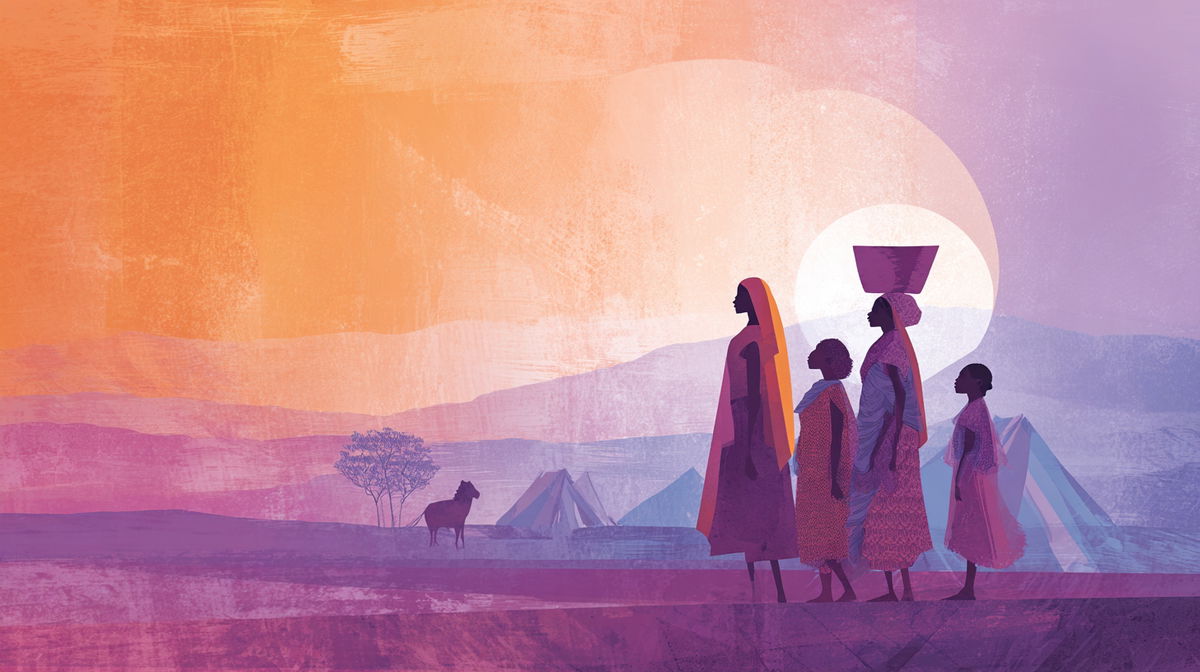
- Despite over $2 trillion in aid disbursed over 50 years, tens of thousands still die of starvation daily — suggesting the current aid model is fundamentally failing its intended purpose.
- “Aid” is a muddled term covering genuine humanitarian relief, political soft power, and even arms sales — obscuring an honest public debate about what aid is actually for.
- Large NGOs have become self-sustaining fundraising machines that prioritise breadth over depth, and critically, fail to challenge the global economic structures that perpetuate poverty in the first place.
- The global economic framework itself prevents poor countries from developing independently, making them permanently dependent on donor governments and bodies like the World Food Programme.
- The core argument: aid is not development — what’s needed is a fundamental rethinking of the international system, not just more money.
A year ago, in early 2025, both the United States and United Kingdom governments announced that Official Development Assistance (ODA) would be severely curtailed. France, Germany, and the European Union have similarly reduced their ODA allocations. These announcements should have provoked national debates, given that millions of people across the western world have consistently campaigned for the alleviation of poverty.
The missing debate would have illuminated several distinct issues. The first is terminology. For most people, aid is an extension of charity, and the increasing number of calamities across the world has demonstrated how emergency aid can be extremely useful. The second is the role of aid as an element in the soft or hard power of official donors. For the US, supplying $3.8 billion worth of arms to Israel and $1.3 billion to Egypt each year also counts as “aid”. The third is an examination of the players in the aid industry: if governments need to use aid for political purposes, is anyone genuinely concerned with aid as a tool to alleviate poverty? The fourth, and most important to the public, is the effectiveness of aid. There are more people facing acute food insecurity now than in recent decades. We all seem still to be more concerned with the quantity of aid—donated by the rich world—than the quality of aid, measured by the benefits to intended recipients. Over $2 trillion worth of “aid” has been disbursed in the past 50 years; what has it achieved?
Here we need to pause and reflect.
The scale of failure
The ultimate measure of failure for any form of aid, from any source, is the number of people who die of starvation—estimated at tens of thousands per day across the poor world. Preventing this fate is certainly the aim of all those who advocate for more public aid or donate to charitable organisations, though not those who would argue for aid as a legitimate weapon of war. In 2020, the executive director of the World Food Programme warned that the world faced famines of “biblical proportions”—before Covid-19 spread across the globe and before the eruption of hostilities between Ukraine and Russia.
Smart, Progressive Thinking on the Big Issues of Our Time
Join 20,000+ informed readers worldwide who trust Social Europe for smart, progressive analysis of politics, economy, and society — free.
Those two countries together produce the largest volume of cereals destined for global markets. Ukraine’s wheat production feeds many parts of the poor world—Africa as a whole takes 34 per cent—but total production has decreased by about 30 per cent since 2020-21. Inevitably, prices have risen because of decreasing supply. The governments of poor, heavily indebted countries cannot afford to buy that food. They must beg for it.
The figure of people starving per day is inevitably a serious underestimate and will inevitably rise, not just for those reasons, but also because the global population is increasing. By 2050, another 1.4 billion people will join us on earth. How are they going to be fed? Surely, we cannot believe it will happen through more generosity from the rich world.
Few of us would challenge the need for our governments to use official aid under the broader “national interest” heading. To put it at its most absurd, not many of us would want Kenya, for example, to become a possession of China. But those who should have insisted on the need to target starvation, regardless of politics, should have been the international Non-Governmental Organisations (NGOs). By constantly emphasising the need to relieve starvation, they benefit from donations—but at the same time they remove agency from local people.
We have seen in the past three decades the progressive rise of the international NGO as a major power in its own right. At least 20 NGOs in the aid field each have budgets exceeding $50 million per year. They have become enormous fundraising machines that inevitably must keep raising funds to maintain their offices, staff, international travel and public-relations operations. But that comes at the cost of working in the field. NGOs pursue greater width, not depth.
The Malawi paradox
One of the best examples of the failure of aid is Malawi, one of the poorest English-speaking countries in Africa. There are almost one thousand NGOs registered as charities with the UK Charity Commission that work in that country. Meanwhile, local people—particularly smallholder farmers, who paradoxically are the main producers of food for their families—are becoming poorer each year.
The reality is that the global economic framework prevents poor countries from using their own tools to develop. It makes donor governments and the World Food Programme arbiters of who lives and who dies. The big NGOs should have highlighted this fundamental failure. They should have campaigned for changes in the international framework. Instead, they have failed to challenge the very system that keeps the poor in starvation.
Aid is not development. We need a different conversation.
Help Keep Social Europe Free for Everyone
We believe quality ideas should be accessible to all — no paywalls, no barriers. Your support keeps Social Europe free and independent, funding the thought leadership, opinion, and analysis that sparks real change.
Social Europe Supporter
— €4.75/month
Help sustain free, independent publishing for our global community.
Social Europe Advocate
— €9.50/month
Go further: fuel more ideas and more reach.
Social Europe Champion
— €19/month
Make the biggest impact — help us grow, innovate, and amplify change.