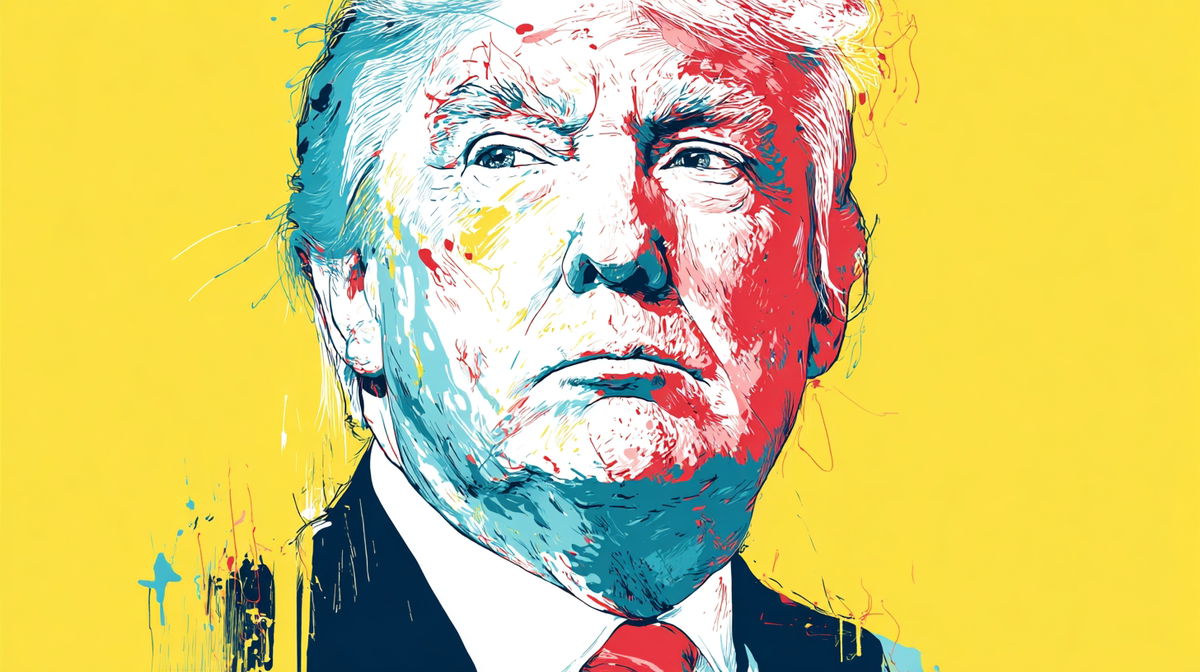
- A pretext that collapses on contact: The administration’s claim that Iran was building a nuclear weapon cannot be squared with its own boast of having destroyed that programme months earlier.
- The authoritarian playbook: Foreign wars force citizens to rally behind their leader, sidelining opposition — a pattern the US and Israeli right are following to the letter.
- Corruption in plain sight: Gulf monarchies that stand to gain from regime change in Iran have lavished Trump and his family with business deals, raising the question of whether US military force is now for hire.
- A brutal regime, a reckless response: Iran’s mass killing of protesters demands a serious strategy of pressure, sanctions, and ecological engagement — not a war driven by personal gain.
- Democracy’s stress test: Citizens are told not to question a war in progress, yet that is precisely when scrutiny of leaders’ motives matters most.
The major assault against Iran launched by the United States and Israel has already triggered retaliatory strikes across the Middle East. A broader regional conflict looks increasingly likely, with grim unintended consequences, such as the downing of three US warplanes by “friendly fire” in Kuwait. So, why did US President Donald Trump – a self-proclaimed peacemaker – start a foreign war?
The official justification strains credulity. The Trump administration’s claim that Iran was building a nuclear weapon has not been established. Nor can it be reconciled with the administration’s repeated claims that it destroyed Iran’s nuclear-weapons program in airstrikes last June. Trump’s insistence that the Islamic Republic must be replaced by a democratic – or at least US-friendly – regime is just as bizarre, given that staunch opposition to foreign military entanglements and regime-change wars was supposedly a core tenet of Trump’s MAGA movement.
I see two plausible reasons for his decision, neither of which is legitimate: to destroy American democracy or to enrich himself. Of course, foreign wars are often motivated by domestic politics, and more often than not, political authoritarianism and personal corruption are not mutually exclusive. That appears to be the case here.
International conflicts can undermine and undo democracies either by forcing the public to rally behind the leader (with opponents portrayed as traitors), or by creating conditions that are favorable to the ruling party ahead of elections. The right-wing governments in the US and Israel are following this utterly predictable authoritarian model.
Smart, Progressive Thinking on the Big Issues of Our Time
Join 20,000+ informed readers worldwide who trust Social Europe for smart, progressive analysis of politics, economy, and society — free.
The implausibility of the official justifications for the decision to start another war in the Middle East points to the second possible explanation: corruption. Who might directly benefit from regime change in Iran? Insofar as foreign policy was involved in the US decision, I suspect it was that of the Trump administration’s closest allies in the region.
Middle Eastern politics has long been shaped by the rivalry between Iran and Israel, as well as between Iran and the Gulf Arab states, especially Saudi Arabia. Given that this structural feature is far more durable than Trump’s wavering and contradictory statements, it is a better place to start tracing the administration’s objectives. And those objectives seem to be to advance personal politics – or, rather, personal gain.
The Gulf monarchies that oppose Iranian power have lavished Trump and his family with huge business deals. The United Arab Emirates invested in a Trump family crypto venture. The Trump Organization has profited handsomely from Saudi deals. And sometimes Gulf monarchs have wooed Trump directly, as when the Qataris gave Trump a luxury jet. The list is very long, and now the US government is using military force against a common enemy of the countries that have enriched Trump and his family. This context should be included in all reporting on the war. This administration’s stupefyingly overt corruption raises the question of whether the US armed forces are now for hire.
To be sure, my goal is not to defend the Islamic Republic, a brutal regime that has been engaged in the mass murder of peaceful protesters since the start of the year. The scale of that slaughter has not really sunk in. But there are more effective ways to push back against Iran’s authoritarian and corrupt political system. The US government could launch a patient campaign of pressure and sanctions, coupled with support for the opposition and proposals to help address the country’s water crisis, a growing ecological problem that has contributed to social unrest. Unfortunately, the Trump administration could never offer such a comprehensive and competent strategy. All it can offer are militarism, authoritarianism, and corruption.
Americans will be told not to question the war that is now underway. But this is precisely when questions must be asked, particularly given what we know about the Trump administration. There is abundant evidence that the attack on Iran could very well be about undermining US democracy, enriching the president, or both. While there is no smoking-gun evidence to prove these presumptions, they suggest productive lines of inquiry to pursue as the war progresses and more is revealed about its origins.
War does not erase a government’s misdeeds and compel citizens to believe leaders’ absurd justifications. On the contrary, war represents the best opportunity to uncover leaders’ true motives.
Timothy Snyder
Timothy Snyder, the author or editor of 20 books, holds the inaugural Chair in Modern European History at the Munk School of Global Affairs and Public Policy at the University of Toronto and is a permanent fellow at the Institute for Human Sciences in Vienna.
New publications by our partners Harvard University Press

Help Keep Social Europe Free for Everyone
We believe quality ideas should be accessible to all — no paywalls, no barriers. Your support keeps Social Europe free and independent, funding the thought leadership, opinion, and analysis that sparks real change.
Social Europe Supporter
— €4.75/month
Help sustain free, independent publishing for our global community.
Social Europe Advocate
— €9.50/month
Go further: fuel more ideas and more reach.
Social Europe Champion
— €19/month
Make the biggest impact — help us grow, innovate, and amplify change.