- Atlanticism as category error: Clinging to a transatlantic alliance whose anchor power has openly abandoned the rules-based order is not realism — it is strategic self-negation.
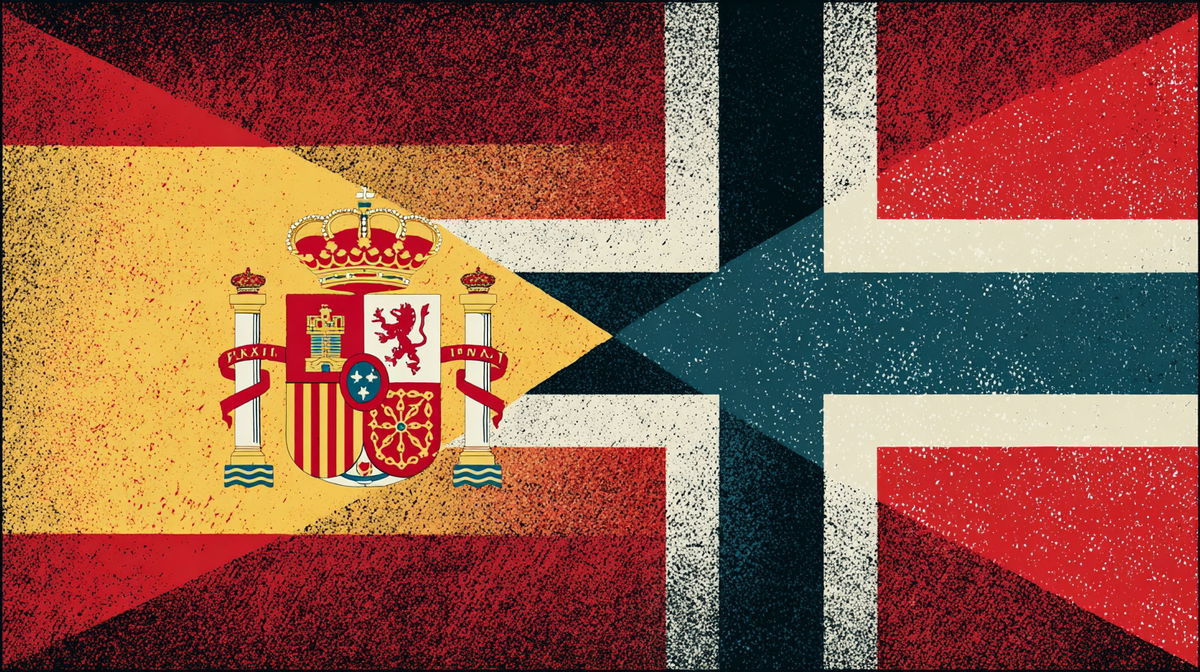
- Europe’s peripheral leadership: Norway and Spain, not the traditional Franco-German axis, are articulating a foreign policy grounded in international law and genuine multilateralism.
- Bombing as counter-strategy: Military strikes are more likely to accelerate Iran’s nuclear ambitions and entrench the regime than to produce the stable order their architects promise.
- The civilisationist trap: Far-right narratives framing the conflict as Western enlightenment versus barbarism create moral hierarchies that license violence and corrode the universalist principles they claim to defend.
Liberal globalism has collapsed, and the vacuum is being filled by an increasingly violent, lawless illiberalism that trades principle for hierarchy and force. The centre right — and its European figurehead, Friedrich Merz — is often framed as the main counterweight to illiberal disruption.
Yet when the United States and Israel launched strikes on Iran on 28 February, Merz revealed himself once again as Trump’s loyal junior partner, announcing he would not “lecture” the allies on their military actions. He later added that international law does not apply to this war. Last June, Merz went further, calling Israel’s strikes on Iran the West’s “dirty work.” This realpolitik is the shortest route to a weightless, voiceless Europe in an increasingly lawless world.
Clinging to Atlanticism while the always-contradictory rules-based order is being violently dismantled from within Washington is not hard-nosed realism. It is a category error: loyalty to a structure that no longer exists, directed toward a partner that has openly declared European interests subordinate to American unilateralism. Macron stopped well short of principled opposition; Starmer hesitated before authorising British base access within 24 hours — a flip-flop that signalled nothing.
Locked in Dependencies
The Israeli-US war on Iran was initiated in complete isolation from the rest of the world. In 2003, the Bush administration invested significant diplomatic capital in assembling a coalition. Back then, it mattered — at least performatively — what Europe thought. The “Coalition of the Willing” was as much a legitimation exercise as a military one. Trump did not even bother attempting to bring European governments on board. Europe was neither a partner nor an audience; at best, it was a logistical backdrop.
Smart, Progressive Thinking on the Big Issues of Our Time
Join 20,000+ informed readers worldwide who trust Social Europe for smart, progressive analysis of politics, economy, and society — free.
This is not simply a matter of Trump’s personality. It reflects a deeper structural shift in how American power operates under illiberalism. The rules-based order was always partly a legitimation device for American hegemony, but it was a device that required European buy-in — and that buy-in gave Europe real leverage. Trump has abandoned the legitimation mechanism entirely. He does not need Europe’s moral endorsement because he has dispensed with the need for legitimacy altogether. Power is its own justification. That is precisely what makes the European establishment’s eager compliance so self-defeating.
For all the recent announcements, Europe has little strategic autonomy. Military capacity is outsourced to Washington, technology platforms are American, energy reliance has shifted from Russian gas to American liquefied natural gas, and the dollar’s reserve role leaves European economies exposed to decisions made in the White House. Europe never built the political architecture to address any of this. The fundamental question remains unanswered: is this economic integration to manage a single market, or political integration with genuine collective agency? Decades of deferring that answer have left Europe divided, dependent, and sidelined.
The Real Adults in the Room
These dependencies, combined with a confused vision of Europe’s purpose, make it all the more significant that Berlin, Paris, and London are not the totality of Europe. Norway’s prime minister, Jonas Gahr Støre, declared the strikes incompatible with international law, pointing out that a pre-emptive attack requires an imminent threat — one that was never established. His judgement was sharpened by a crucial detail: just days before the bombs fell, Oman’s foreign minister had announced a diplomatic breakthrough, with Iran agreeing to zero stockpiling of enriched material and full International Atomic Energy Agency (IAEA) verification.
And then there is Spain — a country that has emerged as Europe’s clearest moral compass on this crisis. Pedro Sánchez condemned the strikes as a breach of international law, refused to allow US military bases on Spanish territory to support the operation, and absorbed Trump’s threat to cut all commercial ties with Madrid. His position, delivered in a televised address, was unambiguous: “No to war.” Remarkably, the Party of European Socialists and the Socialists and Democrats (S&D) Group backed him, signalling something shifting in how at least part of the European centre-left is willing to position itself.
Sánchez is dragging Europe’s centre-left toward articulating a foreign policy grounded in international law, genuine multilateralism, and the understanding that the international order is rebuilt through principles consistently applied, not selectively invoked. What makes the S&D shift notable is that arguments long dismissed as too radical — when made by voices like Yanis Varoufakis — are now coming from governing parties.
Bombs Hardly Lead to Peaceful Coexistence
The leaders in Norway and Spain understand that, however horrible the Iranian regime, the strategic arguments for this war do not hold up. Strikes are more likely to accelerate Iran’s nuclear ambitions than arrest them, more likely to deepen cycles of violence than contain them. Bombing rarely produces the stable order its architects promise. What it produces is destroyed infrastructure, civilian casualties — such as the strike on a girls’ school in Minab that killed over 160 children — and the siege narrative the regime needs to suppress dissent.
The massive protests that shook Iran in late 2025 were driven by economic collapse, a decimated currency, and decades of repression. That is the organic material from which genuine political transformation is built. The ongoing leadership transition might have provided an opportunity to amplify democratic voices and strengthen civil society from within. Durable change requires social coalitions capable of sustaining inclusive institutions; it cannot be conjured by external military force.
A principled foreign policy does not mean turning a blind eye to repression or pretending that the Iranian regime bears no responsibility for violence in the Middle East or for the oppression of its own people. It means holding firm to the same standards regardless of who is doing the bombing, insisting on international law as a constraint on the powerful, and understanding that lasting security is built on legitimacy — not on the rubble of failed interventions.
The Civilisationist Trap
There is also a deeper trap to avoid, one that has been paralysing politics for years. Many frame the war on Iran — in Washington, Jerusalem, and Berlin alike — through a civilisationist lens: the enlightened West defending itself against barbarism. This narrative has become the ideological glue of the global far right, and it is as dangerous as it is self-serving. It produces moral hierarchies that license violence: some lives matter more, some states deserve sovereignty less, some bombs are more legitimate than others.
This far-right civilisationism may satisfy those nursing a post-colonial Western hangover — the need to feel that history has a civilised side and a barbaric one. But it has nothing to do with the principles that hold the international order together. Human dignity, peace, inclusion, the sovereign equality of nations, and the prohibition on the use of force: these are not European inventions generously bequeathed to the rest of the world. They are globally shared principles, in part won through anti-colonial struggles against European empires, at enormous human cost. A Europe that speaks for these principles must do so as an equal partner, not as a civilisational guardian.
That is the foreign policy Europe needs. Sánchez and Støre are making the case for it. The question is whether enough European leaders are listening.
Help Keep Social Europe Free for Everyone
We believe quality ideas should be accessible to all — no paywalls, no barriers. Your support keeps Social Europe free and independent, funding the thought leadership, opinion, and analysis that sparks real change.
Social Europe Supporter
— €4.75/month
Help sustain free, independent publishing for our global community.
Social Europe Advocate
— €9.50/month
Go further: fuel more ideas and more reach.
Social Europe Champion
— €19/month
Make the biggest impact — help us grow, innovate, and amplify change.