Remember perestroika? That was Mikhail Gorbachev’s ill-fated experiment in reform in the late 1980s which ended with the sudden collapse of the Soviet Union in 1991. The perestroika story, as we read it in the West, was about an enlightened Soviet leader’s effort to democratise internally, while at the same time ending the Cold War. The first part failed; the second succeeded, but ended up looking like a victory for the other side. After the Soviet collapse, which involved the dissolution of the old state into its constituent national republics, a new story about the Soviet Union emerged, namely that it had been a Moscow-based Russian empire oppressing its colonies (the former Soviet republics). This didn’t fit with the old perestroika story (was Gorbachev after all a quasi-emperor and not a democrat?), but Gorbachev was already old news, so nobody noticed. In the West, Gorby remained a hero. In Russia, his name was mud because it was under his watch that the country disintegrated, losing its superpower status and the world’s respect.
Those of us who were in and out of Russia in those years were left with some bizarre impressions. Take late Soviet free thinking and interest in the paranormal. From perhaps the early 1980s on, I noticed that some of my Russian friends had become open-minded to a fault. Russian Orthodoxy, Zionism, astrology, ESP, yoga – you name it, they were into it, without feeling any incongruity or need to choose between them. In 1989, at the height of perestroika, the TV hypnotists Allan Chumak and Anatoly Kashpirovsky suddenly became enormously popular; their performance involved staring intensely through the screen to direct healing rays at the glasses of water that viewers had been instructed to place in front of their TVs. Western journalists made private jokes about this odd deviation from Soviet norms. But that wasn’t the big story of perestroika, so they kept filing articles about Gorbachev and democratic reform.
Joseph Kellner has now provided a frame into which to put some of those strange phenomena of the Soviet Union’s last years. (He is too young to have seen these events for himself; this book is based on his PhD at Berkeley.) His is one of a number of new stories of perestroika which are now emerging. Most have a grassroots, out-of-Moscow perspective, but Kellner’s has Moscow in it too. His subject is the upsurge of fascination with the spiritual, paranormal, occult and extraterrestrial that occurred in Russia (and other parts of the Soviet Union, but his is basically a Russian story) as the Soviet Union went into free fall. He calls it the ‘seeking phenomenon’. But it could equally be understood as something like Joan Didion’s ‘magical thinking’ – not, as in Didion’s case, an individual response to personal trauma, but rather a collective manifestation of shock as the familiar contours of Soviet life suddenly dissolved.
The Soviet Union had brought up its citizens as believers in scientific atheism, scornful of the tradition-based ‘superstition’ of the unenlightened masses before the Revolution. Yet by 1990 surveys showed that a majority of Russians gave some credence to astrology, telepathy, ‘supernatural forces’ and faith healing via the TV screen. Advertising and street preaching, virtually absent before perestroika, were now present in force: on Moscow’s Arbat, ‘Adventists, Scientologists, Baptists, anti-fascists, telepathists and eunuchs preached their faith; people in rags were saving Russia from Zionist conspiracy; sharply dressed people in glasses were saving Russia from a pogrom,’ while others touted weight-loss programmes and ice-water baths. This is the description of a then 16-year-old Muscovite, now a Putin supporter, looking back from the sober distance of 2015. He remembered feeling confusion as well as shock: had his ‘fairly enlightened’ country gone mad? Was this exuberant parade a manifestation of Gorbachevian openness (glasnost) and sincerity (iskrennost), or of the decadence which, in Soviet speak, was always threatening to flood in from the West?
The years between 1989 and 1991 were an apocalyptic time in which old rules, values and habits were overturned, and flux became the new norm. For many, spiritualism of various kinds seemed to be the answer. In pre-Soviet times, before spiritualism was put into the same ‘false consciousness’ box as religion, the Russian popular world had been full of spirits, benevolent and malign, which had to be placated or otherwise dealt with in everyday life. These became largely invisible after the revolution, and the authorities hoped they would disappear under the impact of Soviet enlightenment and science-based education. There was more official concern about the periodic rumours of apocalypse and the coming of the Antichrist, historically linked with popular resistance to rulers like Peter the Great and Stalin whose reforms threatened the old ways. But it was sixty years since Stalin’s collectivisation had sparked the last big alarm.
As Kellner tells it, the upsurge of spiritualism accompanying perestroika had Soviet roots, namely fascination with the cosmos in the 1960s, the great age of the Soviet space programme. Side products were an intense interest in UFOs and the spontaneous creation of clubs of UFO watchers (tacitly accepted by the state), as well as Kellner’s ‘seeking phenomenon’. For Kellner, this is a Soviet not an anti-Soviet phenomenon – hence his title, The Spirit of Socialism, which I read as only partly ironic.
The Soviet Sixties, like their US counterpart (but without the drugs), were an age of ‘new thinking’ that wasn’t specifically focused on political institutions. It came to encompass something called dukhovnost (spirituality), a word that could mean either a faith in communism or, more broadly, a responsiveness to the non-material. Spirituality went out of fashion as a positive term in the Brezhnev period but made a comeback in the mid-1980s, and Gorbachev sometimes called for a ‘spiritual [dukhovnaya] perestroika’ in his speeches.
‘Seekers’ were typically members of the Soviet intelligentsia, in particular scientists and mathematicians. They were not dissidents; organised politics interested them even less than it did the philosophically and legalistically minded Moscow dissidents of the 1970s. In contrast to the dissidents, who looked to the West for understanding and an audience, seekers tended to turn east, particularly towards ‘Oriental’ religions. They were more successful than the dissidents were in using Soviet spaces and institutions to serve their purposes, particularly the popular science journal Znanie (‘Knowledge’), with its associated network of adult-education clubs, and the official atheist journal Nauka i religiya (‘Science and Religion’), whose editors gradually stopped treating the two concepts as opposed. Soviet socialism, in Kellner’s telling, left space for ‘seekers’ while at the same time unintentionally creating a need to seek by failing to provide a proper substitute for religious belief or an outlet for spiritual needs. Enthusiasm for the Space Age initially pulled people’s gaze heavenwards; even after that waned, the gaze remained upwardly turned, seeking answers from the stars.
This is the genesis story Kellner tells, and it’s unexpected but plausible. Still, once one starts thinking about possible antecedents, an even broader field might be discerned. Having written a Shortest History of the Soviet Union in which the word ‘spirituality’ never appears, I thought it would be an interesting game to run through Soviet history and collect all the spiritual bits that got left out as marginal. This counter-history could start with the interest in the occult and psychic contact with the dead which Russia shared with other countries in the wake of the First World War. Mikhail Bulgakov, one of the most popular writers of the 1920s, wrote a short story called ‘The Séance’ and then made Satan, in the guise of a Professor Woland who performs magic tricks at a variety show in Moscow, the protagonist of The Master and Margarita. That novel wasn’t exactly standard-issue socialist realism, but still managed to become a classic until the end of the Soviet period and beyond.
Nikolai Fyodorov, the turn-of-the-century philosopher of ‘cosmism’ who saw the prolongation of individual human life not only as a scientific possibility but as a moral imperative, comes into the story too, not least because his admirers included some prominent Bolshevik intellectuals. There were surely Fyodorovian undertones in the decision – bizarre, in Soviet materialist terms – to embalm Lenin’s body after his death in 1924, build a mausoleum on Red Square and put the body on public display, inspiring the populace with the slogan ‘Lenin lives.’ (The staying power of this particular strain in Russia was recently illustrated in a hot-mic incident when Putin and Xi Jinping were overheard discussing the possibility of physical immortality.)
The counter-history would include all the various psychics and shamans rumoured to have been consulted by Soviet rulers from Stalin to Brezhnev. Officially, there was no room for psychics in the Soviet state; in practice, they occasionally became celebrities in the lively world of popular gossip, often neglected by historians. The Polish mind-reader Wolf Messing achieved his celebrity in the Soviet Union during the Second World War, when he may or may not have met Stalin. After the war, he took his act to the circus and (like Bulgakov’s Woland) the variety theatre, both familiar territory for Soviet ‘mentalists’. During perestroika, Messing’s autobiography was serialised in Nauka i religiya.
The history of Soviet parapsychology also needs telling. Under Stalin, parapsychology – along with psychology as a whole – was out of favour. But as psychology re-established itself after Stalin’s death, so did parapsychology. Scientists in Moscow, Leningrad, Tbilisi, Alma-Ata and elsewhere investigated claims about hypnosis and thought transference, with an open mind as to their validity. Western parapsychologists, who had been in touch with their counterparts in the Soviet Union since the early 1970s, found them a bit sloppy in their scientific methods, but not significantly constrained in their activities – perhaps even encouraged – by the authorities. The possibility that some of this might have military uses added a Cold War dimension. During the Carter administration, some US intelligence people sounded the alarm that in the area of parapsychology (as earlier in space exploration), the Soviets had got dangerously ahead, and the US needed to catch up. Similar arguments were probably being made to Brezhnev about American efforts; in the event, neither Carter nor Brezhnev seems to have been convinced. But the idea that distant hypnosis, thought transference or something else from the parapsychology toolbox might be the next big breakthrough in the practice of warfare bubbled away beneath the surface in the latter phase of the Cold War.
It perhaps doesn’t belong in a scholarly counter-history, but I have a few memories of my own to contribute. My Soviet room-mate at Moscow State University (MSU) in 1970 was the first person I had ever met who practised fortune-telling from tea leaves. I made nothing of this at the time (if she had been interested in Gramsci or the dissidents I would have taken notice). It was probably in the 1970s that I picked up the term ekstrasens – a person with ESP, often used for healing purposes as well as telepathy and clairvoyance – which was coming into general currency in Moscow, though it wasn’t in any Soviet Russian dictionary. Around 1988 I actually met an ekstrasens: we were guests on the same TV show in Sverdlovsk (now Ekaterinburg), the capital of the Urals. His shtick was interpreting blobs of ectoplasm on a screen; mine was commenting on the discovery of Romanov remains in Sverdlovsk and the question of their disposal. As we were waiting to go on air, I developed a terrific fit of sneezing. The friendly ekstrasens offered to direct healing rays at my back to stop the sneezing (it worked).
Although Kellner begins his book with Chumak and Kashpirovsky, the TV hypnotists, neither hypnosis nor ESP lies at the heart of the story. His focus is on spiritual seekers – mainly from the Soviet scientific and technical intelligentsia – whose investigations began in the 1960s and who during perestroika became involved in four specific movements or cults: astrology, Krishna consciousness, the Vissarion sect and Anatoly Fomenko’s ‘New Chronology’ movement.
Mikhail Levin , who became a guru of astrology in the 1990s, was a mathematician and son of scientists. In the 1970s he fell into a circle of ‘esotericists’. ‘There were Buddhists, there were parapsychologists, there were young Christians,’ Kellner writes; some studied Agni yoga (living ethics) while others were Hare Krishnas, but all felt ‘spiritually kindred’. Levin came to astrology by way of a fascination with astronomy that started with Sputnik when he was a teenager, and developed his interest while working in a computing lab at MSU. Astronomy was, of course, recognised as a science in the Soviet Union while astrology was not, but Levin apparently saw no problem in being interested in both. He continued his old work as a scientist even after establishing the Moscow Academy of Astrology, which became hugely popular in the early 1990s. The Academy offered a three-year programme ending in a degree, constructed much like a university science course. For Levin, astrology was ‘a perfect fusion of science and the transcendent’. Still, he never ceased to think like a mathematician, regarding astrology as a ‘hard science’ based on crunching of data on the locations and movements of stars and planets. By what an outsider might see as a leap of faith, this celestial data happened to provide insight into the individual and collective fates of people on Earth. Like much of the new thinking about the transcendent that Kellner explores, these insights made conventional history look pretty pointless, since the story the planets told was so much better at predicting the big events: ‘Saturn and Neptune come into conjunction every 36 years and did so again in 1989 … Tsar Alexander II was killed in 1881, there was revolution in 1917, Stalin died in 1953, European communism unravelled in 1989.’
Scientific and technical training, easily abandoned or sidelined during perestroika, was also characteristic of the adherents of the Hare Krishna and Vissarion movements Kellner interviewed almost two decades later. It came as a surprise to me to find Kellner describing Hare Krishna as a Russian sect. I had noticed the sudden prevalence of saffron-robed Hare Krishnas on Moscow streets and near Metro stations at the beginning of the 1990s, but it didn’t occur to me that they were actually Russian – I saw them as part of the great invasion of foreign proselytisers for various religions that became visible in perestroika. I’m still not convinced I was wrong. The Hare Krishna guru, Swami Prabhupada, was an Indian who built up a following in the US and then, in the 1970s, went international, tapping into the hippie movement. With success came pushback in a number of countries. The Hare Krishna operation in the Soviet Union was thought by the KGB to have ties to the CIA; as a result, the Hare Krishnas were persecuted, along with Jehovah’s Witnesses and other sects, between the mid-1970s and the end of the 1980s.
As Kellner shows, however, there was a local Hare Krishna story. Russian seekers felt that their needs could be met by a movement which offered spiritual peace by means of freeing oneself from material concerns and recognising one’s part in karma-driven cycles of death and rebirth. Kellner traces the origins of this response to Nikolai and Elena Roerich, occult seekers of the 1920s with a following among the Russian intelligentsia; their search took them to Tibet and India and produced the doctrine of Agni yoga. Helped by the Soviet state’s diplomatic rapprochement with India and by the return from Indian emigration of the Roerichs’ elder son, a renowned Orientalist, spiritual Orientalism flourished in intelligentsia circles in the 1960s.
Fifteen years of Soviet state persecution left surprisingly little impression on the Russian devotees of the Hare Krishna movement whom Kellner interviewed. Escape from a tumultuous world was what they had sought as converts in the early 1990s. That meant abandoning worldly concerns: ‘plain living and high thinking’ was the message one woman remembered hearing, principles that tapped into the familiar values of Soviet dukhovnost, anti-materialism and anti-consumerism, at a time when Western-style materialism and consumerism seemed to have flooded in. Krishna consciousness in Russia under perestroika was a movement ‘with social nostalgia at its heart’, as Kellner puts it. Explicitly, the nostalgia was for the ancient Vedic way of life in India, free of conflict and material striving; implicitly, it was for the old Soviet Union, construed in a similar manner. ‘In the former Soviet Union, it was easy to realise that goal [of renunciation of material things],’ one woman remembered, ‘because we didn’t have so many ways to gratify the senses – supermarkets, restaurants, casinos, the advertising industry, the glorification of sex, violence, alcohol and narcotics.’ Now everything had changed: the perestroika period was seen by Kellner’s interviewees as a cycle of ‘degradation’. The lens of Krishna consciousness provided assurance that this cycle, too, would pass.
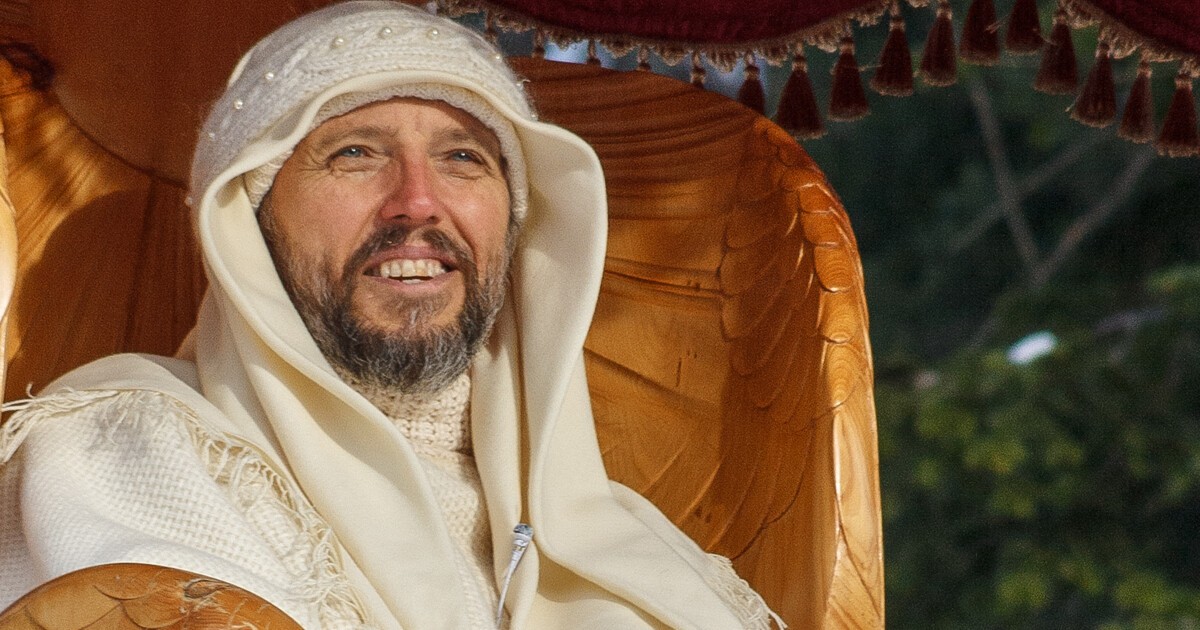
The movement that formed around the charismatic Vissarion in the early 1990s also involved a retreat from the world, but in this case with apocalyptic overtones. Clothed in scarlet robes cinched around the waist, with Christ-like (or hippie-like) long hair and beard, Vissarion taught that ‘Mother Earth … would soon react against cities like these, whose impositions were driving her to the brink.’ He encouraged the faithful to take refuge at a safe distance from the ‘toxic and irradiated post-Soviet world’, more precisely in a series of remote villages without electricity or other modern conveniences in south-central Siberia en route to a sacred Mountain. Vissarion, born as Sergei Torop, had once been a traffic cop in nearby Minusinsk, a dreary provincial administrative centre (avoiding Soviet clichés, Kellner doesn’t mention the fact that Lenin spent some years of exile in the area in the 1890s). He came to his mission via the local UFO Club, whose extraterrestrial contacts picked him as a leader in ‘humanity’s imminent evolution to a higher spiritual stage’.
Vissarion offered no dogmas and seemed to be accepting of all religions and belief systems. Kellner beavers away to see if Vissarionism can be made intellectually coherent, and concludes that what Vissarion was offering was just ‘a beautiful and empty vessel’ for his admirers to fill. They did so by building new lives in the remote villages leading to the Mountain, lives based on very hard collective physical labour (building a road in icy conditions with no power tools), mastery of trades such as carpentry, and the construction of homes and a temple (very attractive, judging by the illustrations) in Russian fairy-tale style. Their daily lives, once this was all built, were filled with artistic activities such as decorative carving, writing poetry and performing music and drama. What they didn’t fill their lives with, at least according to Kellner’s report, were the bitter sectarian fights over doctrine that generally bedevil such communities, so perhaps Vissarion’s insistence on intellectual incoherence was strategic. Apocalypse forgotten, the members seem to have realised their dream of a quiet collective life, close to nature. Their biggest reported problem lay in convincing the Russian Ministry of Education that their schools were not in violation of the national syllabus for history, which the Vissarionites preferred ‘cleansed of all mention of war, retribution and similar manifestations of cruelty’.
A puzzle that remains from these case studies is how people who had worked as scientists or engineers – as most of Kellner’s interviewees had – could move so seamlessly between the scientific and the spiritual. Kellner pressed them to talk about any sense of rupture they might have felt on crossing the divide, but they never admitted to anything of the kind. Given that the boundaries between astronomy and astrology have been strictly monitored in the West since the 17th century, it’s a little shocking to see how casually Levin ignored them, and he’s not the only one. Is this something specific to Soviet science? Or is scientific rationality just a professional convention that can always be discarded in favour of magical thinking when things get tough?
‘The end of history’ can mean the apocalypse, according to Russian folk belief, or US victory in the Cold War, according to Francis Fukuyama. But it’s used in a different sense in the title of Kellner’s last chapter, ‘Anatoly Fomenko at the End of History’, about a man who did a very thorough demolition job on history and those who write it. Fomenko was (and perhaps still is, at the age of 81) a brilliant mathematician, internationally recognised as a specialist on topology, with a position at MSU. To the outrage of professional historians, he came out with a ‘New Chronology’ asserting that the 13th-century Mongol invasion of Russia, one of the milestones in the national history, never actually happened. This conclusion was based on a statistical analysis of the few available sources, mainly chronicles, which showed them to be ignorant, imitative, contradictory and generally worthless. It was an anomaly in celestial mechanics connected with the Moon’s gravitational pull that got Fomenko the mathematician interested in the human measurement of time: unlike Levin, the other number-cruncher in Kellner’s story, he was not otherwise a seeker (the Moon is a red herring here). As far as the purported expertise of professional historians was concerned, he was a sceptic to the nth degree.
Left-field claims about history usually have support at least from a marginalised minority of the profession. Not in this case. Russian historians to a man and woman denounced Fomenko and tried to prove him wrong. This, of course, is very difficult to do in any field relying on specialist knowledge (how and on what kind of paper the chronicles were written, for example), and historians’ arguments made absolutely no dent on the huge popularity of the New Chronology in the 1990s. No doubt that popularity owed something to a nationalist sub-theme in the story: in place of the barbarian Mongols, Fomenko’s chronology includes a short-lived Great Empire which, from its base on the Volga, ruled over ‘all Christian lands, including Europe, Siberia, China, India and Turkey’ in the 14th century until broken by the split in Christianity and the rise of Islam. This offered a moment of past Russian greatness to lessen the pain of present humiliation. But Kellner, as well as Fomenko in the interview Kellner conducted with him in 2014, is inclined to downplay the national theme.
Fomenko’s immense scepticism about the wisdom of experts and other authorities is the main source of his appeal to a disillusioned public. Indeed, scepticism and spiritual seeking seem to have run in harness in Russia in the 1990s. When, during perestroika, Soviet historians scoured the archives for documentation of Stalinist repression, the West hailed it as ‘truth-telling’. In Russia, it seems, the takeaway was different: of course ‘they’ (the authorities, the historians) had once lied about Soviet history, which was bad; but now ‘they’, and the West along with them, are trashing our country and saying we ought to be ashamed of it, and that’s no better. In his interview with Kellner, Fomenko said he personally found the collapse of the Soviet Union ‘deeply regrettable’, since in Soviet times there was less crass materialism and more space for culture. This was a sentiment that all of Kellner’s seekers shared.
Soviet Marxist-Leninist ideology taught that history necessarily progresses upwards. No Russian believed that after 1991. But there was a question as to whether the collapse of the Soviet Union was the apocalypse, the ‘end of history’, or just a cycle of degradation which, in the nature of such cycles, would eventually pass. The eclectic Vissarionites seem initially to have held both beliefs. Twenty-five years later, when Kellner visited, they remembered that they had taken refuge in Siberia to escape the apocalypse, but exactly what or when that apocalypse was (1989? 1991?), and whether it had been merely the threat of apocalypse or the real thing, was no longer clear to them. What’s more, they didn’t care. History might have stopped, but life had more or less gone on. Even apocalypse, so long a fear or hope of alienated Russians, turned out to be a bust.