Zbigniew Herbert , noted lover of Golden Age Dutch painting, decided one day to break with his well-trodden pilgrimages to his favourite museums in Rotterdam and Amsterdam. Instead, he ventured into the Dutch countryside for a view of what one might call the hinterland of so many of those dim, flat, dampish paintings (the landscapes, at any rate). ‘It is reasonable,’ he contends in his book of essays, Still Life with a Bridle, ‘to begin the sightseeing of a country not from its capitals or spots marked with “three stars” in a guide but precisely from a godforsaken province abandoned and orphaned by history.’ Accordingly, he went to a place called Veere. He quotes from his Michelin guide: Veere has ‘une lumière douce, une atmosphère ouatée et comme assoupie’.
I, however, went to West Palm Beach, which is neither sleepy nor gentle nor indeed quilted, and inasmuch as it is godforsaken, it is so in an entirely different way. It is a hinterland only in relation to the ribbony barrier island of Palm Beach, all fertilised lawns and sparkling steel-blue light and stonewashed money, those greens and blues that Rembrandt did not have on his palette. West Palm is the home of leathery Tithonus and sun-spotted Eos, handy for the Jaguar dealership and the Arthritis Foundation, and just the other side of the Lago from our contemporary Ground Zero. Meanwhile, in an upstairs gallery of the imposing Norton, dreamy spots pick out some seventy-odd tenebrous and mainly dignified Dutch Masters in four or five rooms swathed in maroon velvet darkness. Not altogether surprisingly, there has never been a Rembrandt on public display in Florida; right now, there are seventeen (until 29 March).
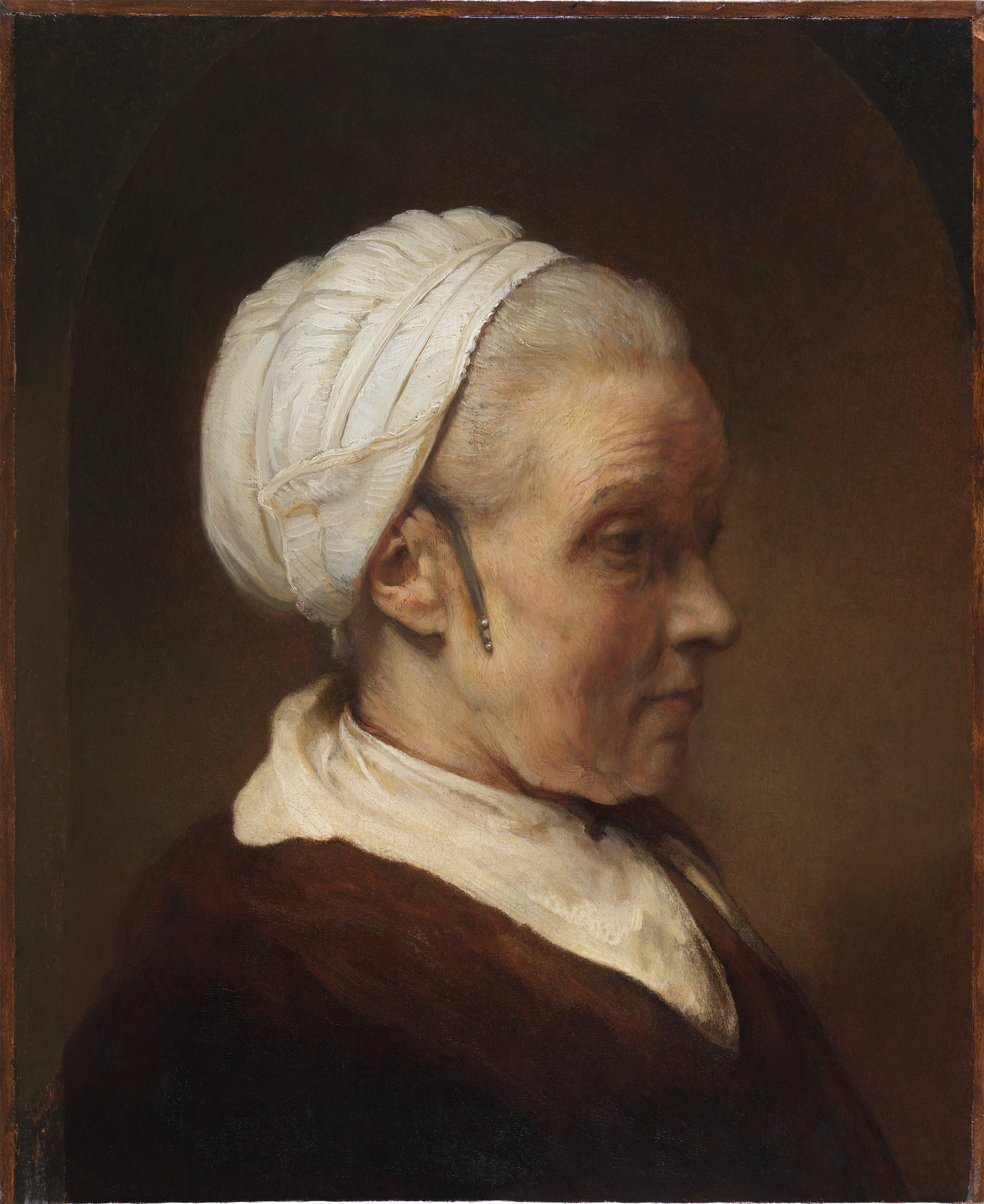
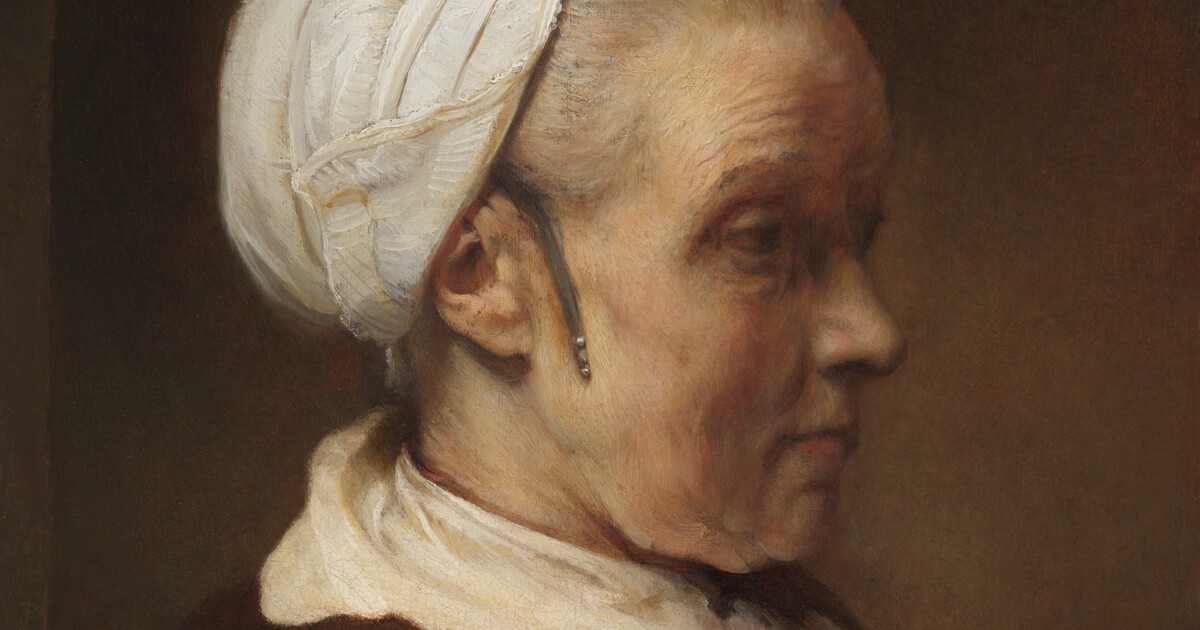
‘Study of a Woman in a White Cap’ (c.1640).
The Leiden Collection is a lending library of paintings, a world-class collection circulated for the benefit of a global public, a travelling show with no fixed points and no permanent home. It comprises hundreds of paintings that have already gone out on loan to ninety institutions all over the world. Founded in 2003 and kept perfectly discreet until 2016 (as a ‘private collection’), it then declared itself and has since been on general display in the Louvre and in Amsterdam (for the city’s 750th birthday), in Abu Dhabi and Shanghai and Beijing and St Petersburg. Palm Beach – West Palm Beach – is its seventh resting point.
The owner and mastermind of the collection is Thomas Kaplan, a silver magnate and wildcat aficionado who must have seen the absurdity of ‘owning’ an Old Master. Or a tiger, come to that. He wants to do something that doesn’t involve tethering pictures to any particular place or institution, and so he does this. He buys Old Masters when they ‘come up’, and then, for the love of Leiden, he lets them go. It gives the lie to the passage in Plato: ‘What does the lover of beautiful things love? That they become his.’ Kaplan spent some of his boyhood a little way up the coast from the Norton. There is maybe something personal at stake here (or perhaps a mission civilisatrice). More than that, though, he seems to have been charmed by the proposal of the director of the Norton, Ghislain d’Humières, who suggested that he borrow one painting from the collection and exhibit it by itself. The painting in question was Jacobus Vrel’s Interior with a Sick Woman by a Fireplace (mid-1650s). Having been on show at the Norton for the past two years, it is not in the current exhibition, but even in reproduction it’s so exquisite that one understands the attitudes of both men: the first in requesting this particular painting, the second in being so impressed by the approach that he, so to speak, gave him the keys to the store.
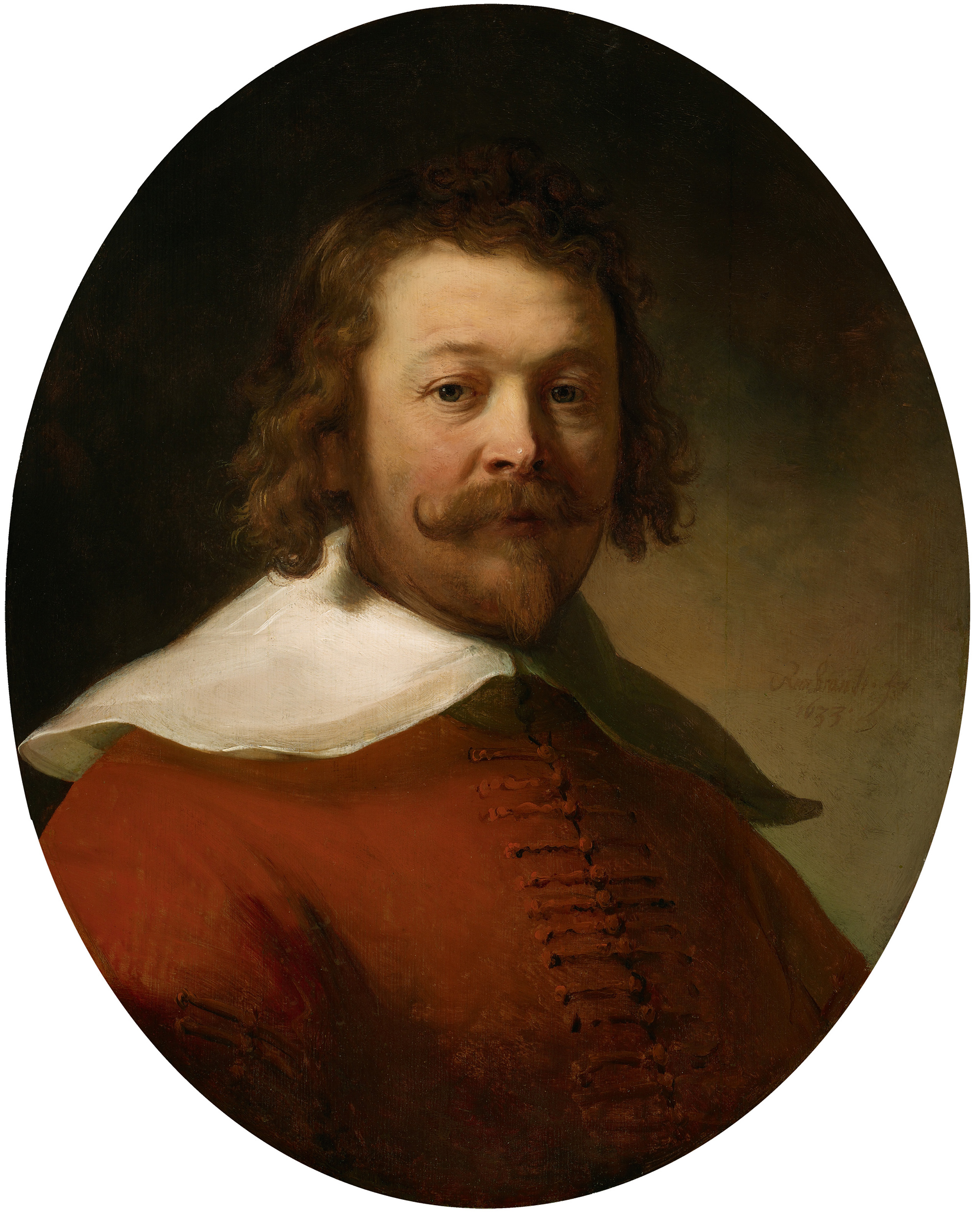
‘Portrait of a Man in a Red Coat’ (1633).
Vrel’s painting might stand in for the whole of the new show, which is called Art and Life in Rembrandt’s Time: brownish, tranquil, tender, whispering, matter-of-fact, at once sumptuous and plain, intimate, humble. The vertical space in the picture is astounding. Nothing, or very little of moment, happens above halfway; its entire human interest is confined to the lower left corner, an imaginary but strongly suggested line only just breached by a sleeping cat and dog. The painting is a study in brown and white: brown floor, brown wall, a heartbreaking brown and white tile fireplace in a jaunty chessboard pattern, ornamented off-white chimney breast set off with two brass candlesticks and a row of decorative off-white plates, the off-white cat and dog the shape of hot-water bottles or curling stones, a modest fire in the hearth (you can hear it), a kettle, some dimly burnished fire-irons. The high brown smoke hood (Rauchfang is the vivid German word, ‘smoke-catcher’) has something of the look of a coffin seen from the side. The flue goes on forever, tapering and tapering. Paint, it seems to me, loves paint. Daylight weeps in unseen from the left (as often in these paintings) and plays wanly over a small hunched figure sitting by herself on a wicker settle: white shawl, white bonnet over her brownish dress, a large white apron trailing over one arm and her head pressed against a shapeless white feather bed parlously clumped together in mid-air.
The woman seems to have a slightly foolish expression; her mouth hangs open; her hand is pressed to her cheek. She has earache, or toothache, or something much worse. She is not asleep, as a previous title had it; rather, she is staring vacantly into the fire, or at her pets. An empty wicker chair sits opposite; perhaps she is a widow. Otherwise, it might be that she is waiting for Death – der letzte Gesellschafter, as Brecht called him, our last visitor. The picture radiates softness and warmth, but also the need of them. Like many of these great Dutch paintings (Vrel is only now in the process of being disentangled from Vermeer), it’s a hymn to materiality, to domesticity, to practicality, to our ability to make ourselves comfortable. It shows off the materials we have tamed and now like to live among: wood, pewter, tile, china, feathers, wicker, wool. And like other Dutch paintings of this extraordinary century, it sends you skittering through time. Are we with Whistler? With Cézanne? With Munch?
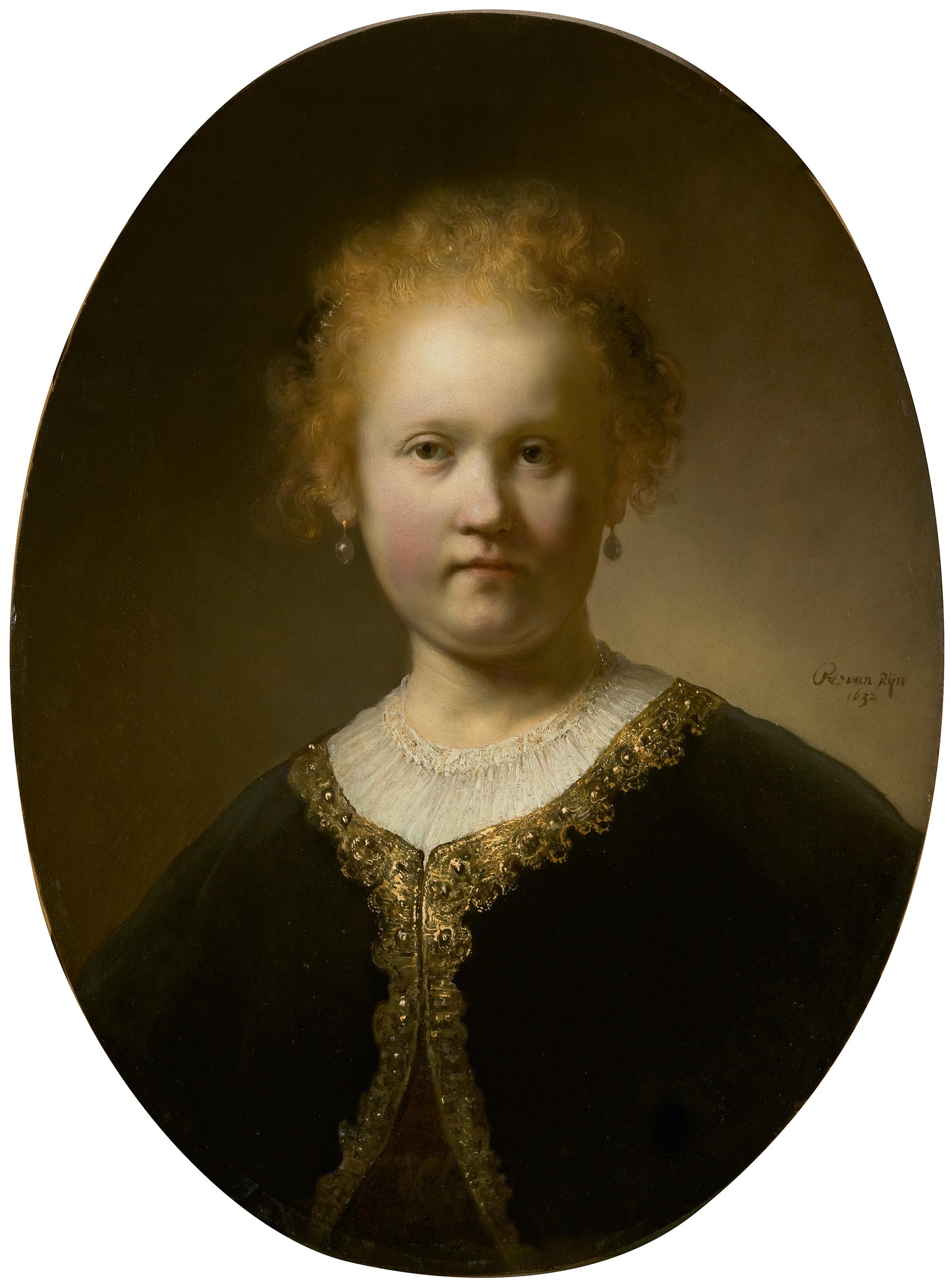
‘Young Girl in a Gold-Trimmed Cloak’ (1632).
It is a picture – like many here – from which one looks away most unwillingly. They are small paintings for the most part, necessitating a close view and long scrutiny. There is something wonderfully uncoercive about Art and Life in Rembrandt’s Time; perhaps it’s the presence of so much life. You have to say goodbye to it in one painting before you greet the next one. In the way they are grouped – thematically, associatively – the paintings have no elbows; they don’t jostle, as even a roomful of Rembrandts can. There is nothing of the balloon debate, nothing of ‘me first’. They aggregate; they complement. I began by coasting, going anti-clockwise along the walls. Later, I started to skip. I toured the bigger canvases, the little ones, the tiny ones. The Rembrandts, the non-Rembrandts. The paintings of old people. The paintings of boys and young men. The paintings of old women. The self-portraits, the genre groups. I paid attention to the characterful frames, a wonderfully diverse array, some of them like no frames I have ever seen. I went back to my favourites, then round those pieces I thought I might have overlooked. My favourites again.
What is it with these Dutchmen? Did human subjects not exist before them? (That strange word tronie for a painting done from the imagination, as a character study, though every bit as real and individual and feasible as any portrait.) Did they write the book on patience? (All those letters being written and read, those prayers being said, those scholars at their studies, those musical instruments being played.) Did they invent detail? The pulleys, the bolts and dowels, the tuning pegs, the baskets of eggs, the lean bacon, the fat bacon, the corms of dried poppyseeds, the buttonholes, the pages of writing, the various convexities of bowls and spoons and pearls, the lace collars, the oorijzer or ‘head-brooch’ – a sort of wishbone fitted over the head that presses the cheek and holds down the flaps of a mob-cap or bonnet. And almost invariably the challenges are met and mastered, not ducked or sidestepped. The fiddlier the better.
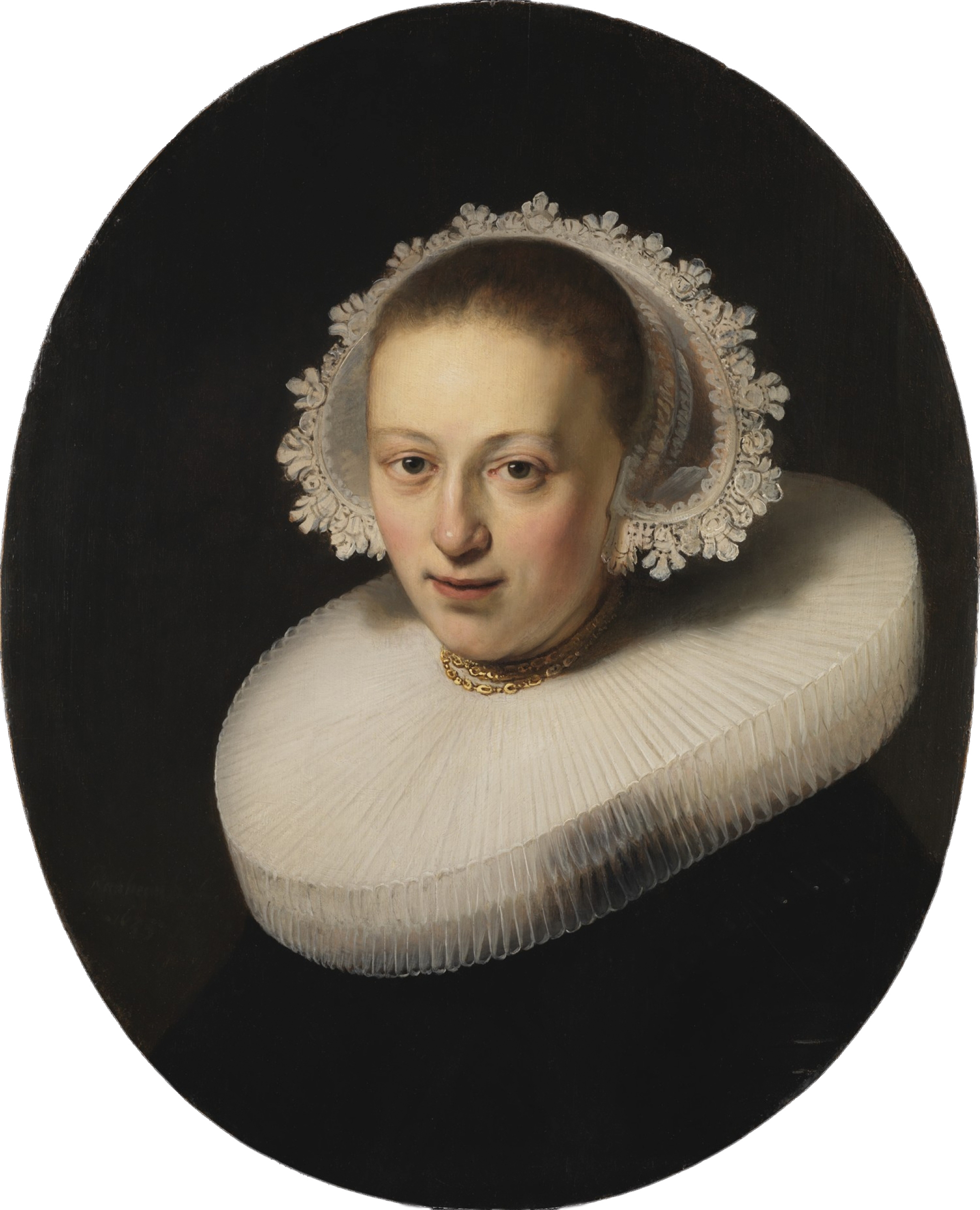
‘The Middendorf Rembrandt’ (1633).
Is it the smallness of the subjects? There is no marble here, no horses, nothing historical, no great men, no saints, no religion, no glamour, no armour. Just the children, the old, the infirm. The renderings of people who didn’t commission the paintings – again, we are two hundred years ahead of ourselves. The woman with the swimmy eyes, the interesting temple bones, the squint (The Middendorf Rembrandt), perhaps driven mad by her two kinds of lace. The girl (Young Girl in a Gold-Trimmed Cloak) who seems to be running a temperature, her damp white forehead, the thin steam of her reddish curls. Mortality is a constant undertow. Gerard Dou’s tiny oval portrait of Dirck van Beresteyn, the fluff barely dry on his upper lip, 25 and just married; the following year he was dead. Carel Fabritius’s rather murky Hagar and the Angel, painted when he was just 23; ten years later, he too was dead, killed when the gunpowder magazine went up in Delft, destroying a quarter of the town.
It’s not really about mastery or technical expertise. Perhaps it’s feeling, in the literal way. A form of invitation or presence. Touch. There are so many types of cloth here. Your fingertips sense them as you look, the soft, the coarse, the slippery. Velvet, hessian, cotton, satin. This cloth exists. The wiry hardness of a man’s curly hair (Rembrandt’s Portrait of a Man in a Red Coat). An old woman (Rembrandt’s Study of a Woman in a White Cap) whose cheek we can almost feel, can imagine brushing or kissing. It’s extraordinary for painting to be so interested in touch. I could swear I had kissed it.