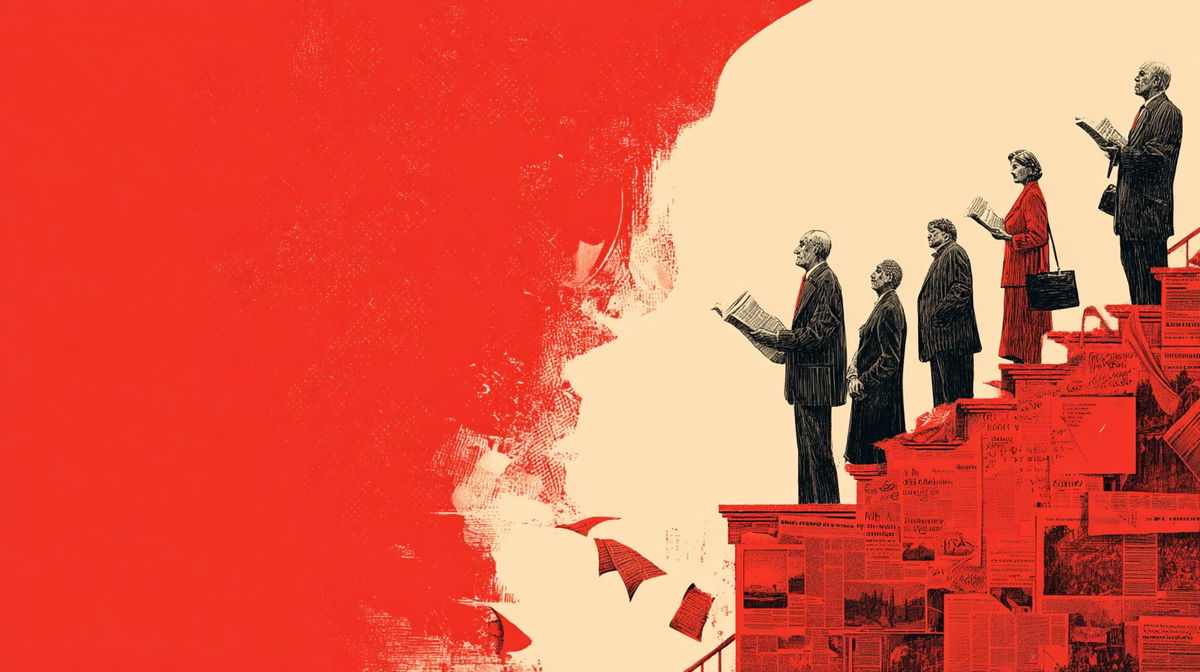
There is a particular kind of paralysis that overtakes an animal caught in headlights. It sees the danger and instinctively understands that it must move. But it cannot choose a direction, and so it freezes, waiting for the impact. This is the current condition of Europe’s centre-left. Progressive parties across the continent are staring at historic electoral collapse and appear incapable of doing the one thing that might save them: offering voters something genuinely new.
The evidence is impossible to ignore
In Germany, Olaf Scholz’s SPD crashed to 16.4 per cent in the February 2025 federal election, down from 25.7 per cent in 2021 — its worst result since the nineteenth century. The traffic-light coalition had spent its final year trapped in a three-way deadlock between the SPD, the Greens, and the FDP, unable to agree on fiscal policy, energy transition, or economic reform. The government’s defining characteristic was not what it did, but what it could not bring itself to do. Scholz, a chancellor who governed by caution, was punished by voters who wanted conviction.
In the United Kingdom, Keir Starmer won a parliamentary landslide in July 2024. Yet, his majority was far larger than the 34 per cent vote share that Labour received, built largely on anti-Conservative sentiment rather than enthusiasm for Labour’s offer. Eighteen months later, Starmer’s net approval has plunged to –57, rivalling the lowest ratings of any post-war prime minister. Far-right Reform UK now leads national polls at 31 per cent, with Labour trailing at 23 per cent. A majority of the public believes Starmer should resign. A combination of high-profile scandals and a hesitation to follow through on any decisive reform — fearing to offend no one inside the party’s broad church — has ended up inspiring no one, neither in Labour nor beyond.
The trap of the lowest common denominator
These are not isolated failures. They are symptoms of a condition general across progressives in Europe and the United States: centre-left parties have become hostage to their own internal complexity. Faced with coalitions that stretch from trade unionists to urban progressives, from fiscal hawks to green radicals, party leaders have learned to navigate by seeking the lowest common denominator — the position that generates the least internal friction. The result is governing agendas that are perhaps competent but politically lifeless: programmes that can survive a party congress but cannot survive contact with an electorate hungry for change.
Smart, Progressive Thinking on the Big Issues of Our Time
Join 20,000+ informed readers worldwide who trust Social Europe for smart, progressive analysis of politics, economy, and society — free.
This is the trap Scholz fell into. His coalition agreement was an exercise in triangulation between three parties with fundamentally incompatible instincts on debt, climate, and the role of the state. The result was not compromise but paralysis. And it is the trap Starmer is falling into now, governing as if the mere absence of Conservative chaos were a sufficient offer to the British public, while hesitating on any policy that risks upsetting the balance between Blairites, soft-left members, and union backers — thus upsetting them all.
The instinct is understandable. Big-tent parties face real internal tensions, and leaders who ignore them risk splits. But there is a difference between managing a coalition and being imprisoned by one. When the search for internal consensus becomes the organising principle of government, the party stops speaking to voters and starts speaking only to itself.
This is not a call for ideological purity but for political courage — for progressive leaders to make choices while accepting that not every faction will be satisfied. It means presenting voters with a vision of change that is tangible and distinguishable from what came before. The great progressive breakthroughs of the twentieth century — the New Deal, the post-war welfare state, even the early Third Way moment that carried Blair, Schröder, and Clinton to power — all involved leaders who were willing to break with their party’s established comfort zone. They picked fights, took risks, and offered something voters had not heard before.
With the likely exception of Pedro Sánchez and his PSOE government in Spain, today’s centre-left has lost that capacity for disruption. It has replaced ambition with risk management and message-testing in focus groups. But voters facing stagnant wages, unaffordable housing, and institutions they increasingly distrust can tell the difference. When progressives offer more of the same — or a slightly more tucked-in version of the same — they should not be surprised when voters look elsewhere, for instance to the populist right, which attracts them with the energy of feigned conviction, however destructive.
The progressive tradition is not dead. But it is on life support, and the oxygen it needs is not better communications strategies or smarter micro-targeting. It is the willingness to break with incrementalism, to accept the political cost of bold choices. Electorates must feel that progressives are offering them something genuinely different from the present. The headlights are getting closer. It is time to move.
Help Keep Social Europe Free for Everyone
We believe quality ideas should be accessible to all — no paywalls, no barriers. Your support keeps Social Europe free and independent, funding the thought leadership, opinion, and analysis that sparks real change.
Social Europe Supporter
— €4.75/month
Help sustain free, independent publishing for our global community.
Social Europe Advocate
— €9.50/month
Go further: fuel more ideas and more reach.
Social Europe Champion
— €19/month
Make the biggest impact — help us grow, innovate, and amplify change.