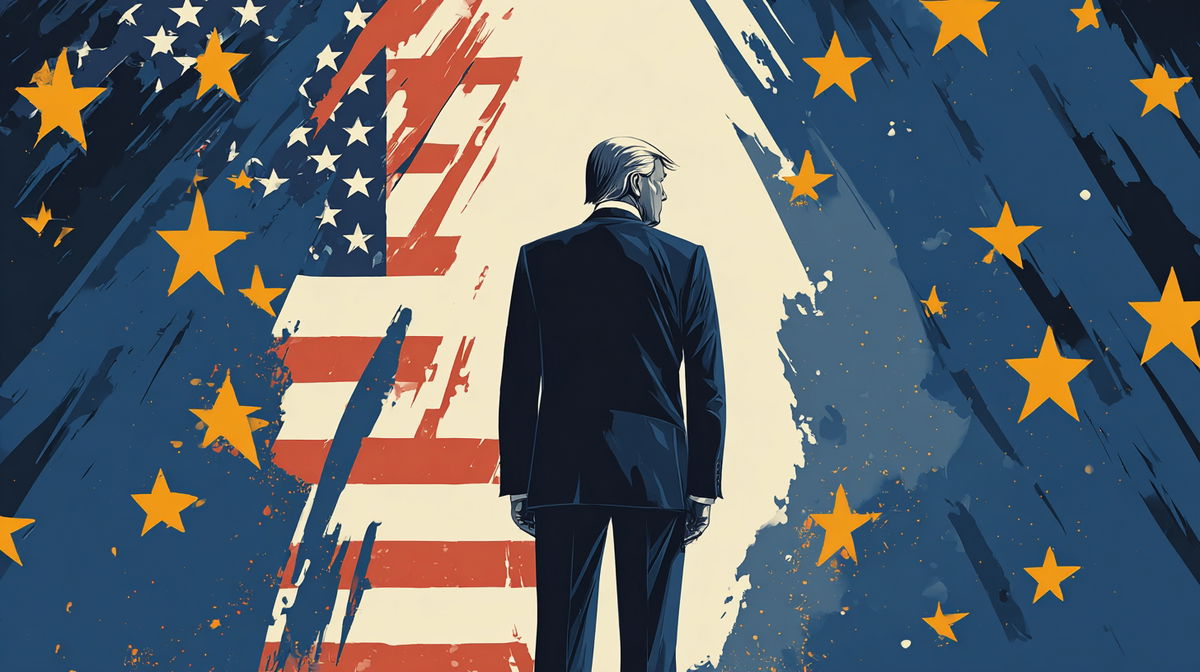
If there is anyone left in Europe who thinks the past can yet be reclaimed, they would do well to watch the White House video glorifying Donald Trump’s war on Iran. Trumpian triumphalism about America’s military might is not enough. Images of the death and devastation being visited on Iranians are interleaved with violent sequences from the likes of Ironman, Gladiator and Braveheart. The aim? To celebrate “the American Way of Justice”. War as pornography. It’s time for Europeans to own up. These people are not like us.
The absence of restraint or propriety is matched by the administration’s boastful contempt for international law. Pete Hegseth, the shiny-suited defence secretary and wannabe Dirty Harry, exults in the violence. The US will wage war on its own terms “No stupid rules of engagement, no nation-building quagmire, no democracy-building exercise, no politically correct wars. We fight to win”. If scores of children are killed when a Tomahawk missile lands on a school, that is, well, tough.
European voters have been more willing than their leaders to recognise the new America. One where the glamour and glitz of Hollywood makes way for the ugliness of troops on the streets and masked militias scouring them for immigrants. It has not gone unnoticed that Trump’s answer to climate change is to burn more fossil fuels.
Even before his decision to bomb Iran, one nine-country poll showed 48 per cent of Europeans regard him as “an enemy of Europe”. A YouGov survey suggested Germans and Brits think the US is as big a danger to their security as Iran. Asked for an overall view of America, between 60 and 70 per cent of voters in Germany, France, Britain, Italy and Spain say it is “unfavourable”.
Smart, Progressive Thinking on the Big Issues of Our Time
Join 20,000+ informed readers worldwide who trust Social Europe for smart, progressive analysis of politics, economy, and society — free.
There are durable alliances between nations, and there are ententes and pacts. The first of these identify common ground that reaches beyond coincident security and economic concerns to shared goals for regional or international order. Alliances link interests to values. The second group are transactional arrangements, recognising common threats and ambitions but blind to principle. Remember Britain’s attempt to strike a deal with Benito Mussolini in 1938? My enemy’s enemy is my friend.
Screen out the cacophony from the White House and you still hear European leaders proclaim that NATO has been the most successful alliance in history. They once had a point. It worked by marrying hard-headed national interests to the shared belief that Soviet communism posed an existential threat to western democracy.
This month marks the 80th anniversary of Winston Churchill’s Sinews of Peace speech at Missouri’s Westminster College. Churchill was a pragmatist rather than a wishy-washy liberal. His concern was to preserve Britain’s status at the top table of world affairs. But he saw the opportunity for postwar peace. Atlanticism, he declared, rested on more than collective military power. It spoke to “the great principles of freedom and the rights of man… which through Magna Carta, the Bill of Rights, the Habeas Corpus, trial by jury, and the English common law find their most famous expression in the American Declaration of Independence.”
Put simply, NATO would put vaulting commitments to democracy, freedom, and the rule of law — the pillars of what became known as the rules-based international system — to the service of the west’s strategic interests. The liberal democracies would face down communism from the moral high ground.
Practice and principle sometimes diverged, of course. The US did not always honour its own rules. Europe looked the other way when America embroiled itself in Indo-China and when the CIA toppled democracies in Latin America. As for cultural collisions — middle America’s jarring attachment to guns, private health and the death penalty — Europeans chose to ignore them. The Americans they sat down with were like-minded folk from the Ivy League east coast. Europe ignored the rougher, tougher frontier America.
Occasionally, see-no-evil silence hardened into defiance, as with Franco-German opposition to the Iraq War. But by and large, Europe’s judgement, informed as much by self-interest as high mindedness, was that there was sufficient moral cement to hold the relationship together. After all, the US guaranteed the continent’s security.
That world has gone. Trump prefers autocrats to democrats and Russia’s Vladimir Putin to Ukraine’s Volodymyr Zelenskyy. The notion of territorial integrity, the keystone of European security, has been consigned to the White House dustbin. The US has a president who wages war on a whim and ruminates in public about sending in a second wave of bombers to destroy Iran’s oil terminal “just for fun”.
Sure, it’s true enough that Trump’s narcissism, ignorance, and playground compulsion to beat up weaker enemies is the most extreme expression of the change in the Atlantic relationship. But Europeans need to recognise that the new American nationalism also reflects a profound structural shift.
The US was happy to sign up to a law-based international order for as long as it could set the rules to its own advantage. The soaring rhetoric about values was useful flummery. But American power is now contested, not least by China. Beijing demands its say in setting the terms of global order. And power in Washington no longer belongs to a generation of east coast politicians who understood that an enduring alliance with Europe was a strength rather than a burden.
After all this, Americans and Europeans still have important shared interests — strategic as well as economic. And before too long, the US may have a president who recognises that few things would better serve China’s global ambitions than a retreat from Europe. But the idea of a permanent alliance rooted in the values of liberal democracy has run its course. The future is transactional, a place for pacts and deals.
This article was first published on Philip Stephens’ Substack.
Help Keep Social Europe Free for Everyone
We believe quality ideas should be accessible to all — no paywalls, no barriers. Your support keeps Social Europe free and independent, funding the thought leadership, opinion, and analysis that sparks real change.
Social Europe Supporter
— €4.75/month
Help sustain free, independent publishing for our global community.
Social Europe Advocate
— €9.50/month
Go further: fuel more ideas and more reach.
Social Europe Champion
— €19/month
Make the biggest impact — help us grow, innovate, and amplify change.