In 1889 Charles-Édouard Brown-Séquard, a 72-year-old professor at the Collège de France, wrote a letter to the Lancet in which he reported the effects of injecting himself with guinea pig semen. The results were remarkable. He could once more lift heavy weights, no longer had to hold the banister when going down the stairs and his youthful vigour had returned in other areas too. ‘After the first days of my experiments,’ he wrote, ‘I have had a greater improvement with regard to the expulsion of faecal matters than in any other function.’
Brown-Séquard’s research was just one example of a late 19th-century fascination with organs and their rejuvenating secretions. The same year, other researchers reported that they could give a dog diabetes by surgically removing its pancreas, then reverse the condition by placing fragments of pancreas under the dog’s skin. It seemed that the pancreas was responsible for exuding a mysterious substance into the blood. Diabetes was the absence of this secretion.
This was a welcome development. At the time, medicine could do little for people with the condition. Sufferers complained not only of constant hunger but of constant thirst, becoming dehydrated as their bodies voided pints of sweet-tasting urine. These symptoms had been recognised for thousands of years. Ancient Chinese texts describe ‘the wasting thirst’ (xiāo kě) and Sanskrit medical authorities refer to ‘honey urine’ (madhumeha). In Greek, from which the modern name derives, diabetes was simply ‘the siphon’ (διαβήτης); one doctor in the second century ad wrote that ‘the flow is incessant, like the opening of aqueducts.’ In the 18th century a doctor in Liverpool, Mathew Dobson, showed that the sweetness of patients’ urine resulted from high levels of sugar circulating in their blood. But the cause of the condition was mysterious, and long into the 19th century, the various speculative treatments – potatoes, oats, opium – did little to help.
The pancreas is present in all vertebrates. In humans, it is a salmon-coloured gland roughly the length of a dinner fork that sits behind the stomach, and without its crucial secretion the body of a diabetic behaves as if they are starving. The liver releases its stored sugar, sweetening the blood above a healthy level. But without insulin the sugar can’t be used, so the starvation response continues, and the body resorts to burning fatty tissue for energy, turning the blood acidic and lacing the breath with the fruity smell of ketones. The surge of toxins in untreated diabetes typically kills patients within a few years of their first symptoms.
In the 1890s, researchers began injecting pancreatic extracts to cure diabetes in much the same manner that Brown-Séquard had trialled semen’s restorative effects. But by 1914, one American doctor thought that chasing after a glandular cure had proved not only useless but harmful. His own treatment was simple: starvation. The aim was to keep a patient’s blood sugar low, eking out their existence as long as possible on strict rations. One manual instructed doctors to begin with a diet of black coffee and whiskey, to ‘keep the patient more comfortable while he is being starved’. Calibrated starvation did seem to extend some patients’ lives, but it was uniformly awful and few could adhere to the regimen.
Faced with this horror, the pancreas and its secretions remained under active investigation. As biochemical methods became more precise, the eventual identification of the magical substance, insulin, was inevitable. What was far from inevitable was that it would be discovered in the early 1920s at the University of Toronto by a group of four scientists, only two of whom would be awarded the Nobel Prize, resulting in a bitter dispute that overshadowed their subsequent careers.
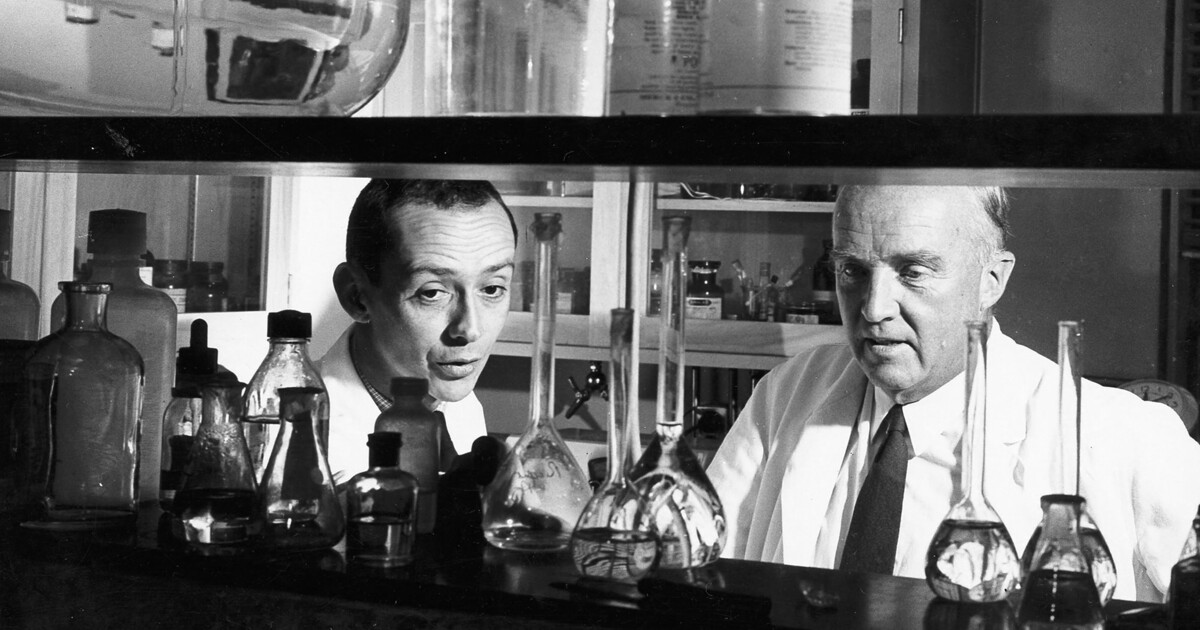
It was this dispute that first attracted the historian Michael Bliss to the story of insulin. In the account he learned at school, its discovery was a medical fairy tale whose knight errant was a young Canadian doctor called Frederick Banting. In 1920, while reading an article on diabetes, Banting had an epiphany about the way to isolate the sought-after pancreatic extract. He approached John Macleod, a biochemist at the university, who agreed to give him laboratory space to investigate his wild surmise. Banting was assisted by a student, Charles Best, and within a year they were keeping diabetic dogs alive with their extract. In 1922 Banting and Best tested it on humans, with miraculous effects. The following year, Banting and Macleod were recognised with a Nobel Prize. Banting shared his portion of the prize with Best; Macleod shared his portion with the biochemist James Collip, who had helped purify insulin.
That was the conventional account. But in the late 1960s, when Bliss was a graduate student in history, his older brother, a professor of physiology at McGill, had written to him with some gossip still going round Canadian medical circles – the kind of gossip that becomes ‘more interesting after each round of drinks’, according to Bliss. There were rumours of unpublished documents, untold stories, things that would only come to light after Best, the last of the four, had died. Bliss longed to know more, but it was only after Best’s death in 1978 that he was able to access the glut of archival material – notebooks, memoranda, papers – and to persuade other scientists and researchers to give him their recollections (more than sixty did). The resulting book, The Discovery of Insulin, first published in 1982 and reissued in multiple editions, has rightly become a classic.
With access to original laboratory records from Banting and Best, Bliss found he was able to describe their experiments ‘day by day and dog by dog’. But medical research was quite a departure from his previous academic expertise in business history, and he was anxious to get the details right. To make sure he could write accurately about removing a dog’s pancreas, he arranged to watch a vet perform the procedure and was proud to have touched the pancreatic ducts himself. His book conveys the shambolic nature of Banting and Best’s investigations, conducted in the relatively lawless world of 1920s medical experimentation. The dogs they used weren’t bred for the laboratory, but procured on the street from dubious characters. There was no attempt at standardisation: operations were performed on a long-haired spotted hunter, a spaniel, a yellow collie, an Airedale and scores of others. Many of the dogs died through the incompetence of their vivisectionists – neither had performed a pancreatectomy before.
Toronto was also where the Canadian Anti-Vivisection Society held its first meeting, in July 1921. Banting and Best weren’t mentioned, but just a few miles away they were operating on street dogs in a dingy room filled with ‘heat and dirt and unbelievable stench’. It’s possible they performed these operations without gloves, using their fingernails to scrape pancreas remnants away from the splenic artery. Opening up seven of the dogs to check their progress, they discovered that five of them would need to have their pancreatic ducts tied together again. By the end of the week, most were dead.
Over the next few months, their exciting but often demoralising work continued. The pair took to living in the laboratory, cooking steaks on a Bunsen burner and working through the night. As the summer dragged on, one dog began to blur into another, their chaotic numbering system making it hard to marshal their data into anything coherent. Bliss identifies multiple points where they misinterpreted their experiments and even failed to read their own graphs correctly.
In theory, pancreatic extracts were simple. Every trained anatomist was familiar with the islets of Langerhans, the tiny cell clusters in the pancreas believed to produce the secretion (or hormone) that controlled blood sugar. But in practice, any extract of the pancreas was a clotted gunk of proteins floating in miscellaneous juices. Even if the crucial hormone was present in this dirty mixture, injecting such an impure goop into the blood tended to produce side effects. Banting’s late-night insight, scribbled in his notebook, had been that ligating the pancreatic ducts would protect the ‘internal’ secretion of the islets of Langerhans from degradation by other ‘external’ secretions. In this way, one would obtain a much purer extract. In an article published in February 1922, Banting and Best claimed that the extract produced after ligation was 100 per cent effective in lowering the blood sugar of dogs. This was an exaggeration – by Bliss’s count their data suggested around 50 per cent. But more embarrassingly, Bliss points out that the success of their extract can have had nothing to do with the fiddly process of ligation: Banting’s idea was reasonable, but wrong. The important step was the subsequent biochemical purification, meaning that equally good results could be obtained with extracts of the whole unligated pancreas. Banting and Best seemed to realise this, because they eventually abandoned ligation in their experiments. But for the rest of his life, Banting clung onto his epiphany, continuing to credit it as the pivotal moment without ever acknowledging that he had been wrong.
Bliss shows that Banting and Best were not proceeding rationally. But this doesn’t mean that their fumbling was incomprehensible. Each dog was a real dog, its blood sugar really did rise and fall, and Bliss argues that if we want to understand how insulin was discovered we must follow exactly what Banting and Best knew at each stage. The approach is gripping, because the reader knows that this misinformed picaresque led to one of modern medicine’s greatest discoveries. The picture that emerges is far from any neatly circumscribed scientific method. As Paul Feyerabend wrote in Against Method (1975), ‘even a law-and-order science will succeed only if anarchistic moves are occasionally allowed to take place.’ Bliss doesn’t quite say it, but Banting may have accelerated the discovery of insulin precisely because of his sloppiness and egotism.
Macleod, who had encouraged Banting and made the work possible, soon became the subject of his ire after daring to question his results. Their relationship soured. Macleod handed over the problem of making a purer pancreatic extract to Collip, a talented biochemist spending a sabbatical year at Toronto. In January 1922, Collip succeeded in making a highly potent form with his own method, which it seems he refused to share with the ambitious and paranoid Banting (things went so badly at one meeting that there may have been a physical fight). In the aftermath, Banting nearly imploded. He started drinking himself into oblivion, stealing alcohol from the laboratory when he couldn’t afford to buy it, and told Best he was going to quit the whole enterprise. Best persuaded him to stay.
Despite these difficulties, the work at Toronto moved quickly onto human patients with promising results. In May 1922, Macleod presented the team’s findings to the Association of American Physicians. Several people in the audience had been experimenting with extracts themselves, and were probably just months away from the same discovery. But this was the first time the wider scientific community heard about insulin, and the response was electrifying.
In Toronto, Collip and his team were struggling to produce enough insulin to meet the rapidly rising demands. The US pharmaceutical firm Eli Lilly offered their services and, after some reluctance, the university entered into a licensing agreement. It felt it had little choice. As a representative from Lilly pointed out, the demand for insulin was going to be immense, far beyond what a university could provide. It was crucial for a responsible pharmaceutical company to be involved from the start, because of the risk of ‘attempts on the part of unprincipled individuals to victimise the public’.
In 2017, Alec Smith turned 26. He had been diagnosed with diabetes a couple of years earlier and, like millions of people around the world, was now dependent on insulin. But turning 26 meant he was no longer covered by his mother’s health insurance. He’d just moved out of the family home in Minnesota to a new apartment when he went to collect his monthly prescription and got a shock: the bill was $1300. Alec didn’t have that kind of money, so he left the pharmacy without it. Rather than asking his family for help, he decided to ration his remaining insulin until payday. It was a fatal decision. When his body was found, the insulin pen he used was empty.
Who killed Alec Smith? At the time of his death, insulin’s global market was still, as it had been for decades, dominated by three companies: Novo Nordisk, Sanofi and Eli Lilly. All three can trace their history of insulin production back to 1923, securing a reliable customer base in the millions of people who needed it to survive. Bliss’s last lecture before his retirement in 2006 was to the 900-strong insulin sales force at Lilly. As Chris Feudtner writes in Bittersweet (2013), injectable insulin transformed diabetes into a chronic rather than a fatal disease. But as well as becoming crucial for those unable to make insulin, like Alec Smith (type 1 diabetics), the drug had also become an important part of managing type 2 diabetes, a slower condition where the body grows less responsive to the body’s natural insulin. In the 1920s, diabetes probably affected around one in a hundred people worldwide. Today, one in nine people have it. Although rates of type 1 diabetes have increased slightly, that rise is almost all due to type 2, which is closely associated with obesity.
Until the late 1970s, production of insulin still relied on extracts from pig pancreases, offcuts of the meat trade. (Pig insulin is almost identical to human insulin.) Two tonnes of pig pancreas produces just eight ounces of insulin, and Eli Lilly needed to process 56 million carcasses a year to meet demand. With the rise of recombinant DNA technology, it became possible to envisage making insulin from bacteria instead. In 1978 the company Genentech was the first to succeed, working out of a rented warehouse shared with a distributor of porn videos. By smuggling a modified gene into E. coli on an engineered loop of DNA, they turned bacteria into tiny factories that swelled to bursting with insulin.
In 1996, Lilly released a genetically modified form of insulin called Humalog that was even faster-acting in the bloodstream: its protein sequence had been altered to prevent it sticking together in clumps. Humalog was a modest medical advance compared to the discovery of insulin itself, but it permitted a different patent. Many other minor changes followed, and each new patent gave manufacturers a new twenty-year exclusivity period. Insulin diversified from one substance into a family of brand-name medicines, each encircled by a thicket of intellectual property. New delivery devices – pens and pumps rather than syringes – could all be covered by separate patents too.
Despite there being no patent on insulin itself, its three early manufacturers now enjoyed unchallenged dominance. And despite the promise that genetic engineering would lead to falling costs, the price of insulin in the US only rose. In 1996, a 10 ml vial of Humalog cost around $40 in today’s money. But over the following years its market value began to climb. Between 2012 and 2016 it almost doubled, eventually reaching more than $300 – ten times the cost in Britain.
In the face of widespread criticism, insulin manufacturers protested that to speak of the price was misleading. As patients were reliant on insulin, the manufacturers in turn were reliant on the distributors who bought their products and acted as middlemen, selling them on to healthcare systems. These middlemen had realised they too could abuse this monopoly by encouraging the Big Three to bid for favourable placement in their inventory. The manufacturers paid the middlemen ever increasing kickbacks for this privilege, delivered legally as rebates on the price of the insulin they sold. All this meant that while the ‘list’ price of insulin kept climbing, the amount that the manufacturers were paid after rebates remained relatively stable.
This argument neglected to mention that the companies had a strategy of price-matching their rivals. In late 2014, Lilly executives had privately earmarked 3 December as the date they would raise the price of Humalog by 9.9 per cent. But Novo Nordisk got there first, announcing its own year-end price increase of 9.9 per cent a few weeks earlier. Internal emails show that Enrique Conterno, the president of Lilly Diabetes, was emphatic: ‘Let’s compensate by taking [our] price increase earlier … I think we should push for it asap.’ If they waited, the distributors would stock up at Lilly’s current price, harming future profits. After a flurry of emails on Friday, 21 November, Lilly’s prices went up on the Monday.
In the last decade, anger over insulin pricing made this practice politically untenable. In 2023, Lilly announced it was dropping the price of Humalog in the US to $66. But a recent survey reported that 20 per cent of Americans with diabetes had rationed insulin in the last year, compared to none in Britain, Sweden or Germany. The US is an outlier, but insulin’s robust oligopoly has persisted worldwide. Médecins Sans Frontières estimate that the cost to manufacture insulin for a typical patient for a year is less than £100. The median global price is at least double this, and newer insulin medicines are many times more expensive still. Other smaller companies sell insulin, and in theory others can join the market whenever they like, but the dominance of the Big Three continues.
The treatment of diabetes has never been dependent on insulin alone, and in the century since Banting and Best’s experiments scientific knowledge has expanded its scope further. The pancreas also produces another molecule, glucagon, which acts to increase blood sugar. In the early 1980s, researchers worked to identify the gene that encoded glucagon. In humans, that meant isolating the fraction of cells responsible for making it from within the islets of Langerhans – a challenging prospect, as Banting and Best had found. Instead, biochemists turned to the American anglerfish, a wide-gaped fish of spectacular ugliness whose glucagon-producing cells are stored in big fleshy lumps. The glucagon gene was discovered, but the same region of the genome also encoded two other hormones. These were given the name ‘glucagon-like peptides’, GLP-1 and GLP-2, and appeared to be intimately involved in the feedback mechanisms relating to food. Levels of GLP-1 peaked soon after eating, passing on a message to the pancreas to reduce glucagon and increase insulin, ready for the expected rise in blood sugar.
Insulin lasts for hours in the bloodstream, GLP-1 just minutes. This meant it couldn’t serve as a reliable drug. But other researchers had been pursuing similarly structured molecules that would have more long-lasting effects. They found them in another unlikely animal, the Gila monster – a black and yellow venomous lizard that lives in the deserts and scrublands of Mexico and the American Southwest. A protein extracted from its spit eventually led to an approved drug for type 2 diabetes called Byetta, first sold in 2005. Many patients loved it, calling it Lizzie in honour of its reptilian origin. Lizzie and other GLP-1-like molecules had more complex effects than insulin. In 1996, researchers had discovered that injecting GLP-1 into the brains of starved rats stopped them eating. Somehow, GLP-1 made their huge appetites evaporate. This reduction in appetite meant that medicines such as Lizzie could lead to rapid weight loss. There was an obvious potential double application for GLP-1-based drugs to treat not just diabetes but obesity.
It took years of research, but the world’s biggest insulin manufacturers were at the head of the pack. After Novo Nordisk launched Ozempic to treat type 2 diabetes in 2018, patients started to use it for weight loss too, and a higher dose of the same drug was soon approved as Wegovy. In 2022, Lilly launched Mounjaro for type 2 diabetes, and the following year it was approved for weight loss as Zepbound. More than a hundred other anti-obesity drugs are currently in development, including pills as well as injections. Not all will make it to patients, but in the next few years Lilly hopes to win approval for a trio of new drugs with goblin-like names: retatrutide, orforglipron and bimagrumab. Novo Nordisk is also pursuing new products, including one that targets the cannabinoid receptor responsible for the munchies (the hope is that blocking it will have the opposite effect).
The potential market for these drugs is enormous. In the UK alone, nearly two-thirds of people aged over 35 are currently classed as overweight or obese, and many would like to be thinner. More than 1.6 million people in the UK have taken GLP-1 drugs in the last year, nearly all of whom buy them privately despite the cost. Health economists have argued for universal access, since according to standard metrics the huge costs of such a move would be more than offset by the downstream benefits. We are only in the opening throes of the transformation these new medicines will effect. Sectors from retail to hospitality are modifying their business plans for a new, thinner clientele. And because GLP-1 drugs seem not only to reduce appetite but to reconfigure the palate towards bitter and fresh tastes, nervous junk food manufacturers are experimenting with low-calorie, high-protein milkshakes and reformulated frozen meals that will hit the spot.
A Nobel Prize for GLP-1 drugs in the next few years seems certain. Among the many thousands of scientists who contributed to the research, much of it publicly funded, some are already jostling for position. The contrast with insulin a century before is stark. Science has changed since the days of Banting and Best, and future historians of science will have the unenviable task of charting their narrative not through personal notebooks but by navigating a blizzard of papers from large teams where the role of any individual is hard to establish. Does that matter? Even in the case of insulin, Bliss thinks that without the Toronto researchers somebody else would have discovered it within a few years, and quite possibly within months.
The apportioning of credit and blame is a human instinct, even when we know the story is usually more complicated. Before insulin, doctors found themselves blaming diabetic patients for not following their starvation diets. More than a century later, people continue to be blamed for being fat even as our scientific understanding of metabolism has become more nuanced. We know that modern food systems drive people into obesity and we have a better understanding of the intricate hormonal signals of hunger and satiety – signals that can be harmful to our health but excruciating to ignore. GLP-1 drugs offer to cut this Gordian knot. Even leaving aside the uncertain long-term side effects, there are reasons for concern. Tens of millions of people are set to become dependent on a handful of the world’s largest companies. The power of these companies already exceeds anything their founders would have imagined – or desired. In 1923, Nordisk was set up by a Danish scientist to manufacture insulin for patients across Europe, with all profits ploughed into a charitable foundation. Although the foundation still holds most of the voting rights, the company is now majority-owned by outside investors, including BlackRock and Morgan Stanley. In 2023, thanks to sales of Wegovy, Novo Nordisk’s market value briefly exceeded the GDP of Denmark.