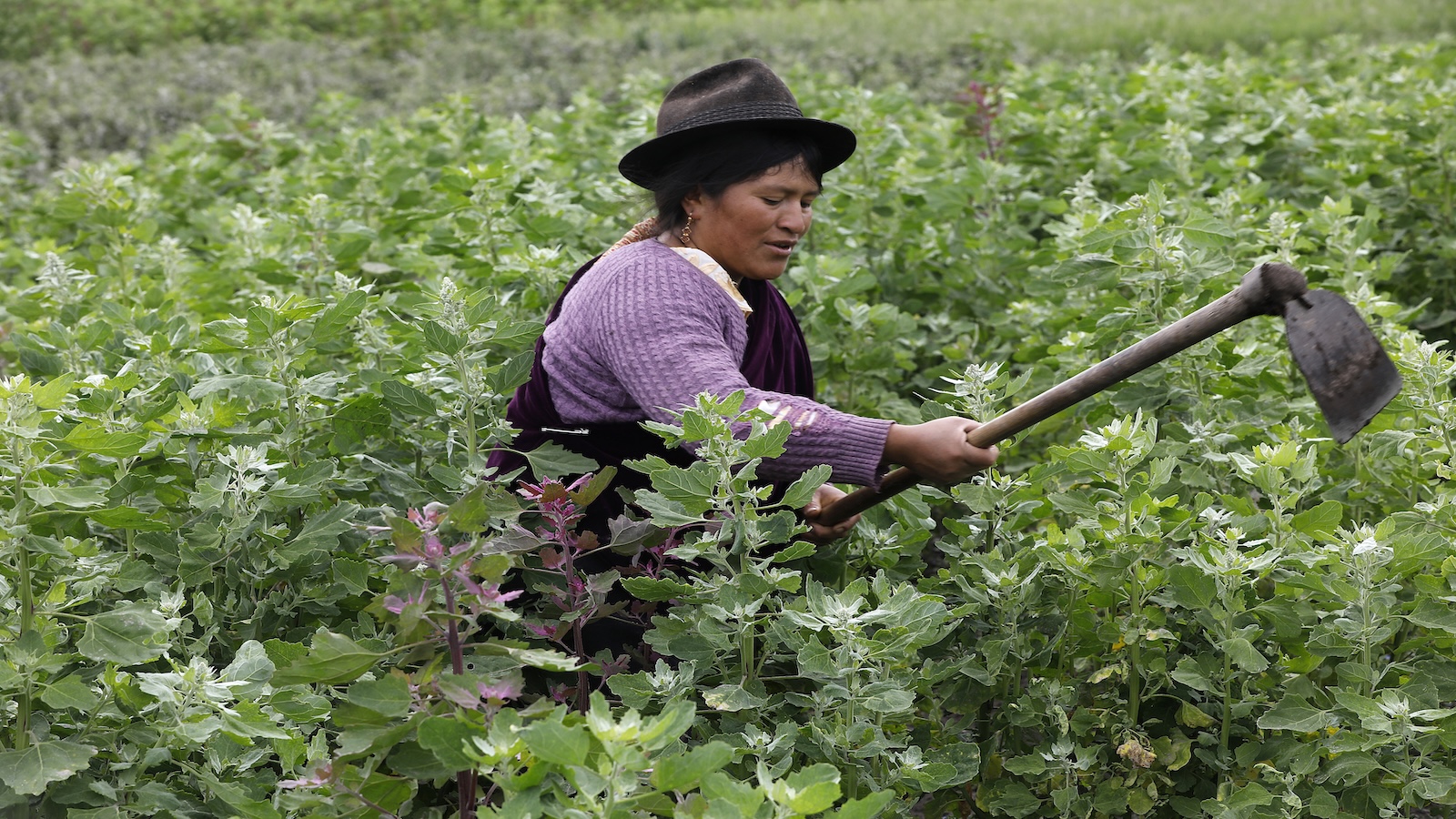
In the last five years, Indigenous agriculture has received attention in academia as an alternative model, though on a smaller scale, to modern farming systems. Research has shown that some traditional farming systems, such as growing maize, beans and squash together, protect soil health, reduce biodiversity loss and support Indigenous knowledge, known as traditional ecological knowledge.
How many of these elements from traditional farming can successfully translate into larger crop production models, when little research defines their economic value, is a question Kamaljit Sangha, a researcher in ecological economics at Charles Darwin University, wanted to explore in a new study published earlier this month in the journal Frontiers in Sustainable Food Systems.
“How do we take it from the perspective where there are holistic and multiple values [of Indigenous farming], which are mostly hidden in the current way of measuring the importance of these food systems?” said Sangha. “The key message we wanted to get out is that if we highlight the non-monetary values of these food systems, we hope that this can attract more attention from policy decision makers and governments to support these indigenous peoples and local communities’ food systems.”
When assessing how many publications include rigorous empirical evidence to measure potential scalability and sustainability for Indigenous farming systems against mainstream agriculture, “there is a gap between advocacy and evidence,” the report read.
In the study, Sangha and Charles Darwin University researchers found that when reviewing 49 published research articles on Indigenous peoples and local communities, known as IPLCs, most literature highlighted the benefits of communities’ traditional farming practices. This comes at a crucial vantage point, as global industrialized agricultural systems are swept up by climate change risks. The study also found a lack of research examining the quantitative productivity and scalability of IPLC farming, an area Sangha hopes to see more literature on in the near future.
It’s estimated that a 35 to 56 percent increase in food production, achieved while suspending land clearing for agricultural use, is vital to feeding a projected 10 billion people by 2050. As climate change has emerged as a threat, food producers are looking to these reliable traditional forms of farming.
As average temperatures climb, climate change is decreasing biodiversity, altering nutritional values and degrading soil health. These effects are disrupting global food production and Indigenous food systems alike. Currently, food systems are responsible for 26 percent of global greenhouse gas emissions.
Sangha said this review couldn’t be done without acknowledging the impact of colonialism on traditional farming. “In countries like Australia, a lot of food practices Indigenous people have carried in the past have been severely impacted, and in many other countries as well,” she said. The expansion of “mainstream food systems” has resulted in changes to Indigenous communities’ diets and the widespread loss of knowledge needed to carry these practices on to future generations.
The study also argues that merging the two systems, rather than viewing them as opposites, is required to tackle the climate crisis. With government investment and targeted policy, IPLC agriculture can build a resilient wall against threats driven by climate change, while modern farming industries can learn from these traditional ways of growing food. Otherwise, both systems face the loss of ecological, economic and cultural resources.
“Beyond market value, IPLC farming systems generate substantial non-market economic contributions by reducing household expenditure on food, medicine, fibre and fuel,” the report read. The review suggests that government funding and support can provide larger food producers with a look into how to address growing challenges caused by climate change and the impacts of fertilizers on soil health.
In 2024, the United Nations Global Biodiversity Framework Fund ratified investments to dedicate 20 percent of its resources to support IPLC initiatives to improve their lands and conserve biodiversity. Yet, a global commitment to specifically fund efforts to conserve traditional food systems is so far missing.
“If we highlight these non-monetary values of these food systems, and they’re important for policy decision-making, we hope that this can attract more attention from policy decision-makers and governments to support these Indigenous peoples and local communities’ food systems,” Sangha said.