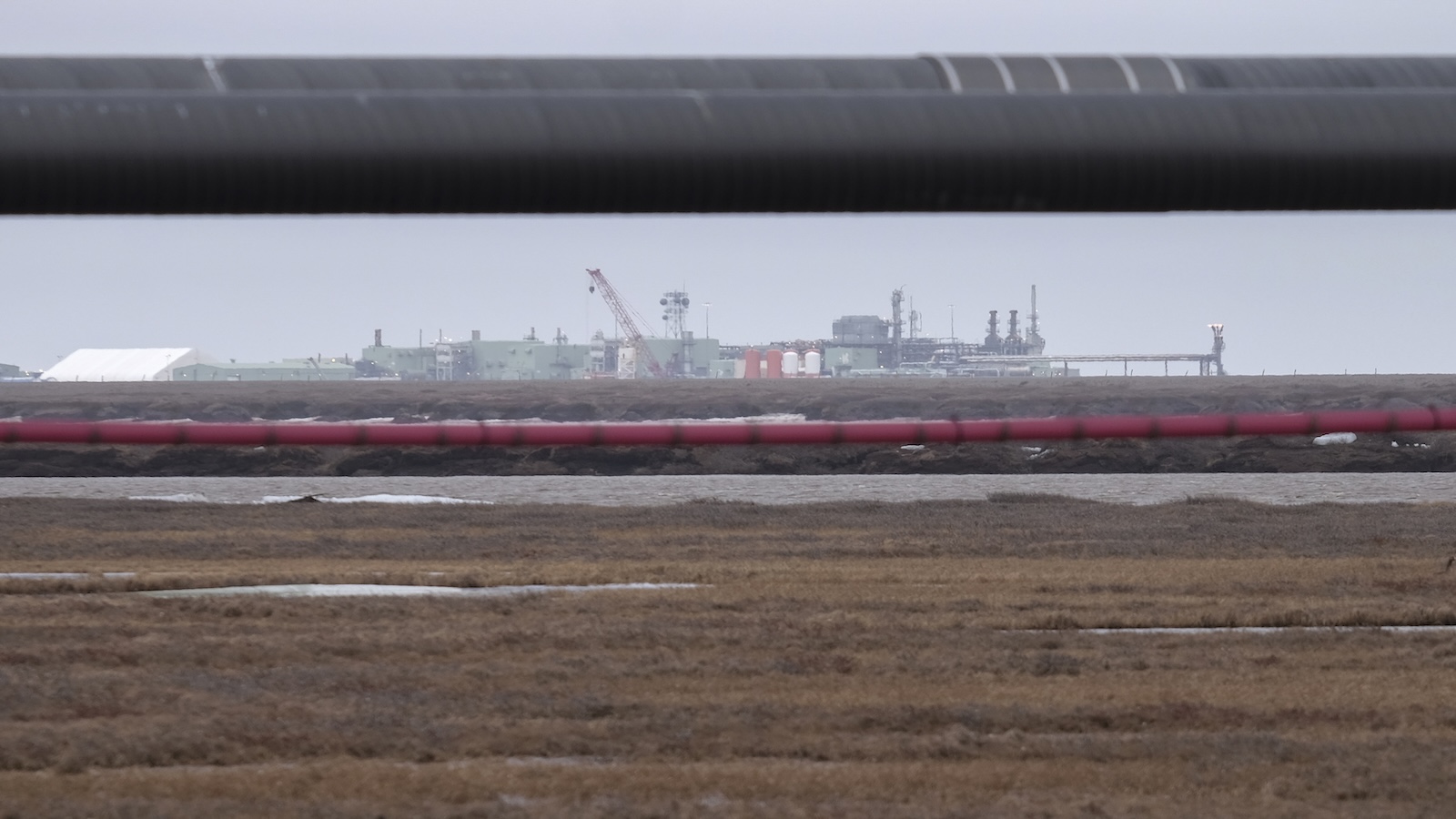
In 2023, when Rosemary Ahtuangaruak, Iñupiaq, was mayor of Nuiqsut, a federally recognized village of 500 residents on Alaska’s North Slope Borough, a gas leak from a nearby oil operation left her community waiting for answers.
“It was only 8 miles from our village. We watched industry evacuate their personnel on ice roads in front of our community while we were left waiting for information about what was going on,” she said. “It was very concerning that through all the efforts we had put forward, we still couldn’t protect our community from the effects of what was happening.”
Nuiqsut sits 4 miles from the boundary of the National Petroleum Reserve in Alaska, known as the NPR-A, and the standoff between oil development and local Indigenous communities has ebbed and flowed over the years.
During Ahtuangaruak’s tenure as mayor in 2023, the Biden administration approved the Willow Project, a ConocoPhillips oil production project that Ahtuangaruak opposed. In late 2024, as a compromise, the Biden administration produced a right-of-way agreement for land around Teshekpuk Lake, the largest lake in the state’s Arctic region, as a way to protect caribou migration, wildlife, and subsistence for Iñupiat communities across the North Slope. This changed last year when the Trump administration announced oil and gas auctions in the NPR-A, last held in 2019, and voided the agreement protecting Teshekpuk Lake to include the area in the sale.
“Generations of leadership have talked about the importance of [Teshekpuk] Lake and the special areas that were created, and the uniqueness of these areas that are not reproducible in other Arctic areas,” said Ahtuangaruak. “And then this administration put profitability over everything else — just taking the reins and leaving life, health and safety, the importance of tradition and culture on the wayside.”
Last week, more than $164 million in leases covering 1.3 million acres of land in NPR-A, near Nuiqsut, were sold to oil companies, including ConocoPhillips, Shell, and Exxon Mobil Corp., as part of the Trump administration’s energy plan. Under the Trump administration’s sweeping budget bill known as the One Big Beautiful Bill Act, the Bureau of Land Management, or BLM, will hold additional auctions in the future until 2035.
But two days before the auction, U.S. District Judge Sharon Gleason issued a preliminary injunction in a case brought by Nuiqsut Trilateral Inc., a nonprofit created by the Nuiqsut local governments and the Kuukpik Corporation to protect Teshekpuk Lake. While initial claims cited the lake as a place of cultural significance to the Iñupiat, Gleason said property rights, rather than “esoteric” claims on environmental or cultural grounds, supported a more compelling argument to reinstate the right-of-way agreement before the BLM sale as the Nuiqsut Trilateral case continues.
On the day of the auction, several oil companies, including ConocoPhillips, purchased almost a quarter of a million acres near Teshekpuk Lake despite the injunction. According to Andy Moderow, senior policy director at the Alaska Wilderness League, it’s uncertain how the Trump administration will handle these leases.
“I don’t think industries will treat any place as off limits if they can make profits there, and that’s why we’re so concerned about what we’re seeing from the Trump administration and the rush to hold the sale and cancel easements designed to put communities in the driver’s seat of what they want to see near their communities,” said Moderow.
Ahtuangaruak and other Nuiqsut residents argue that environmental and cultural issues are inseparable from the impacts of oil development. Nauri Simmonds, Iñupiaq, directs Sovereign Iñupiat for a Living Arctic, a grassroots nonprofit, and Ahtuangaruak leads Grandmothers Growing Goodness, another small nonprofit. Both organizations focus on the health and ecological tolls of oil development and the threat it poses to Iñupiat life.
Both Ahtuangaruak and Simmonds say a community health study has not been conducted for the village to document trends driven by nearby development. “We’re decades past the ability to do a baseline study at this point,” said Simmonds, who has pushed for research on impacts to community maternal health.
A 2017 industry report prepared by ConocoPhillips found that oil field operations release 1.7 million pounds of nitrous oxide into the air each year. The chemical is linked to respiratory problems, mental disorders, and vitamin deficiencies. “There are health effects that come from these emissions. Is that why we’re seeing the increase in neurological disorders around our community?” Ahtuangaruak said. “These are important questions we keep asking, but nobody’s giving us answers except for more and more development.”
“The perspectives of Alaska Native Tribes and Alaska Native Corporations on the North Slope have been critical to the Bureau of Land Management’s work to date to unlock the potential of the National Petroleum Reserve in Alaska,” the Department of Energy said in a statement.
Simmonds says the oil industry’s influence in the North Slope is inescapable, especially when it helps pay for social services and is a top employer in villages. Approximately 46 percent of workers in the North Slope work in the industry. Local Alaska Native corporations also support industry projects as a way to generate revenue and distribute dividends to their shareholders under the Alaska Native Claims Settlement Act, especially in communities that face high rates of poverty.
“When you’re in that particular sort of level of survival mode, living at poverty levels and worrying about the next rent payment, it’s propagated that these projects are going to make bigger dividends,” said Simmonds. “I think some people, even in Nuiqsut, are recently starting to give credit to this idea that their physical health is being impacted by the industry.”