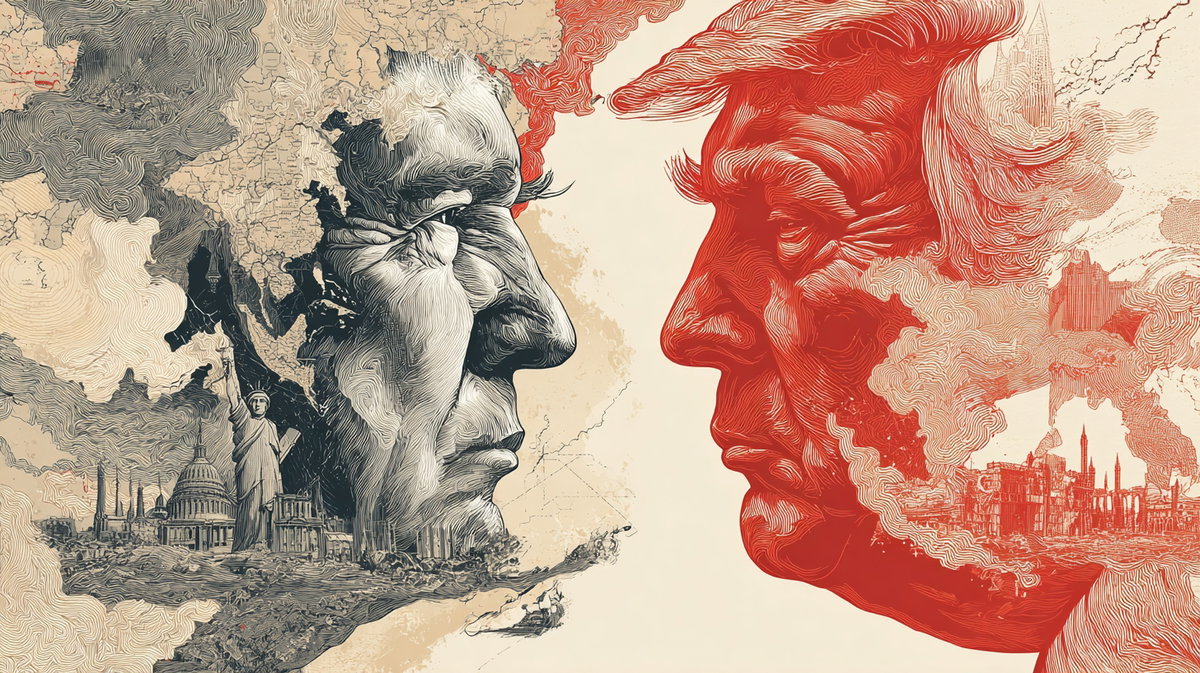
- Strategy versus reality: Trump’s November 2025 National Security Strategy laid out a clear path to Middle East disengagement — then the administration launched a war against Iran barely three months later.
- Iran is no Iraq: Unlike previous US adversaries in the region, Iran is a civilisation-state with deep reserves of missiles, drones, and national cohesion, making a quick or decisive victory implausible.
- Expulsion from the Gulf: With US bases partly destroyed and the Strait of Hormuz closed to western shipping, the United States may already have lost its military foothold in the Persian Gulf — whether or not Washington acknowledges it.
- A government at war with itself: The chasm between the NSS and actual policy raises fundamental questions about whether the US government can still function as a coherent strategic actor.
- The costliest route to the inevitable: Even if the US ultimately withdraws from the Middle East as the strategy envisaged, it will now do so on far worse terms — humiliated, economically damaged, and stripped of allies.
The National Security Strategy that US President Donald Trump’s administration published last November was remarkable, far-reaching, and unlike any other NSS that has appeared since George H.W. Bush “kicked the Vietnam syndrome” in the early 1990s. In the cover letter that bears his signature, Trump described the document as a “roadmap to ensure that America remains the greatest and most successful nation in human history.”
Trump’s NSS anchors America’s greatness and success in its founding ideals. “In the Declaration of Independence, America’s founders laid down a clear preference for non-interventionism in the affairs of other nations.” But, alas, “our elites badly miscalculated America’s willingness to shoulder forever global burdens to which the American people saw no connection to the national interest.” They “allowed allies and partners to offload the cost of their defense onto the American people,” and “sometimes to suck us into conflicts and controversies central to their interests but peripheral or irrelevant to our own.”
Until last month, Trump’s policies seemed to be working toward disengagement from the Middle East. The NSS had laid this out clearly: “As this Administration rescinds or eases restrictive energy policies and American energy production ramps up, America’s historic reason for focusing on the Middle East will recede.”
There were, of course, qualifications: “America will always have core interests in ensuring that Gulf energy supplies do not fall into the hands of an outright enemy, that the Strait of Hormuz remain open.” But “we can and must address this threat ideologically and militarily without decades of fruitless ‘nation-building’ wars.”
Smart, Progressive Thinking on the Big Issues of Our Time
Join 20,000+ informed readers worldwide who trust Social Europe for smart, progressive analysis of politics, economy, and society — free.
Moreover, the era when the “Middle East dominated American foreign policy in both long-term planning and day-to-day execution” has ended, in part because the region “is no longer the constant irritant, and potential source of imminent catastrophe, that it once was.” Israel’s security was mentioned, of course, but only in passing. Instead, the authors proclaimed, the Middle East is “emerging as a place of partnership, friendship, and investment – a trend that should be welcomed and encouraged.”
Yet despite these stirring words, the United States on February 28 attacked Iran, a country 4.6 times the size of Germany, with more than 90 million people. The two Iraq wars may have been larger (so far), but they were against a rather puny opponent. Iran, by contrast, is a civilization-state with a deep reserve of missiles, drones, and patriotic and religious commitment. To attack it is to launch the mother of all forever wars.
Of course, one could dismiss Trump’s NSS as yet another dishonest statement cooked up to mislead the American public – and many commentators did exactly that. But what purpose would this have served? If the goal was to get through the 2026 midterm elections by reaffirming Trump’s commitment to the promises he made during his last campaign, it makes no sense to expose the fraud just three months after the document’s release and eight months before Americans head to the polls.
Moreover, the quality of the document suggests that those who composed it were serious people. This is no typical Trump campaign speech or press gaggle. Because such documents must be crafted and reviewed, written and rewritten, their importance lies precisely in the fact that they must overcome internal opposition before a president’s signature is added. This NSS was a largely coherent articulation of a distinct and important worldview: it set out a new direction for America, renouncing the NATO-centric, global-policeman, Pax Americana rhetoric of every administration since the collapse of the Soviet Union.
Yet here we are, at war again in the Middle East. It is not going according to plan, if there even was one. The Strait of Hormuz is closed to US, European, Japanese, South Korean, and Israeli shipping. World oil supplies have fallen, and there will be severe shortages of gas, fertilizer, and, in due course, food. US bases in the Persian Gulf region have been partly destroyed or rendered unusable.
As matters stand, America will never be able to return to those bases, because Iran shows no sign of bending before the bombs, nor will it run short of drones and missiles. Nor is there any chance that a few thousand Marines will turn the tide. To put it more bluntly, the US has already been expelled, once and for all, from the Gulf – though this may not yet have dawned on US officials or the public.
How can we explain the vast gap between strategy and policy? One possibility is that the US government is no longer really a government, being unable to devise, announce, implement, and execute a strategy – something that real governments are supposed to do. A second interpretation is that the government the US did have, until three months ago, has since been replaced, through a silent coup d’état, with a different regime that is using Trump as a figurehead. Something like Venezuela, without the helicopters.
The third possibility is that the US will eventually end up where the November 2025 NSS wanted it to go. That is, it will be forced out of the Middle East, obliged to recognize the limits and obsolescence of US power, and made to respect the sovereignty and autonomy of other nation-states. This would not be the worst result. But it would have been much easier to arrive at it directly, without the humiliation of a brutal military defeat, the elimination of allies, and the lasting damage to the global economy.
Help Keep Social Europe Free for Everyone
We believe quality ideas should be accessible to all — no paywalls, no barriers. Your support keeps Social Europe free and independent, funding the thought leadership, opinion, and analysis that sparks real change.
Social Europe Supporter
— €4.75/month
Help sustain free, independent publishing for our global community.
Social Europe Advocate
— €9.50/month
Go further: fuel more ideas and more reach.
Social Europe Champion
— €19/month
Make the biggest impact — help us grow, innovate, and amplify change.