The idea of a road trip organised around trials and hearings at courthouses across the US had been in my head for years. Last autumn I found myself in a position to make it a reality. I had a month. My aim was to attend as many different kinds of criminal and civil hearing in as many parts of the country as I could. Some courts post their weekly dockets online but most don’t, so there was little scope for detailed planning. A helpful clerk in Deadwood, South Dakota told me of a jury trial that was almost certain to go ahead early in my time frame (most trials are plea-bargained out), and I had to be in New Orleans for a talk three weeks later. That gave me the bare bones of an itinerary.
I left New York at the beginning of October and headed for Chicago. The day before I arrived, ICE agents conducted a raid on a South Side apartment building, with agents rappelling from a Black Hawk helicopter and zip-tying children. Given the mayhem I’d seen on TV, the city was surprisingly calm. Families were out enjoying the sunshine in Millennium Park. Office workers strolled in shirtsleeves. Even the Chicago Immigration Court, my first destination, seemed oddly quiet. I had to pass through a magnetometer, but nobody asked what I was doing and there were no agents lurking in corridors to snatch deportable aliens, as had recently started happening in New York.
I’d had some misgivings about my project before setting off, mostly to do with the voyeuristic element. What I hadn’t imagined was the possibility of my presence affecting anyone but myself. It became apparent the moment I stepped inside the windowless courtroom. A dozen adults and children, all Hispanic, turned to me with looks of terror, and it dawned on me that, with my shaved head and pale skin, I must look like some ICE body snatcher. Mortified, I slid onto one of the wooden benches and tried to make myself invisible.
It was a master calendar hearing (the first stage in removal proceedings) and hybrid, with participants appearing remotely as well as in person. The judge was swearing in a Russian interpreter on speakerphone while a young couple from Kyrgyzstan appeared huddled on a screen. After some back and forth, the judge gave the couple’s attorney a date for 2028, when ‘their comments about their government’ would be assessed. The Department of Homeland Security, in the person of a young attorney in the courtroom, offered no objection.
Similar hearings followed at a clip. Some of the technicalities went over my head, but the gist was that the respondents, while admitting to being in the country illegally, were asking for asylum. Until recently, America’s conflicted attitude to immigration expressed itself in lengthy procedures that offered undocumented migrants some grounds for hope. Under Trump, judges are being pressured to dismiss cases altogether, a cynical tactic that exposes migrants to the body snatchers, and around 150 have been sacked (immigration judges are not part of the judiciary proper, but employees of the Department of Justice). Here in Chicago, both the judge and DHS lawyer appeared to be playing by the old rules, setting follow-up appearances far into the future.
The families on the benches next to me were dressed in their finest and their children sat in absolute silence. Speaking to them through an interpreter, the judge told them they’d been summoned because the government ‘thinks you shouldn’t be in the country for one reason or another’. They had a right to representation, he continued, though they would have to pay for it themselves. ‘Raise your hands if you don’t want time to look for an attorney, and just want to talk about removal from the country today.’ No hands went up and the judge set an appearance date for the following year, wishing them luck.
A woman who’d been sitting with a little boy in a braided pink suit said: ‘I just want to know. Do we have a removal order against us today?’ The judge repeated patiently that no order would be made until their next appearance.
As the room emptied out, he turned to me. ‘You’re an observer, I assume?’ I nodded, pleased by the designation, which had a reassuringly official ring.
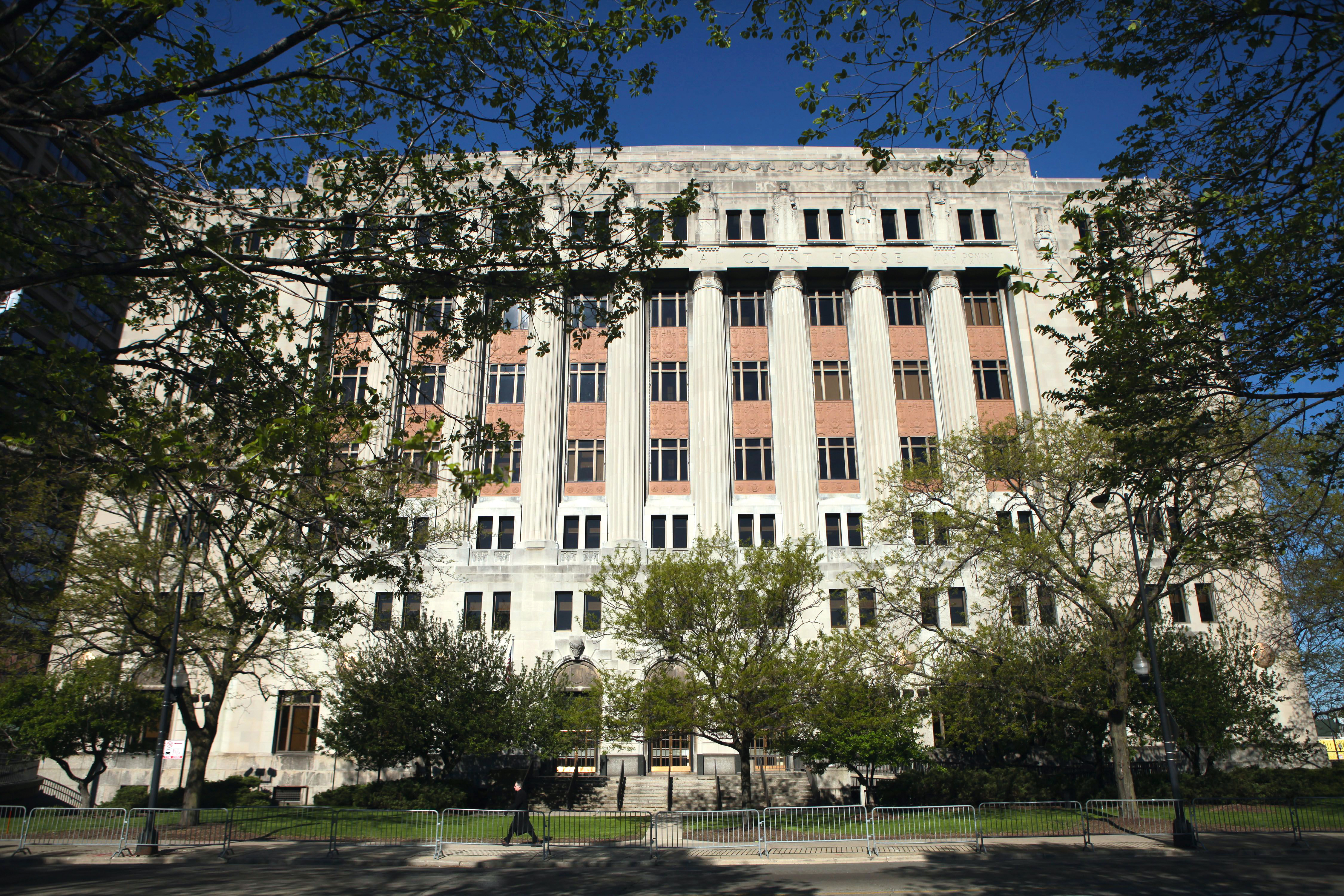
Cook County Criminal Court in Chicago
The next morning I took a bus to the Cook County Criminal Court, a fifty-minute bus ride from the Loop and a world away from its corporate towers. There were dozens of courtrooms inside the building and I went to the clerk’s office to see if I could find out what was happening where. ‘We have seven floors full of courtrooms,’ a bemused woman informed me. ‘I can’t tell you what is going on in this one or that one. Could be anything going on, or nothing. The judge could have called a recess because they need the bathroom, or just because they are the judge. All I can tell you is I’ve heard that the higher the floor, the more senior the judge. But it could be homicide, child pornography, anything, going on. This is the criminal division.’
I went up to the fourth floor and chose a court at random. The judge was questioning a frail-looking man in a T-shirt about his failure to show up for an assessment by the mental health programme he was trying to join.
‘They told me they was going to call me,’ he said. ‘I haven’t received a call.’
‘Well, you’re the one who’s trying to get into this programme, so who should be calling whom?’
‘I should.’
‘Also, you need to finish paying restitution if you want your victims to consent to you getting into the programme.’
The man assured the judge he was going to do this, though he didn’t look as if he had two cents to rub together.
‘All right, let’s see you next Friday.’
An even frailer man came forward. Looking up from her files, the judge smiled. ‘I see you’re in CARE’ – another mental health programme – ‘and working for Clean Slate. How do you feel about getting this job?’
‘Feel good.’
‘You’ve come a long way in a short time.’
‘Yes ma’am.’
‘Sir, you’re doing well. These are all good things.’
Next was a teenager in a white leather jacket, accompanied by his attorney. He’d missed an appearance the previous week. ‘He was feeling very unsafe living with his father, so he moved to his mother, then contacted me to say he could come in, but –’
‘I appreciate you may be having difficulties at home,’ the judge interrupted, addressing the defendant. ‘But the charge is of unlawfully having a weapon.’
At issue was the question of whether the boy could stay on release pending his trial. The judge expressed concern about the combination of guns and an ‘unsafe home environment’. But she seemed reluctant to lock him up. A further meeting was scheduled.
Courtroom encounters present you with just a fragment of a person’s story, from which you may or may not be inclined to infer the rest. On the face of it, these particular shards didn’t add up to much, and yet I felt encouraged in my belief that courts were still places where, to adapt a phrase of Saul Bellow’s, ‘reality instruction’ was to be had. The first time I was inside a courtroom was at the Old Bailey, in my twenties. I had dropped in on a whim and found myself lost in the exploits of a Pinteresque young crook who’d got the pampered son of a Harley Street doctor into his clutches and pressured him into using his father’s money to finance a long spree of luxury shopping and drug bingeing. When asked how he’d persuaded his victim to make yet another raid on the family coffers, the young man said: ‘I speeched him, didn’t I?’ I was never good at striking up conversation with strangers – a major drawback for an aspiring writer – but I realised that here was an arena where an endless variety of characters would reveal their stories to you without your having to utter a word.
The landscape grew flatter as I crossed Illinois and entered Iowa, with fewer trees and rows of corn reaching into the distance. I’d booked a room at an inn in the Amana Colonies, a farming community twenty miles from Iowa City, founded by refugee German Pietists in the mid-1800s. The owner had told me they were having a bonfire for guests that night and I had visions of high-minded talk among kindred spirits drawn to the rich history of American utopianism.
What I’d missed was that the bonfire was part of an Oktoberfest. Beer tents had been set up and were filled with families eating sausages and potato salad, and couples dancing to oompah music. Men with tankards dangling from their lederhosen took turns hurling kegs on a green. I sat down with a plate of bratwurst at an outdoor table. Next to me a man in a plastic Tyrol hat and a T-shirt with the words ‘This May Contain Beer’ stretched over his belly was ribbing some women in dirndls about an event they were going on to. It was all very jolly, a reminder of the element of German culture and humour in the American mix (something you can easily forget in New York) and beyond that, of how little I really knew the country I’d lived in for more than half my life. That hadn’t seemed problematic before, but recently (like many people lucky enough to have other options) I had begun to wonder what it is that keeps me here.
I took the scenic route towards Nebraska. White wooden farmhouses among clusters of silos appeared at regular intervals, along with ivied chimneys and other tenderly preserved ruins of bygone industry. Together they conveyed a settled, agreeable way of life, one that clearly worked well for those who enjoyed it. ‘We Know Clean!’ a sign at a rest stop declared, and it was true that everything, from the curving plough-lines in the fields to the filigreed gantries on the silos, looked amazingly clean and orderly. I could see the domed sky meet the land far ahead along the road and felt as if I were driving through an enormous glass paperweight.
I stopped for the night in Omaha, a city I’d put on my itinerary largely because I had never imagined visiting it. In the morning I went to the Douglas County District Court, where a bench trial (i.e. no jury) was just starting. The structure of a state court system usually echoes that of the federal system, with trial courts, appeal courts and a supreme court. Unlike the federal courts, however, where judges are appointed by the president, state courts have a mixture of elected and locally appointed judges, who sometimes serve fixed terms, and the jurisdiction of a given court will vary from state to state. In Omaha, a witness was describing an incident from earlier that year. He’d been eating lunch when a man approached him asking for food and money. ‘I told him I wanted to relax,’ he recalled on the stand. He’d then seen the man enter several nearby businesses, including a restaurant where he set off the sprinkler system the witness had just installed. The witness called the cops. His 911 tape was played. ‘There’s like a drunk, homeless Black man keeps entering businesses here … He set off the fire suppressants. I didn’t see any weapon, but I don’t want to get too close to the dude … He looked all jacked up.’
The accused (I’ll call him Fletcher), dressed in orange prison scrubs, was acting as his own defence. He’d mastered some lawyerly phrases and quickly scored a point with them. ‘Objection! Did you see me pull that alarm?’
‘I did not.’
‘No further questions!’
Unfortunately, he spoiled the effect by asking again: ‘Did you see me with your own eyes pull that particular fire alarm?’
‘No, but it wasn’t pulled before you went in and it was afterwards.’
The police officer who’d responded to the 911 call took the stand. She testified that she and her partner had found Fletcher at the back of the restaurant and been met by ‘a very rude demeanour’. ‘I was advised by Mr Fletcher: “Fuck you bitch.”’
Her bodycam footage was offered into evidence.
‘Any objection, Mr Fletcher?’ the judge asked.
Fletcher produced another courtroom phrase. ‘No, I have no objection at this time.’
He was visibly intoxicated in the bodycam footage, stumbling around a patch of waste ground and swearing colourfully.
‘Hi, how are you?’ the officer greeted him, putting on latex gloves. ‘Why’d you pull the fire alarm?’
‘What am I charged with?’
‘Disorderly conduct.’
She cuffed and frisked him.
‘What did you do today, besides drink?’ she asked. She and her partner began removing and bagging the copious contents of his pockets.
‘You’ve got a lot of stuff on you!’
‘I got a pickle in there,’ he muttered.
‘You do have a pickle!’ she said, holding it up.
She then talked to the witness who’d installed the sprinkler system. ‘I didn’t go in after him,’ he told her, ‘because I don’t know what he’s got and I don’t want to get diseased or anything.’ He showed her the damage in the restaurant.
‘What a mess!’ she exclaimed. ‘This is such a nice, up-and-coming area too.’
The real issue, the man told her, wasn’t the mess but the cost of recharging the sprinkler system, around $6000. The sum surprised her, and on the basis of it – still with the same amused, motherly air – she amended the disorderly conduct charge to a felony charge of ‘criminal mischief, $5000 or more’.
The judge called a recess. After he and the prosecutor had left the courtroom, the deputy guarding Fletcher asked him about the incident. ‘I never went into the building,’ Fletcher told him. ‘I was just down by the dumpster there.’
The deputy shrugged. ‘I don’t have a dog in the race.’
‘I never was in the restaurant, period.’
The judge returned, and now it was Fletcher’s turn to question the officer.
‘Your probable cause to detain me was disorderly conduct,’ he began. For a moment he seemed to be laying the ground for a procedural point about the charge being amended, but he quickly lost his thread and began spinning out random Perry Mason phrases – ‘Did you or did you not? … Yes or no? … Let me rephrase …’ Changing tack, he offered to pay restitution for any damage he’d caused rather than go to prison, while again protesting that he hadn’t been in the restaurant. The judge stopped him, pointing out that he couldn’t testify while he was also questioning a witness, and asked whether he wanted to take the stand. He didn’t, and the state gave its closing arguments. Fletcher began talking again, more frantically now, but the judge cut him off.
‘Sir, you already made your closing statement. The court finds that the state’s witnesses are credible. I am going to find you guilty.’
A sentencing hearing was scheduled, and Fletcher was led away, loudly demanding a restitution hearing.
As I stood up to leave, the judge came over and asked if I had ‘any investment in the case’. ‘Just an observer,’ I replied. He nodded affably. It was unusual for defendants to act pro se, he said, and it always presented challenges. He’d originally set bond at $200, keeping it deliberately low, but Fletcher hadn’t paid. ‘He’s been having trouble in jail,’ he said, adding gloomily: ‘He’s a danger to himself.’ He and the prosecutor were both Black, and I wondered what they’d made of the witness’s barely disguised bigotry.
Idrove north-west, passing through a landscape of scrubby cattle pastures, stockyards, freight depots, massive grain storage facilities. Night had fallen by the time I reached Mitchell, South Dakota, where a felony drunk-driving court was scheduled to take place at the Public Safety Centre the following morning.
The centrality of the car to life in the US isn’t news, but less well-documented is the necessity of driving to the many Americans eking out a precarious existence beyond major cities. It was on stark display in the cases at the Public Safety Centre, as was the difficult position of the judge, faced with the need to calibrate suitable penalties without inflicting total disaster. A woman who’d been caught at a sobriety checkpoint came up for sentencing. She had a good job at a plastics factory sixty miles away, but this was her second DUI, and despite her promise to give up ‘these very bad habits of mine’, the judge had no choice but to revoke her licence. In a precisely measured gesture of mercy, he granted her a special permit for driving to work.
‘Do you have children?’
‘No, sir.’
‘Then I can’t allow you to drive for groceries or gas. You’ll have to find someone to do that for you.’
Next up was a tough-looking man in baggy jeans, charged with obstructing a police officer as well as DUI. He, too, had a job some distance away, which he was anxious to keep. According to the prosecutor, he’d tried to break out of a patrol car after being stopped for speeding. He admitted this, and it was easy enough to picture him drunk and unruly. But it turned out his four-year-old son was in the car he’d been driving, and he’d tried to free himself after being told that social services were coming to take the child away. What’s more, according to the defence, he hadn’t been drunk and had only ‘admitted’ to this as part of a plea deal. There was another twist: earlier that day, the man had discovered that his father had taken the boy to a casino. He’d stormed into the casino, grabbed the child and driven off in a state of high agitation, hence the speeding.
This rapid reframing of events, with accompanying shifts and reversals of meaning, was another feature of these hearings, forcing me up against my prejudices and preconceptions. Years ago I’d attended a domestic violence trial where a man was accused of throttling his partner and smashing a vase over her head. It seemed unambiguous until the partner’s ex-husband came on to testify that she’d twice been found to have brought false allegations of assault against him, faking her injuries. But then it emerged that this same ex-husband had recently accused another partner of making similar false allegations. It continued like this for two days, each seemingly solid piece of evidence demolished by the next.
The judge let the man keep his licence. ‘But I believe his conduct deserves a weekend in jail, if only to send the message: “Don’t act like an idiot.”’
Iwould have stayed in Mitchell for longer but I had to get to Deadwood for my jury trial, due to start the next morning. Swathes of empty, rolling grassland flanked the road as I continued west, then huge tilted plateaus surged out of the ground like rock tsunamis.
Deadwood, high in the Black Hills, was off-season, chilly and a bit desolate. Slot machines winked in the empty hotel lobbies and restored saloons. Giant silver motorcycles stood in darkened storefront windows. Harley Davidson holds a huge rally nearby every summer, flooding the place with half a million bikers. A big ad for the company hung over the far end of town, proclaiming ‘Our Roads. Our Rules. Let’s Ride.’
I got a room in a rickety motel and walked down Main Street to an upstairs restaurant someone had recommended. The cavernous room was empty except for a life-sized figure of Frank Sinatra and a solitary waiter drinking at a banquette. He stood up as I entered and promptly keeled over, landing flat on his face. Recovering himself, he brought me the wrong drink followed by the wrong meal. I saw him the next morning at the courthouse, sitting on a bench outside the probation office. I nodded, but he didn’t appear to remember me.
Jury selection had just started. Like so much else in the running of these county courts, the process appeared to operate by local rules. Instead of systematic individual questioning, it was conducted en masse as a guided conversation, quickly turning into an informal symposium on America’s handling of law and order. ‘This is the most democratic process you’ll ever take part in,’ the defence attorney began. Indicating that the case was going to involve fentanyl possession and ‘false personification’, he asked if anyone had strong opinions about the criminal justice system. Hands flew up.
‘It’s very flawed,’ a man began. He’d recently been pulled over for speeding, only to be told there was a warrant out for him from an incident three years earlier. ‘You can summon me here for jury duty,’ he complained, ‘but you can’t send me a letter telling me I’ve been charged!’ Another man volunteered that he’d been assaulted in Texas by three police officers. ‘A godly system is what we need,’ he declared. ‘I think the system itself is fine,’ a retired federal agent said. ‘The problem is, when you run into people who can’t be objective.’ An older man demurred. ‘I think it’s a little bit flawed. Not everybody gets the same treatment.’ A woman, the sister of a public defender, took up the point. ‘You say everyone has a right to a trial, but not everyone can afford a trial, so they are coerced into a plea bargain.’
Nodding politely at each comment, the lawyer moved on to the topic of presumption of innocence and the phrase ‘beyond reasonable doubt’. He explained that this standard differed from ‘the preponderance of evidence’ – the standard for civil cases – ‘where only money, not freedom, is at stake’. As he was reminding jurors that the state had the sole burden of proof, he was interrupted by the man who’d been beaten up in Texas. ‘If the state has full burden, then why are you here? If he’s presumed innocent? My point is, you’re here to say something to sway us. It doesn’t make sense to me. You are here to prove something that’s already presumed.’
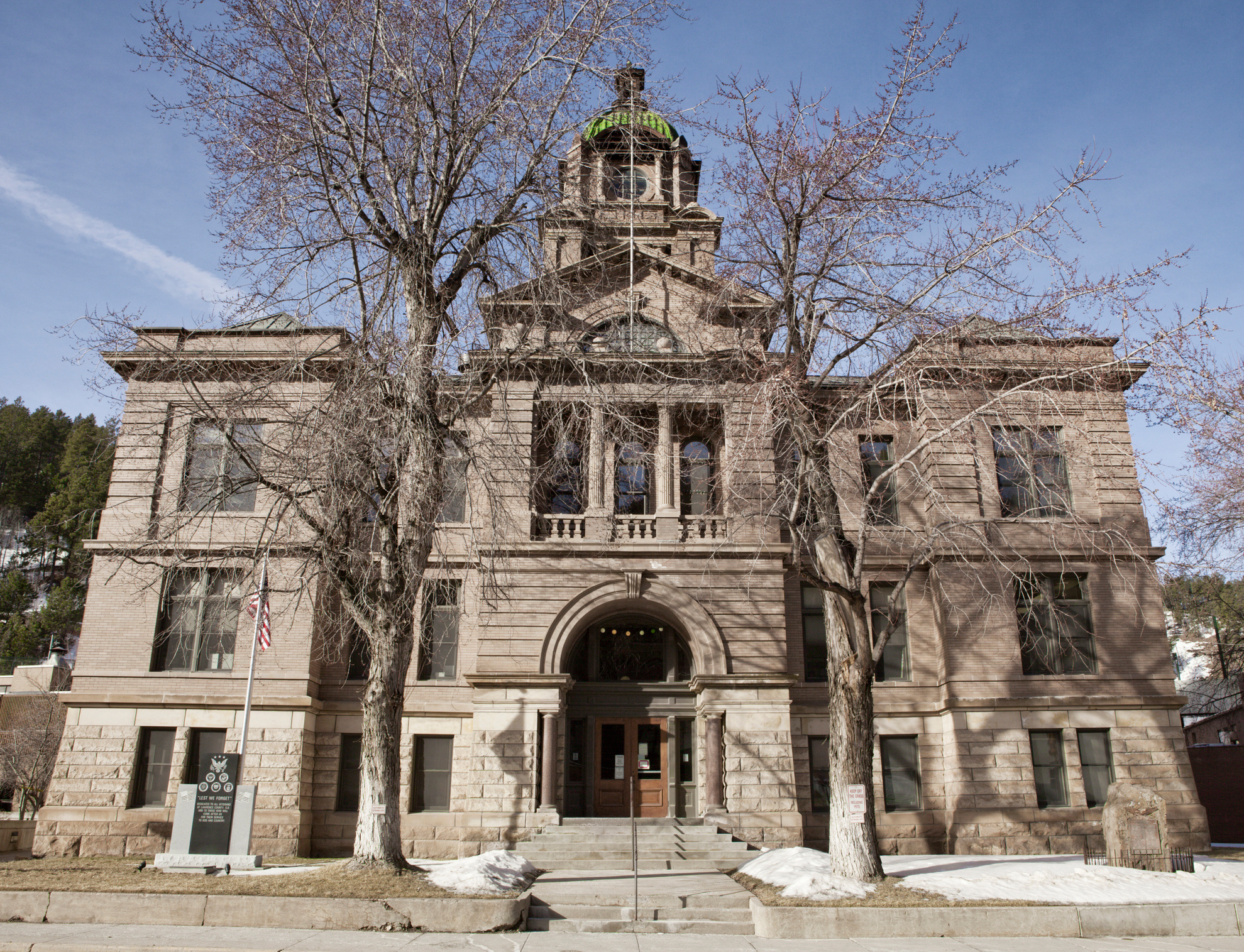
Lawrence County Courthouse in Deadwood
The discussion grew more animated. Conflicted feelings about the system emerged, with the tension between tough-on-crime sentiment and deep distrust of law enforcement never far from the surface. It wasn’t the repartee of David Milch’s cod-Shakespearean TV series Deadwood, but it was impressive. These people were unafraid to state the obvious, or to test established principles against their own instincts. It seemed to me that the traditional regard for civic responsibility was at least latent here. These were people who clearly saw themselves, in de Tocqueville’s distinction, as ‘citizens’ rather than ‘subjects’ (being both, I’ve felt the revelatory force of the distinction ever since I first encountered it). It wasn’t lost on me that a significant gap existed between the good faith exchanges here at the Lawrence County Courthouse, and the brazenly bad faith goings-on at the Justice Department itself. Only that morning, a young insurance lawyer with no prosecutorial experience, appointed specifically to pursue the president’s private vendettas, had brought charges against the New York attorney general, Letitia James, who had investigated Trump for fraud.
A recess was called and the chosen jurors were led off for lunch at the Silverado Buffet. I was looking for somewhere to have lunch myself when the judge fell in step with me. He seemed glad of my interest in his court and began volunteering things about the case, things that I wouldn’t have presumed to ask about. It was the defendant’s fifth consecutive trial on charges stemming from an incident several years earlier. Action on those charges had been interrupted by a three-year prison term in Wyoming for a separate crime, after which he’d been re-arrested in South Dakota. Charges of this type would normally be pleaded out, but this would entail recognising the US constitution, which, as the judge explained, ran counter to the accused man’s beliefs. It turned out that Christopher Elman, the defendant, was a sovereign citizen.
I’d only vaguely heard of this newish category of far-right dissidence, an offshoot of the militia and Patriot movements, that viewed the constitution as a fraudulent or (at best) purely commercial document, created by corporate interests and with no legal authority. Members accordingly considered themselves exempt from US law and taxation. According to the judge, the movement had been growing in recent years, with its adherents numbering in the hundreds of thousands, and was becoming a problem at courthouses. ‘Part of why they’re hard to deal with is they believe they have full rights over their bodies, including the right to destroy them with drugs, which means a lot of them are pretty cracked. At the same time they can be very sneaky. You’ll see. They recognise sheriffs but not judges. They’ll cite laws going back to Hammurabi and they’ll file hundred-thousand-word motions downloaded from conspiracy sites, which we have to read in their entirety. They can wear down a DA into saying: “I’ll just charge a misdemeanour to get rid of him.” Sometimes they’ll root around in public records and put a lien on a judge’s house, which can be a problem when it comes time to sell.’
Elman, a very tall man with a trimmed beard and crisply ironed shirt, had been arrested after a traffic stop in Deadwood in 2021. He didn’t have a licence on him and appeared evasive about his date of birth, revising it under questioning from 1986 to 1987. He also changed his mind about his middle name, saying he’d given a false one because he was afraid there was a warrant out for him in nearby Crook City. Suspicious, the officer searched the car (having been given consent) and found what turned out to be fentanyl. Booked and released, Elman was arrested again a month later when it was discovered that the name and date of birth he’d settled on were in fact those of his brother. A count of impersonation with intent to deceive law enforcement was added to his charges.
That was about all there was to the case, but as so often at these hearings, it turned out to be more than the sum of its parts. Elman started out in sovereign posture, insisting that his attorney enter a lien into evidence. This, his attorney somewhat reluctantly attempted to do. It wasn’t a lien against the judge’s property, but, mysteriously, against the defendant himself, premised on the fact that his name had been capitalised in court documents. Passing over the question of what any of this meant, the judge pointed out that the lien wasn’t captioned, so wasn’t a formal court document and therefore had no legal meaning. This allowed him to deny its admission.
After that the trial proceeded more or less conventionally for the rest of the day, with the prosecutor bringing on the usual roster of arresting officers, dispatch operators, lab technicians and other officials to establish the chain of events, while Elman’s attorney did his best to pick holes in their accounts. He fought hard for his client, casting doubt on the legality of the original traffic stop and accusing the police chief of lying to cover up the sloppiness. If nothing else, he was proof that no trouble or expense was being spared to ensure that Elman got a fair trial.
Ispent the evening watching clips of sovereign citizens being arrested (a popular genre on YouTube, it turns out). Most of them were mild individuals, with a put-upon, slightly wheedling air of just wanting to be left alone, though this was undermined by a stubborn refusal to give straight answers to even the simplest questions. Many were women, and despite the movement’s links to white supremacy groups, several were Black (‘Moorish’ in the group’s lingo). They all carried large binders full of documents, which they expected the cops who’d pulled them over to read before asking why, for instance, they were driving with no plates. When that didn’t work, they’d come out with mantras they seemed to believe would ward off arrest (‘I’m not driving, I’m travelling,’ was a common one) and when the cops lost patience and dragged them off in handcuffs, they would often burst into tears, as if they’d genuinely expected things to go differently.
Elman, at all times quiet and respectful, didn’t seem out for confrontation, but from what the judge had told me, he was hardly the mild type. The three-year sentence he’d just served was the result of a police chase in which he’d jumped the highway and driven against the oncoming traffic at a hundred miles an hour for fifteen minutes before reversing at high speed down an off-ramp and crashing.
He began with another attempt to get his lien read into the record, and for a few minutes his lawyer was allowed to read from it. Buried in a blizzard of legalese was a claim for $100 million, connected to the capitalising of Elman’s name in court documents. Under sovereign citizen ‘theory’, it emerged, capitalisation was an admission by the government that you were being transacted with purely in your capacity as a commercial entity, rather than as a citizen. Questioned politely by the judge, Elman acknowledged that the purpose of the document was to guarantee that ‘all monies and trade rights’ resulting from his case would flow to him. This time, while still refusing to accept the document, the judge allowed its intentions to be read into the record, ‘so that it’s there for the Supreme Court, should you appeal.’
In the next recess I got talking to the defence attorney’s assistant.
‘I didn’t really understand that lien business …’
‘Right,’ she said kindly. ‘It doesn’t make sense.’
The trial continued but it was hard to get interested in anything other than the character of the enigmatic defendant. There was something strangely aloof about him. It may have been connected to his long-term drug use (meth and coke, the judge told me, as well as the fentanyl for which he was currently in trouble), or the fact that he was several inches taller than anyone else in the courtroom, or perhaps it was an effect of the courtroom itself, of the way these places of judgment keep you in a judging frame of mind.
At one point Elman’s mother was called to testify. An ill-looking woman with a pronounced limp, she answered questions with stoic forbearance. She lived with her husband in a house they’d built in a town north of Deadwood. Elman was presently residing there, along with the brother he’d impersonated. She’d had six sons, two of whom were dead. The picture she painted of a grief-stricken, hyper-masculine household seemed to promise a way in to Elman himself, though its practical purpose was simply to confirm that the car he was arrested in was hers, and to distinguish the baggie of fentanyl pills from a bottle of oxycodone that had also been found. The oxycodone had been prescribed to her after back surgery. Five surgeries in fact, stemming from an autoimmune disorder that began in her thirties.
‘How do you keep your prescription medications?’ the prosecutor asked her.
‘I mean, I’m on so many, I keep them in a tote.’
Hobbling out past the public seats, she paused near me and I braced myself for a hostile encounter. But all she said was: ‘It stinks to get old.’
After closing arguments I stepped out into the lobby. A group of officials stood discussing the details of another high-speed pursuit, fresh in from the dispatcher, involving a 15-year-old girl who’d been kidnapped, drugged and sexually assaulted by four men, but had managed to escape and tell the police where to find them, leading to a chase through Deadwood to Spearfish Canyon. A few feet away, Elman stood by the stairwell with his mother. The latest chase seemed to involve far more heinous crimes, but it surrounded him in its own crazed atmosphere. He caught my eye, giving a faint smile as if guessing the drift of my thoughts, and looked as if he might be willing to talk. I was about to approach him when the judge appeared and invited me to wait with him for the verdict. I didn’t feel I could refuse.
We sat in his chambers, where I tried to come up with some worthwhile questions. Was Elman risking a stiffer sentence by not pleading out? ‘Not with me.’ Why were the charges against him divided into so many separate trials? ‘To protect him. Each crime might have several witnesses. You’d have so many witnesses against him showing up. That’s prejudicial in itself.’ Apropos of prejudice, the judge brought up the recent indictment of James Comey, the former director of the FBI, which seemed to trouble him: ‘With so much on public record there, how are they going to find an untainted jury pool? At least in a state case like this one, nobody knows who the defendant is.’ I asked if he’d felt any undue pressure from the Department of Justice. ‘No. I think state judges are still able to be impartial. But I know federal judges are feeling pressure.’
A note arrived from the jury concerning the legitimacy of the traffic stop. Its questionable legality had been the only real defence offered by Elman’s lawyer. The stop had been ruled legitimate in a pretrial hearing, but this hadn’t come out in the trial itself, meaning (the judge explained) that if the jurors hadn’t inquired about it now, they might have decided for themselves that it was unlawful and acquitted on that basis. ‘A really good state’s attorney would’ve pre-empted that. I kept waiting for her to say something, but a judge can’t tell a DA she’s screwing up.’ The jury was instructed to disregard the matter.
Another question arrived, this time about whether Elman knew that the pills were fentanyl (they’d been stamped to look like oxy and were only revealed as fentanyl after testing). Small stuff, perhaps, but not inconsequential in terms of sentencing, and indicative of attentiveness on the jury’s part.
‘Looking like they’ll acquit on the possession charge,’ the judge remarked. His tone was studiedly neutral, though in my experience judges are rarely neutral about anything. A moment later we were summoned for the verdict: guilty on all charges. Back in his chambers the judge threw off his robe and seemed to relax. Having been critical of the DA, he now praised her: ‘She’s proving she can get convictions. That gives her leverage in plea bargains.’
Ionce wrote walking guides with my wife and got into the habit of assessing landscapes on the basis of whether they would lend themselves to a picturesque hike, or were ‘ruined’ by modern eyesores and industry. Large chunks of France and Italy were ruled out in this manner, whole countries dismissed. I haven’t fully shaken it, but one thing America will do is confound your sense of scale, and with it, your sense of the damage people can and cannot do. Passing, say, through one of the gateway towns to some big natural attraction – Rapid City near the Badlands, or Cody as you approach the Bighorn – you see all the usual dreck of motels, gas stations, strip malls and jerry-built housing, the usual unchecked sprawl of enterprises smokily thriving or left to rot, and you think, oh, so they’ve managed to wreck even this place. But eventually you turn a corner and you’re in another universe, vast and unpeopled, and you’re able to tell yourself that however much has been ruined, it amounts, amazingly, to a pinprick.
Wyoming, roughly the size of New York State and Pennsylvania combined, but with a population not much larger than Staten Island, belonged more obviously to the geographical than the legal side of my project. Here was what Henry James called ‘the handsome side of the continent’, tawny and rugged and heroic. Driving through it with my US passport in my pocket (where I kept it at all times), I felt something avid and proprietorial, and I realised that this too, this purely physical aspect of the country, would have to be considered in any decision about leaving.
I spent the weekend driving through endless cowboy country of dolomite canyons and pine-covered crags, creeks bordered by yellowing oaks, ranches with black cattle grazing. Often there was no human artefact visible for fifty, sixty miles at a stretch, except for the road itself. I had my music and podcasts, but increasingly I just listened to the radio – National Public Radio where I could get it, local stations where I couldn’t. Toggling between them was like moving between two incompatible realities. At a certain point I found myself listening to one through the ears, so to speak, of the other. It was a disconcerting exercise in transpolitical open-mindedness. NPR, the voice of liberal America, has adopted a highly stylised language of genteel euphemism and formulaic ‘sensitivity’ in recent years. Its presenters and guests may not have invented such phrases as ‘coming from a place of privilege’, but they’ve certainly boosted their circulation. The edge-softening impulse seems to have extended beyond politically delicate issues, becoming a baroque end in itself. Cooking and culture have become ‘food-ways’ and ‘life-ways’; people aren’t nurses or doctors but work ‘in the medical space’ or the ‘wellness space’. At home, the weirdness washes over me, or I accept it as the price to pay for decent news reporting. But out here in deep red Wyoming (the only state where I saw a sign reading ‘Trump Country’), the strenuous empathy, the ritual self-flagellation, the extreme vocal kabuki were easy to hear as an ongoing provocation to anyone not fully on board with the programme. I couldn’t turn from that relentless decorousness to the resentment and paranoia on offer at other frequencies without feeling that one was implicated in the other. Elsewhere on the dial: Eric Trump complaining about the persecution of his family; a country singer with a voice of pure venom singing Merle Haggard’s ‘When you’re running down our country, you’re walking on the fighting side of me’; a call-in show for ranchers where, between patriotically coded ads for Ivermectin and warnings of ‘Mexican screw worms coming north’, a guest (who prefaced his remarks with a chuckling ‘this is probably not very politically correct of me’) gave legal advice on how to avoid liability ‘in situations for instance where one of your ranch hands gets killed in an accident or your cattle truck kills someone on a highway’.
Cheyenne, my next stop, had a trial due to end that day. It involved a dispute between ranchers and miners, and turned out to be a version of the old land-use disputes that have been a part of the West’s history since homesteaders forced out Native Americans, only to be ousted themselves by cattle ranchers. In the present case a family-owned ranch was suing a mining company for ‘failing to control fugitive dust’ at the quarry it leased on their land. The mining company was countersuing for breach of covenant.
I arrived during a recess. The two legal teams were laughing quietly together in the wood-panelled courtroom. An attorney came over with a friendly smile to ask if I was connected to either party. I gave my usual answer, prompting a little pantomime of deferential backing off. A moment later the judge and jury appeared and closing arguments began. Each side had 45 minutes and as the lawyer for the ranchers stood up, a clock with big red numerals began counting down.
The lawyer was positioning his clients, a middle-aged couple, as the underdogs. They were dressed in working clothes, as if to convey the life of rugged self-reliance from which they’d been forced to tear themselves in search of justice. The modesty of their claim encouraged this perception. It related to just one year, 2017, in which the mining company had exceeded the amount of dust it was allowed to emit. The company had stinted on the water and chemicals required to keep the rock dust at acceptable levels, allegedly causing the partial failure of the ranchers’ hay crop and costing them $300,000.
‘We’re not complaining about whispers of dust,’ the lawyer told jurors. Photographs came up on the evidence screen: a dust cloud over the prairie, discoloured snowdrifts, inch-thick layers of dust on a barn floor. Eventually Wyoming’s Department of Environmental Quality had issued a notice of violation, after which things had improved. But by then the ranchers had been forced to buy extra hay, reduce their herd and replace the roof of the barn. It seemed a clear-cut case.
‘There are moments in a jury trial that are actually kind of cool,’ the mining company’s lawyer began, beaming at the jurors, ‘such as when you sense that the jury got it.’ The jurors, mostly greying men and women in casual clothes like the ranching couple, looked sceptical. Some appeared downright hostile. But as the lawyer began summarising the weaknesses in the plaintiffs’ case, always with the same smile on his face, they began to look more thoughtful. It helped that he had material to work with. A certain amount of dust was unavoidable and the quarry was paying the ranchers hundreds of thousands of dollars a year for the right to emit it, so the photos meant little in themselves. Moreover, none showed the allegedly failing hay crop. No receipts had been produced for the extra hay purchases or the sold-off cattle. ‘They did produce an estimate for a new barn roof. It was thirty years old. Needed repainting, that’s all. And they don’t explain what the dust had to do with it.’
Having successfully (to my mind) insinuated the idea of a phoney claim, the lawyer went in for the kill. It turned out the ranchers hadn’t made an issue of the dust violation until the mining company’s lease came up for renewal in 2020, at which point they’d used it to try to extract more money. The husband had been asked on the stand if a reasonable person might think this was blackmail. The lawyer reminded the jury of the man’s response: ‘Yeah, I could see how someone could think that what I was doing during these negotiations was blackmail …’
Moving on to the mining company’s counterclaim, he produced another theatrical surprise: ‘We’re going to ask you,’ he said, pausing for effect, ‘for one dollar! Just to make the point that blackmail isn’t the way good faith negotiation is done.’
The jury retired. I sat outside, hoping for a quick verdict. But the day ended with no word from the jury room. I drove on, crossing south into Colorado.
In Thomas Pynchon’s vision of the US as a land divided between corporate money men (the ‘Plutes’ of Against the Day) and various stripes of hipster rebel, Boulder, Colorado would surely count as a flourishing bastion of the latter. Pods of cheerily dressed cyclists bobbed along the roads. The motel I stayed in was as unlike the chains as it could be, down to the framed notice above the vintage payphone in the lobby, welcoming ‘ALL Countries of Origin’ and ‘ALL Genders’. Below the flower-hung cabins was a creek with families splashing around in the clear water and a bridge – the People’s Crossing – leading to trails that snaked up into pristine alpine scenery.
It was an incongruous place to receive, as I did on my way to the courthouse, a travel alert on my phone from a ‘risk management’ platform called Crisis24 Horizon, which I appeared to have been opted into by Tulane University, where I was due to give my talk at the end of the trip. The alert warned of ‘civil unrest escalating significantly’ across the country, with blockades, curfews and dispersal orders likely to obstruct my journey. It seemed wildly over the top and didn’t offer advice about what to do if I did run into trouble. But it rattled me. Before my trip I had been thinking about the necessity of putting oneself ‘on the line’, but for me this meant attending a ‘No Kings’ march, not riding into battle in an old Toyota Prius with a Swiss army knife and an emergency supply of peanuts.
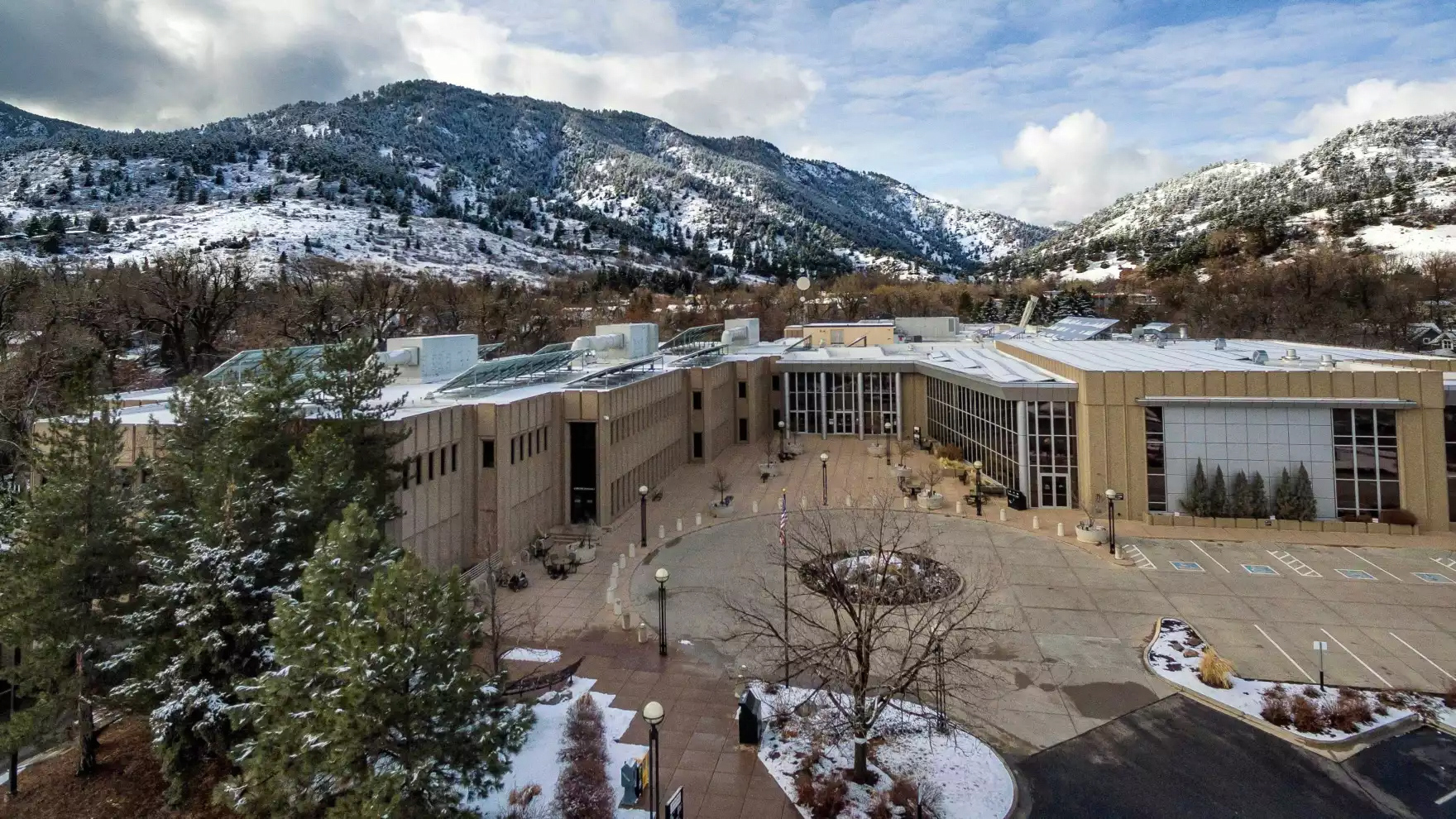
Boulder County Justice Centre
The Boulder County Justice Centre looked more like an arts complex, with its glass walls and mountain backdrop. But the cases being heard within comprised all the usual elements: drugs, alcohol, bad luck, bad judgment, mental illness and the occasional streak of indisputable criminality. In one crowded courtroom, a judge was switching between hybrid and live hearings; asking questions, issuing penalties, granting ‘continuances’ (adjournments), quashing or affirming bench warrants, while deputies and litigants wandered in and out, and chained prisoners in scrubs sat jiggling their orange jail clogs. As I got my bearings, I overheard a DA offering a plea deal to a neatly dressed man in his forties.
This deal-making is for many people a troubling feature of the US legal system. The thought that an innocent person might plead guilty out of fear of getting a heavier sentence if they insist on their right to a trial is hard to square with any meaningful idea of justice. Even if you accept the need for it as an efficiency measure, you’d expect it to be decently shrouded in vagueness and ambiguity, as it is in the UK. But that isn’t the way things work here.
‘I’m OK going with a class two misdemeanour because no violence was involved,’ the DA said, making little attempt at discretion. The man had been charged with child abuse, though his offence was simply driving over the limit with his child in the car. He was Hispanic, and, judging from what the DA added, undocumented: ‘There may be immigration implications for you.’
Leaving him to reflect on this, the DA went over to parlay with a green-haired girl sitting by a tattooed older man. The words ‘drugs’ and ‘petty theft’ reached me. I craned forward. ‘I’m willing to drop the second drug charge, the misdemeanour,’ the DA said. Some inaudible exchanges followed, and a moment later the case was called. The girl approached the bench. ‘An offer has been conveyed,’ the DA told the judge, ‘but we’re not quite ready.’
The girl nodded. ‘I’m nineteen. I really don’t want to have drug charges on my record, you know?’
The older man, still seated, raised his hand. ‘What we’re asking is for my daughter to have the other drug charge also dismissed.’
Despite knowing nothing of the circumstances, I expected a refusal: what leverage could the man have? But once again I’d misread the dynamics. ‘I’m open to that,’ the DA said.
In the middle of these fragmentary episodes, a small hearing unfolded in its entirety. It was a stalking case, not a very dramatic one, but having been stalked myself (and having had great difficulty getting anything done about it), I was curious to see how it played out. The owner of a hormone replacement clinic was requesting a temporary protection order against a disgruntled former employee. The former employee was claiming (falsely, according to the owner) that he hadn’t paid her final wages. She’d begun loitering near the premises, hurrying away when she was spotted, though on one occasion she’d told a current employee that she wanted to burn down the business ‘so they could see what it was like to lose everything’. She’d also refused to pay a local hair salon after getting her hair done, and, together with her boyfriend, had stiffed a food delivery guy. The police had told the clinic owner to request a protection order.
The judge seemed hesitant. ‘I could only give a two-week order initially,’ she told the complainant. ‘She’d need to be served, then we’d have to reconvene to consider a hearing for a permanent order.’ But even the two-week order appeared to require some thought, and the judge called a recess.
I went outside and phoned the Cheyenne court to see if the jury had reached a verdict in the quarry case. Not yet. It hadn’t seemed complicated, though I’d felt there was something too easy about the smiling lawyer’s repetition of the ‘blackmail’ line. Clearly it wasn’t a smart thing for the rancher to have said, but perhaps that was proof of his guilelessness. Jurors were instructed to consider the ‘demeanour and manner’ of witnesses as well as their words. Could it be that they were deadlocked over some question of nuance or subtext?
Back in Boulder, the judge had made her decision: no protection order. ‘The circumstances don’t rise to it,’ was all she offered by way of explanation.
At first the man seemed unconcerned: ‘Really I’m just doing what I can for my employees.’ But then, as if he thought he’d backed down too easily, he reminded the judge about the woman’s boyfriend.
‘OK, but it’s still not to the level we’d need,’ she told him. ‘You can always file again if things get worse.’
‘I mean, she threatened to burn down my clinic.’
‘That was over a month ago,’ the judge said curtly and brought the hearing to a close. The right to be obnoxious, as I knew from my own stalking experience, enjoys fierce protection under US law.
Icontinued south into New Mexico, climbing into the snow-streaked Sangre de Cristo mountains. I’d visited the area before, following in the steps of D.H. Lawrence, who’d largely shaped my sense of the US before I moved here. ‘I think New Mexico was the greatest experience from the outside world that I ever had,’ Lawrence wrote. What excited him was partly some tonic quality of air, light and landscape, and partly a more mystical quality that he discerned in the ceremonies of the Pueblo Indians, what he called the ‘sense of living religion’.
I could vouch for the surpassing beauty of the landscape, which even today seemed, as Lawrence put it, ‘more utterly peaceful and idyllic than anything in Theocritus’. The religious element was outside my range but I wondered, more prosaically, if proceedings in the autonomous pueblo courts might differ in any illuminating way from what I’d seen elsewhere, and I’d called the tribal court in Taos to arrange a visit.
I arrived on the weekend of the No Kings protests. Taos, another liberal bastion, was marking the occasion with a gathering at Kit Carson Park. A few hundred people showed up, most of them in their sixties (like me) or older, some in wacky animal costumes inspired by Portland’s anti-ICE protests a few weeks earlier. They thrust out their handmade signs, chuckling at one another’s grandad humour (‘The Only King We Recognise in America Is Elvis’). It had been agreed with the municipality that only a small detachment of protesters would actually march. The rest converged at a crossroads outside the park, where they waved their signs at passing motorists, who honked approvingly and were cheered in return. For a wizened dude in a cowboy hat standing near me, it was all a little too peaceful: ‘In the 1960s we’d have been turning over cop cars,’ he snarled. ‘Nobody wants to put their ass on the line today.’
The pueblo offices were just opening when I got there on Monday. A woman in the administrative building listened warily as I explained that I’d been given permission by the clerk of the court to attend hearings. She told me she’d have to check with her superior before she could send me over to the courthouse. ‘Be careful,’ she said as she left the room. ‘We are a sovereign nation, and I wouldn’t want you to get in any kind of trouble.’ She came back with an elegant woman in her forties, who took me into a conference room. While I was explaining my project to her, feeling my words turning to gibberish as I uttered them, a note was brought in asking me to call the clerk of the court.
I stepped outside to get phone signal. The clerk explained that she’d thought it would be all right for me to visit today because there were only civil matters on the roster. It turned out that in fact I would need written permission from the governor of the tribe, even for this. ‘If you’d like to come back another day …’ she offered, without enthusiasm. When I returned to the conference room, the woman I had been speaking to was gone, so I walked back to my car. A few tribal members had arrived in the parking lot. They looked at me neutrally as I passed. Unlike the man in Deadwood, these really were sovereign citizens, and I understood that I had just been expelled, gently but firmly, from their nation.
I drove on south, passing Santa Fe, Albuquerque, Los Lunas. At a rest stop I called Cheyenne again. The jury had finally delivered its judgment: zero dollars to the ranchers, and no token dollar to the mining company either. El Paso, which I’d pictured as a bustling border town, was empty. The office towers and stately municipal buildings appeared uninhabited. It was hard to find an open café or restaurant. Even the federal courthouse, built around the usual cavernous atrium, seemed deserted. The only signs of life on the floor reserved for immigration hearings were a couple of deputies watching over a room full of plastic chairs. If I’d come at the beginning of the year, they told me, the place would have been packed. ‘But now nobody shows up, because when they’re going to close a case, the US Attorney’s Office tells ICE and then ICE comes and takes the person away.’
I knew about the practice, which had been pioneered in Texas before being adopted by the Trump administration, but the empty chairs eloquently conveyed the pervasive terror. The empty streets were a result of the same policy: people used to cross the Rio Grande in large numbers from Ciudad Juárez to work and shop, but now they were afraid to. The guards, both of whom were Hispanic, told me there was an immigration session scheduled for that afternoon at a different courthouse, where I might have better luck.
In the meantime I walked over to the El Paso County Court. A competency hearing was in progress, with a jury assembled to determine whether a defendant with an IQ of 79 and a long list of mental illnesses was fit to stand trial. Expert witnesses argued over the definition of ‘intellectual disability’ and ‘adaptive functioning’, while lawyers poked holes in their credentials. The defendant, a young man with an Amish-style beard, listened in meek silence. ‘I’ve had patients buy five Cadillacs in one afternoon,’ one expert declared, dismissing the defendant’s alleged bipolar disorder as ‘mood swings’. During a recess I asked a bailiff what the guy had been accused of. ‘I’m not allowed to tell you,’ she replied, though she did say it was rare to have a jury at a competency hearing, which I took to imply that the mild-looking defendant had done something fairly terrible. Glancing at me with sudden suspicion, the bailiff asked: ‘Are you a sovereign citizen?’ Apparently the movement’s fissiparous energies were being felt here too. ‘They come into the court with no business, just to confront people and make trouble. I’ve had one of them threaten to sue me for refusing to give him my name. They’ll bring cameras and get in people’s faces just to get a rise. We’ve had to post signs saying no filming.’
The immigration hearings were taking place in an older federal building full of corridors lined with frosted glass doors, each bearing a Department of Justice seal. I was led with a group of respondents to a small room with cluttered desks occupied by a clerk and an interpreter, and a screen on which a young judge with bright lipstick and dishevelled hair smiled as the session began. It was a master calendar hearing, much like the one I’d observed in Chicago.
I’ve had my own run-ins with border officials over the years, most of them tinged with humiliation or shame. I remember on one occasion grovelling to a petty tyrant at JFK who’d decided that my teaching visa wasn’t valid, and was threatening to put me on the next flight back to England. A decade later, just as the drumbeats for war in Iraq were reaching a pitch, I was one of two hundred pragmatists crowded into a New York courtroom for a citizenship ceremony where, in what seemed a collective slouch of bad faith, we swore to bear arms for our adoptive country.
A man claiming to have fled death threats in Czechoslovakia in the 1990s took his turn before the judge. He’d been arrested at an ICE checkpoint earlier in the year and served a removal order. (‘Removal’: a euphemism beloved of government officials, suggesting some beneficial procedure rather than the brutality it actually connotes, as in ‘mountaintop removal’ or the Indian Removal Act.) The plea the man read out was rambling and absurd – he claimed his father had been killed by the Czech government ‘with an axe to the head’ and that the same fate awaited him if he returned. But as in Chicago, the judge seemed to want to help even the least plausible respondents to make full use of the system, urging them to get lawyers, offering to transfer cases closer to where they lived, scheduling new hearings far into the future. Even the man from the Department of Homeland Security was scrupulous. More than once he brought up points of law that were advantageous to the people he was supposedly there to hound.
On long drives in the US, you can slip into a kind of trance, in which you start to feel as if it isn’t you that’s moving but the road, rolling under you like a conveyor belt with its unending cargo of human and natural phenomena: convicts in striped scrubs spearing litter, assorted roadkill (skunk, coyotes, a headless javelina), the immense blade of a wind turbine laid out on a truck bed like the bone of a giant pterosaur, biblical mountains rearing up out of nowhere and just as quickly subsiding. An hour east of El Paso a flashing light appeared, with a sign indicating a border patrol checkpoint and, around the bend, a police cruiser lying in wait for anyone seized by the urge to turn tail. At the makeshift booth an armed border agent in desert camo stood chatting with a colleague. He glanced at me. ‘US citizen?’
I nodded, reaching for my passport, but he waved me on – white guy in a hybrid – and turned back to his colleague before I had even registered the pounding in my chest.
Later that day I became aware of a more businesslike landscape taking shape around me, assembling itself in the form of pump jacks and fracking rigs, distant flare stacks, electrical substations, depots full of cable drums and gas cylinders, vehicles transporting the silvery convolutions of what appeared to be entire sections of oil refineries, all on a vast plain of white sand and grey-green creosote scrub that spread as far as the eye could see. This was the Permian Basin, the biggest oil and gas field in the country, key to America’s energy independence and, by extension, the political psychosis arising from that condition.
I passed a sign for Mentone. The name rang a bell: I’d seen it in a story in the Houston Chronicle a couple of days earlier. Mentone was the seat of Loving County, which had a total of 64 inhabitants, making it the least populated county in the continental US. But thanks to taxes from the oil and fracking boom, its budget was currently around $60 million. This disproportion made it an irresistible target for a certain kind of piratical ruthlessness. To seize control of the money, one would simply have to move a few supporters into the county and get them onto the voter roll. This was precisely what a man called Malcolm Tanner was attempting to do. A self-styled philanthropist and ‘visionary leader’ from Indiana, he had bought ten acres in Loving County and was offering free housing to any of his quarter of a million social media followers who were willing to move there, with a monthly stipend of $5000 to follow once the county was in their hands. So far about thirty of them had heeded the call. One interesting thing about the case was that Tanner and his followers were African American (Tanner, who seems to have stepped out of a Paul Beatty novel, refers to his organisation as ‘Melanated People of Power’ and plans to run for president in 2028). Another was that Ken Paxton, the aggressively conservative attorney general of Texas (and hardline Trump supporter), had decided to get involved, filing for a temporary restraining order against Tanner’s scheme.
There were good grounds: the land that Tanner had bought had no water or sewage connection. His followers lived in RVs and tents with burn pits for waste, for which he allegedly charged them $200 a month in rent. But Paxton’s comments on the case, posted on his office’s website, had an edge that suggested something more than just a lawyerly concern over health and safety compliance:
Indiana resident Malcolm Tanner has no right to try to take over Loving County with illegal schemes that endanger real Texans. His deceptive and unlawful scheme to lure people with free housing for the purpose of conducting a political takeover is a disgustingly fraudulent plot to line his own pockets. I will not stand by while frauds try to carve up Texas for themselves and make everyone sicker and less safe along the way.
Paxton himself has been indicted for fraud, impeached by the Texas House of Representatives and investigated by the FBI for corruption (the probe was dropped a few months after Trump’s inauguration), so perhaps this Truth Social-style bombast was just the sound of one grifter calling out another. His office had stayed out of earlier, all-white attempts to game the county’s elections, including alleged election fraud and intimidation by the county judge, Skeet Jones.
I had an address for the encampment, but there was nothing to see at the GPS destination except some machine sheds and, beyond them, flat, stony desert. The lots must have been further off the road than I’d thought. I stood for a while, squinting into the dust. It was no place to live, but evidently there were people for whom it represented a step up in life – or at any rate Tanner had persuaded them to think so.
Ipressed on into Louisiana. Halloween was approaching and the bayou towns along Route 90 were hung with ghost sheets and voodoo roosters. In New Orleans, twelve-foot skeletons and Taylor Swift corpses frolicked on balconies and kraken tentacles writhed through attic windows. It was hard to tear myself away from the toy-box colours and latticework of Marigny, the seedy sweetness of the French Quarter, but I boarded the streetcar to the federal courthouse, where a sentencing hearing had just begun.
Mervin Amacker was brought before the judge in shackles. (This shackling business: it would be hard to argue that it isn’t almost exclusively for purposes of degradation.) He had pleaded guilty to carjacking and felony possession of a firearm and was looking at twelve to fifteen years in prison (he had previously been convicted of possessing cocaine, which meant having a handgun was a federal crime).
What emerged was another of those swerving tales. In March 2023, Amacker had got on a bus at Hayne Boulevard, by Lake Pontchartrain. After a couple of miles, he produced a loaded Ruger and threatened to kill the driver unless he did as instructed. Not a scenario crying out for leniency, on the face of it. But what Amacker was demanding was to be driven to an emergency room so that he could be treated for a bullet wound to his head. The driver obeyed, speeding through red lights and up the hospital ramp. In the ER it turned out there was no bullet wound: Amacker had imagined it.
Medical records showed that he’d been in a state of acute psychosis, and on that basis his lawyer asked the court to consider reducing the advisory sentence. The prosecutor countered that charges had already been reduced from kidnapping to carjacking on the same basis. Amacker then told the judge that at the time of the episode he’d been in the process of moving to California with his fiancée and son to start a construction business. The story had no obvious relevance to anything. I thought of the character in Flannery O’Connor’s story ‘The Comforts of Home’: ‘Not insane enough for the asylum, not criminal enough for the jail, not stable enough for society.’ If the judge was troubled by such considerations, he didn’t show it: ‘You’re fortunate that the gun didn’t go off,’ he told Amacker. ‘I’m concerned about protecting the public.’ He gave him thirteen years.
I left for my event at Tulane, where I read from a non-fiction book I’d just finished, about a personal injury lawyer from South Carolina who, in June 2021, shot and killed his wife and youngest son, seemingly to divert attention from his vast embezzlement. There was no question, at least, where he belonged.
With that I set off for home. The civil unrest warned of in the travel alert hadn’t materialised, but the two realities continued to clash on the car radio. The sense of persecution rose ever higher: ‘They think we are stupid. They fantasise about killing us. They want to decide what kind of man undresses next to your daughter. They have sanctuary cities where they protect illegal criminals.’ (This was from a political campaign ad, and it seems fair to report that the candidate lost.) It was a relief when, driving through Tennessee, all I could get was the old-fashioned Americana of the local radio swap shop: ‘Yes, I’m selling an antique cabinet with a built-in flour-sifter. Also a revolver.’
A bench trial was underway when I entered the Avery County Courthouse in Newland, North Carolina. The case centred on a dispute that was almost comical in its schoolyard triviality, but in its own way it made a fitting finale to the trip. A member of a homeowners’ association had been charged with cyberstalking after making rude online posts about the association’s management. One by one they took the stand. The general manager described a jokey photo he’d posted on his own Facebook page, showing himself and his wife having a drink. The defendant had reposted it with the caption: ‘Is this what you want your general manager doing?’
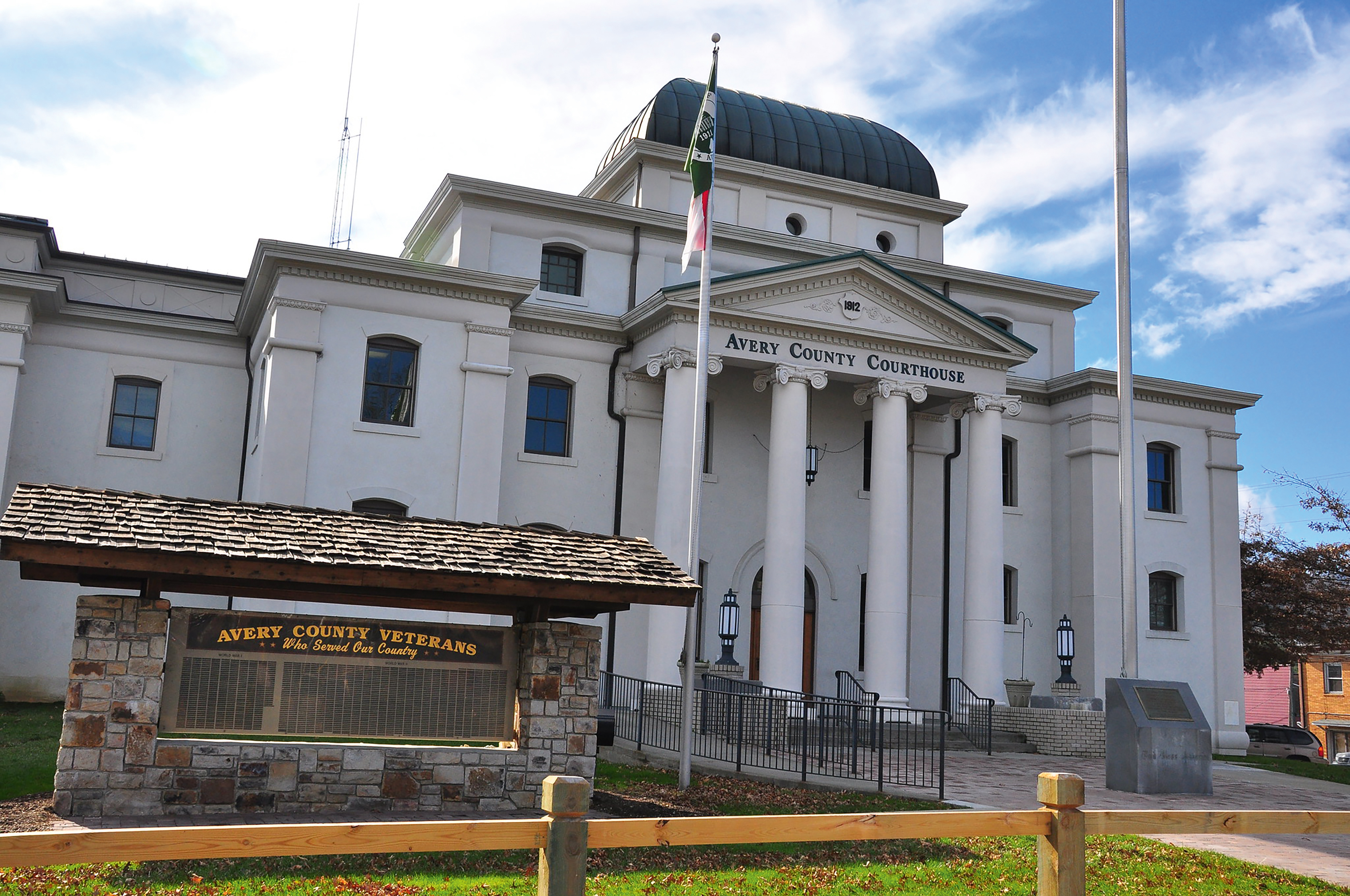
Avery County Courthouse
An accountant and member of the board testified that she’d filed charges after the defendant had posted a Bernie Madoff meme along with information about her DUI from 25 years ago: ‘I’m now facing a recall as a board member,’ she said, ‘because I’m supposedly unfit for office.’ Another manager testified that the defendant had shared pictures of her posing with an AR-15: ‘My husband was in law enforcement,’ she explained indignantly. ‘We have all kinds of weapons. The posts were calling me dangerous, which I’m not. I feel like I’m being demonised. I haven’t slept for months!’ Another complainant said the defendant had posted a decades-old article about him from the Orlando Sentinel, ‘reporting that I’d been charged with grand larceny, which wasn’t true. It was an erroneous newspaper article that I never knew even existed.’ The post had prompted a spate of anonymous comments calling him a ‘thief and habitual criminal’ and someone had accused him of stealing from the Pickleball Club.
The problem, as the defence attorney calmly established, was that the posts were mostly objectively true and almost all on the public record. Summarising her argument, she introduced an explicitly political perspective: ‘I know we have a country where no one wants to be offended, but the First Amendment is the First Amendment. We can’t lie or defame, but there has to be more than, quote, “I don’t agree with what she’s saying” or “I’m facing recall because of what she’s saying.” That’s America.’
At this point the judge asked if the defendant wanted to testify. After a whispered conference with her lawyer, Jamie Thomas, a bespectacled 73-year-old in a pink coat, took the stand. In her telling, the posts weren’t intended to provoke but to inform fellow homeowners about the people running the association. Regarding the DUI, her concern ‘was just whether these were responsible people. There were millions of dollars around, and here’s a compliance officer who isn’t in compliance with the law.’ The Madoff meme was ‘to make the point that just because you’re a certified public accountant doesn’t mean you’re unimpeachably pure’. She denied having posted the grand larceny article, or any of the responses that followed: ‘I’m brave enough to put my own name to what I post.’
Supporters of her supposed victims muttered darkly as she spoke. Given the anti-press litigation billowing out of the White House, they may well have believed that people in authority had a legal right not to be upset by embarrassing information, and I wondered if it had been wise for the defence attorney to turn this so overtly into a free speech case. As Pascal said, ‘justice is as much a matter of fashion as charm is,’ and fashion isn’t currently in favour of speaking truth to power. But the defendant herself, with her confident, educated voice (an NPR voice, you could almost say), seemed a highly credible witness.
There was one small upset as the prosecutor sprang a surprise question on her: ‘Have you ever been accused of cyberbullying before?’
‘No! Well, yes,’ she answered. The case seemed briefly in the balance again. But she recovered her poise: ‘There is an ex-Scientology community. Some people did nasty things to other people. As I’m wont to do, I posted memes to draw attention to it.’
It was a little pert, but it did the trick. Without ceremony, the judge acquitted her. Disgruntled townsfolk began complaining loudly. ‘First thing if you google her is Reddit accusing her of cyberbullying,’ I heard one of them say; another: ‘There’s a whole web page called Escaping Jamie Thomas.’ The judge heard them too. ‘Leave the court right now,’ she said.
I was reassured by the verdict. The First Amendment appeared to be alive and well in Appalachia. Later, though, I felt some misgivings. There were the competing statements: aggrieved and illogical on the part of the complainants; rational and articulate on the defendant’s part. Hers had carried the day, rightly. But the sense of something unresolved, unaddressed even, lingered. I thought of that campaign ad: ‘They think we are stupid. They fantasise about killing us …’ For a moment, some larger reality seemed to disclose itself, rising from the deep before disappearing again. I hurried on to New York.