Around the chilly shores of the Baltic, for nine hundred years from the ninth century, a succession of Dark Age monks, Franciscan friars, Reformed or Lutheran Protestant pastors and Jesuits ruefully recalled that in the Garden of Eden ‘the serpent was more subtil than any beast of the field which the Lord God had made’ (Genesis 3:1). During this first biblical stage of its career, the serpent was apparently less slithery than in later years, but it was already primed to lead Adam and Eve astray with lasting consequences for human sinfulness. Jews and Christians have had a down on snakes ever since. By contrast, until at least the 17th century, the good folk of the Baltic region were notorious for cherishing specimens of the local snake population in their homes, keeping them well fed and watered. Were these reptiles merely a peculiar local form of pet or were they sinister herpetological divinities? Clergy gloomily surveying their flock from the pulpit feared the worst. Domestic and possibly sacred snakes were indications that centuries of diverse Christian missionary effort had made little impact on a substantial corner of the European continent.
What should we call this alternative to Christian faith? Neither Francis Young nor Aleksander Pluskowski claim to be fully successful in their thoughtful treatments of the problem. Descriptions used in earlier times were negative, because Christians had come up with them. Eventually the most dangerous label coined for such practices and practitioners became ‘witchcraft’ and that could result in Christian authorities executing people, often by burning at the stake. Such atrocities in Eastern and Northern Europe happened later than in the west of the continent: they were carried out in the 17th and even 18th centuries, interestingly skewed towards men rather than women. This suggests that the term was describing something different from that which had raised alarm in 15th and 16th-century Western Europe. By 1700, first rulers and magistrates and then wider public opinion in the west were concluding that punishing witches by execution was not a good idea, but in 1693 Lutheran Sweden could still burn alive a charismatic figure or ‘shaman’ called Anders Nilsson because he had sacrificed to the gods of the Sámi people, and had the audacity to assault the pastor who tried to confiscate his sacred drum.
A less perilous term than ‘witch’ would be ‘pagan’, though this was still fundamentally negative in character. In recent times, of course, it has been borrowed as a proud self-identification by those seeking to revive ancient religion. Nevertheless a censorious but conscientious clergyman might feel theological difficulties in speaking of ‘pagans’. Could he condemn as pagans those of his parishioners who obstinately cherished their snakes at home, but who had duly received Christian baptism – so were technically part of his flock and therefore not pagan at all? Might he try to use what he had learned at school about ancient Greek and Roman religion and mediate his pastoral experience through scholarly definitions? After all, snakes were associated with Asclepius, the classical god of medicine and healing. Christian elites of the north were prone to borrowing identities from the classical past, so Poles became Sarmatians, Swedes Goths and Russians (with no flattering intention) barbarian Scythians.
Humanist reframings of northern belief systems encouraged more reflective and less punitive analysis, but it remained unsatisfactory to yoke together priests of ancient Pergamon with 17th-century Sámi reindeer herders. These vanished northern cults did not write down theories, so we are forced to view them through the eyes of Christians who constructed their Christianity out of written texts, and who were inclined to project contemporary observation onto earlier centuries. Nineteenth-century collections of folklore describe the 19th century, not the ninth. In any case, were such collections describing religion at all, or observing distinctive local methods of fitting human beings more comfortably into a vast and dangerous landscape of snow, forests and water?
After much careful discussion, Young opts for ‘pre-Christian’ or ‘unchristianised’ for the tangle of practices he illuminates across a plethora of cultures and language groups from Lapland to Lithuania. It is difficult to avoid making these modern coinages sound clumsy. They also make little chronological allowance for one of Young’s most interesting themes: amid constant official efforts to impose Catholic or Protestant uniformity, the ‘unchristianised’ were assiduous in prudently adapting Christian elements or practices into their lives. Young usefully adopts the concept of ‘creolisation’ from another field of early modern Christian expansion. When Spaniards or Portuguese encountered civilisations in the Americas, the Indigenous people soon became adept at disguising or bringing up to date (creolising) ancient observances in ways calculated to slip past the attention of ecclesiastical authorities. The Samogitian (Lithuanian) god of merchants, Markopollus, first mentioned in 16th-century documents, sounds suspiciously like a celebrated real-world merchant of Italy, Marco Polo, while by the 19th century, enterprising Latvians still involved in traditional religion had added a Mother of Tobacco to their traditional pantheon. Even in the 20th century in what is now the Russian republic of Mordovia, one of Europe’s most tenacious ‘pre-Christian’ cultures enthusiastically worshipped Nikulapaz, who is a version of that jolly Christmas saint St Nicholas, while the evil entity in the Mordvin pantheon is Shyaytan, not a million miles from that evil construct of Judaism and Christianity, Satan.
The word ‘pagan’ keeps creeping back – not least in the subtitle of Young’s book – because of its convenience. It has the advantage of alerting us to problems in our assumptions about European history and what Europe means. Both these studies complicate and enrich common historical perspectives on ‘Western’ religion. Too often the existence up to 1386 of a powerful and successful non-Christian European polity in Lithuania has been treated as an anomaly, as has the prolonged survival of non-Christian religion amid the nominal Christian conversion of north-east Europe. The slither of snakes, the susurration of sacred trees, venerated lakes and much else prompt us to revisit the identity of the continent and its worldwide dispersal through migration and territorial empires. ‘Westerners’ have told themselves a story of their past dominated by a fluke in human history: the rise of a single religion, Christianity, to gain a monopoly over the vast majority of medieval Europe. It’s easy to miss how unusual this is: it has never happened anywhere else in the history of the planet, though over the last hundred years the Saudi Arabian monarchy has come close in seeking to impose one variant of Islam on the Arabian peninsula.
For more than a thousand years beginning around 400, Western Christianity anticipated the (so far, brief) dominance of Saudi Wahhabism. Every territorial ruler from Bantry Bay to the Balkans and the Baltic eventually subscribed to a particular form of Christian belief and practice that called itself ‘Catholic’, deferring to the sacred authority of one Christian bishop in Rome, the pope. Over time it became difficult for most Europeans to imagine that people could live in any other way. Catholic Christian rulers did their best to impose Christianity on their subjects. No religious rivals survived in the west of the continent, apart from circumscribed and vulnerable communities of Jews grudgingly tolerated for Christian ideological reasons, together with popular observance of a handful of customs that may or may not predate Christianity – bonfires on Midsummer Night, for instance. Medieval European Catholic Christian elites created a continent-wide identity, which one Anglo-Saxon writer under the patronage of King Alfred of Wessex in the ninth century termed ‘Christendom’.
This now anonymous scholar had translated a four-century-old world history written in Latin by the Roman Christian writer Orosius. His audience of Anglo-Saxons were determined to unite themselves to the newly named society. The Catholic Church had gained official imperial status following Constantine I’s capricious alliance with the bishops. Even when the institutions of the Roman Empire fell apart during the fifth and sixth centuries, the Church survived, and the Latin language and a shared cultural memory of imperial Rome became its property. In the 16th century, the Church’s common allegiance to the pope was devastatingly challenged by a series of Protestant Reformations, but Protestants as much as those defending the old institutions of Catholicism saw themselves as fighting to perpetuate a version of Christendom as their best expression of Christianity.
So to be European was to be Christian, yet Christendom was not and is not identical with Christianity as a world faith. Christendom represents a particular phase in Christian history, in which violence and coercion became an important part of the package. From the moment that Constantine bestowed his patronage on Christian bishops, the emerging Christendom reflected its Roman imperial alliance by becoming a militant and punitive version of religious practice that had little scruple in imposing Christian faith on the world. There were, it is true, examples of Christianisation without much coercion. Notable early successes occurred from the fifth century beyond the western bounds of the failing Roman Empire. In Ireland, Wales and Scotland as well as in Anglo-Saxon kingdoms, local versions of Christendom flourished beyond Christian elites, and re-exported their zeal for Christ back into mainland Europe. It’s easy to assume that such a welcome to the new religion was common, but Pluskowski and Young both demonstrate that in much of Europe, especially in the north and east, it was not nearly so easy.
Christendom’s commitment to coercion was encouraged in the seventh century by the arrival of Islam, another monotheism from western Asia. Muslim territorial conquests as far west as Europe’s Atlantic coast eventually threatened all of the former Roman Empire. Catholic defence of Christendom was hardening by the 11th century into an explicit belief that military action against the enemies of Christianity could equip a fighting man for salvation – a concept of crusade directly contradicting earlier Christian pacifism and condemnation of military service. Motives of defence easily shifted to glorying in aggressive warfare. During the 12th century this major about-turn in Christian thought gave rise to an unprecedented phenomenon: new orders of celibate monks who doubled as fighting men, or in medieval parlance, knights.
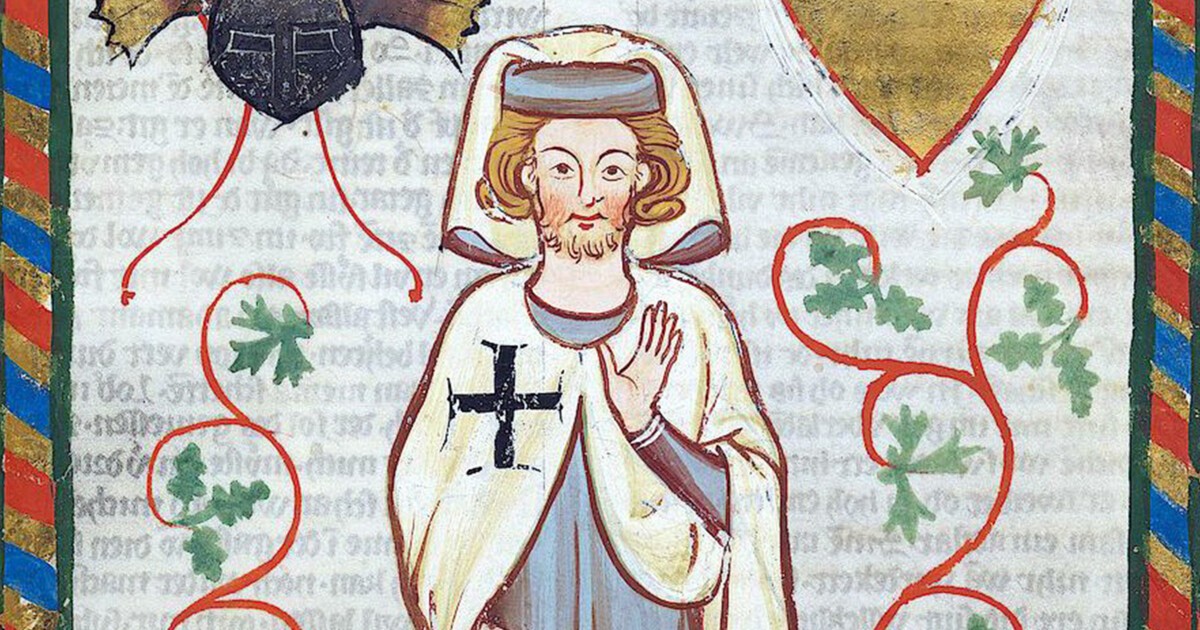
Pluskowski centres his story on the rise and fall of one particular order of monastic crusaders from the 12th to the 16th centuries. The name Teutonic Knights reflected the fact that they came from the German-speaking parts of Europe. Like the Templars and Hospitallers before them, the Teutonic Order began building up estates in Europe to finance their part in freeing the eastern Mediterranean coast from Islamic rule, but as the crusader states of the Levant disintegrated in the 13th century, their lands back home took on a new significance. The Teutonic Knights made the most drastic adjustment of all the military orders: they staged a strategic withdrawal to their native Northern Europe to crusade for Christendom on its north-east frontier. Together with some lesser crusading variant orders, they created something unique in European Christendom: with papal approval, they became military rulers of territories both in Prussia and in Livonia (a region largely represented by the modern Estonian and Latvian republics). The populations in these two regions were neither German nor at that stage Christian, but their territories provided convenient springboards for attacks on the powerful and sophisticated polity of Lithuania, whose rulers and nobility resisted any move to Christianity. The knights’ mission was always tangled up with their enterprise of bringing German settlers, language and lifestyle eastwards, and they never showed much energy in persuading their non-German subjects in Prussia or Livonia to embrace the Good News of the Gospel. Throughout these lands they have left a spectacular legacy of distinctively designed castles and newly founded German-dominated towns that still mark the landscape and are splendidly illustrated in both books under review.
The Teutonic Knights refashioned the enterprise of crusading to please military-minded Europeans who were undeterred by earlier fiascos in the eastern Mediterranean and attracted by the relative accessibility of the Baltic coast. Their campaigns or ‘journeys’ (in German Reysen) offered authentic experiences of danger: a witness across the continent to Christian knightly heroism. They proudly named one of their most historically resonant urban foundations after an early and distinguished guest crusader, King Ottokar II of Bohemia (who reigned from 1253 to 1278): hence ‘King’s Mountain/Hill’ or Königsberg. One English casualty in the Baltic in 1368, probably at the siege of the Lithuanian stronghold of New Kaunas, was Sir Anthony de Lucy the Younger. He was returned for burial to a comparably bleak shore in a western land far away where paganism was long extinct, in his family’s little priory church at St Bees in Cumbria. The wrapping in lead of de Lucy’s body in Lithuania proved so effective in preserving the corpse that archaeologists opening his coffin in the Cumbrian priory ruins 45 years ago could look into his eyes and smell the pine pitch of his shroud. A few decades after de Lucy, another English crusader, Henry Bolingbroke, was clearly not worried that all the leaders he was fighting (at vast expense) were now actually professed Christians. Bolingbroke was demonstrating his knightly valour before all Christendom, in particular to those back in England increasingly infuriated by their distinctly unvalorous and self-indulgent monarch, Richard II. King Henry IV proved a more convincing ruler than Richard, and his time on the Reysen helped excuse his murderous usurpation back home.
The Teutonic Knights’ enterprise took three centuries to collapse under the weight of its own contradictions. The knights had many enemies besides those identified with the lively pre-Christian religious practice that was their official target: some of their opponents were equally authentic champions of Catholic Christendom. To their west was the Piast royal dynasty of Poland, long established in Catholicism and increasingly resentful of German cultural and military advance; the Piasts would have good cause to regret inviting the knights to help them fight pagan raids on Polish territories. To the north, Scandinavians had their own territorial and religious designs on the eastern Baltic seaboard well before the knights arrived. The 12th-century Danish monarchy showed a special enthusiasm for building monumental circular churches to remind its subjects of the sacred monuments in crusader Jerusalem. In the 1170s, Pope Alexander III had issued a bull encouraging Scandinavians to launch Baltic crusades, using language that for the first time hinted that it was a sacred task to force people to become Christians. From the east, another constant threat to the knights was the rival Christianity styling itself Orthodox. The medieval missionary ambitions of Orthodoxy had once stretched as far west as Iceland, and the Orthodox outlived the Teutonic Knights. Gradually the powerful and wealthy Orthodox city-state of Novgorod was eclipsed by the principality that began as Muscovy; after eliminating Novgorod, Muscovy transformed itself into the Russian Empire, all the while using Orthodox Christianity as an agent of its expansion, and viewing the Baltic as one promising area to annex. That enterprise has not ceased.
Amid all this was the pagan dynasty of Lithuania, which had grown adept in playing off Christian powers against one another. In 1251 Grand Duke Mindaugas of Lithuania tried to contain increasing harassment from the Teutonic Knights by converting to Christianity; he even began building a cathedral in his chief city, Vilnius. Although a suitably gratified Pope Innocent IV upgraded Mindaugas’s ducal title to that of king, the Christianising of Lithuania involved no wider programme of evangelism and it was followed within a decade by Mindaugas’s assassination. His family seems to have contemptuously converted the cathedral into a roofless temple for traditional religion, open to the skies for the god of thunder. Popes and bishops were forced to tolerate the intricate variety of the Baltic: they reluctantly countenanced Lithuanian cremation ceremonies – anathema to well-instructed Christians – and agreed to the equivalent of a preservation order on sacred forests to protect them from Christian felling. The continuing vigour and political importance of the official Lithuanian cult was symbolised in 1338, when warring powers of all persuasions signed a treaty protecting Baltic trade routes. The signatories included Teutonic Knights from Livonia, vassals of the Orthodox duchy of Rus’ and envoys of the Lithuanian king, all sealing the deal with their respective religious rites.
A turning point for the region came in 1386-87, during the long and fruitful reign of Grand Duke Jogaila of Lithuania. If Paris was well worth a mass to King Henri IV, Jogaila both anticipated and surpassed Henri’s strategic cynicism: his conversion to Catholicism won him not only plaudits from Pope Urban VI, but a potential second realm, since Jogaila was now an eligible husband for Queen Jadwiga of Poland, descendant of the Piast dynasty. After Jadwiga’s death in 1399, Jogaila succeeded as sole Polish ruler, suitably Polonised for his new subjects by his name acquired in Christian baptism, Władysław II Jagiełło. The resulting union turned Poland-Lithuania into one of the superpowers of late medieval Europe, a player alongside France and the Holy Roman Empire. Jogaila’s Lithuanian nobility observed these momentous events, brushed up their Polish small talk and readily followed their monarch’s entrance into the Catholic Church. Snakes and sacred fire ceased to be part of the devotional urban landscape in Vilnius, though no one made much official attempt to convert the population at large.
All this was disastrous news for the Teutonic Knights, as it robbed them of any justification for crusading and, in the end, any reason for existing. Their struggles against the conglomerate of Poland and Lithuania were marked in 1410 with the order’s shattering defeat by a joint Polish-Lithuanian army, on a field between the villages of Tannenberg and Grunwald (Germans and Poles differ as to which village should lend its name to the occasion). Foreign adventurers would soon take note; so apparently did Our Lady, who from the beginning had been central to the order’s pride and belief in its mission, but who now no longer delivered them victories. Already her services to Christendom were more urgently required in the Balkans against the growing threat from the Ottoman Turks. More fundamental than the humiliation of Tannenberg/Grunwald was the hollowing out of the Teutonic Knights’ rationale, as papal sympathies veered towards Władysław and his Christianised dynasty.
The Poles provided a remarkable witness to the logic of changed times before the whole Catholic world when in 1414, the papally convened Council of Konstanz examined the rights and wrongs of the continuing crusader conflicts in the Baltic. The Polish lawyer and rector of the University of Kraków, Paweł Włodkowic, boldly formulated the novel principle that unchristianised peoples had the right to be protected from forcible efforts at their conversion: ‘All persons, whether faithful or infidels, are sheep of Christ, by virtue of their creation, even if they are not of the sheepfold of Christ.’ The council found his propositions convincing, and refused to listen to counter-arguments from the Teutonic Knights about their exclusive rights of conversion. The case propounded by Włodkowic anticipated by a century the troubled academic discussion in Southern Europe about the Indigenous peoples who suffered Iberian conquests in America. Spanish theologians and lawyers seem to have done their thinking with little reference to the earlier Polish-Lithuanian initiative, but Włodkowic’s case remains at the root of modern discussions of human rights and the right to freedom of religion. Notably, amid the bloodshed of the Reformation that was to come, the territories of Poland-Lithuania remained remarkably free of coercive violence in the name of Christianity, in contrast with the Reformations and Counter-Reformations further west.
The Protestant Reformation was the delayed nemesis of the Teutonic Knights after a century of decay. Short of human resources after Tannenberg/Grunwald, the order had to pay mercenaries to do its fighting. A particular humiliation came in 1457 when the grand master of the knights lost his headquarters, the castle/monastery of Marienburg: furious at not being paid their wages, the order’s garrison of mercenaries sold the magnificent complex to the merchants of the great trading port of Danzig (Gdansk). Marienburg (in Polish, Malbork) became a prized possession of the royal dynasty of Poland: the largest castle structure in Europe. The grand master ignominiously retreated to his city of Königsberg in eastern Prussia, and was forced to recognise the annexation by the Polish Crown of even greater swathes of his western Prussian lands, now to be styled Royal Prussia. The annexed Prussians showed little nostalgia for their former masters. Many urban communities fostered by the Teutonic Knights were gleeful at the order’s humiliation, which brought them the chance of self-government. In 1484, the town council of Riga celebrated acquiring the order’s castle there by granting townspeople a free hand in its destruction: the speedy and thorough response was the last in a series of such demolitions across knightly territories.
This was the depressing inheritance of Albrecht von Hohenzollern of Brandenburg-Ansbach, a north German nobleman appointed grand master of the order in 1511 at the improbable age of 21. It was not a hopeful time for the crusading ideal. A last flicker of northern crusading aspiration from the Scandinavian monarch Christian II, armed with a papal bull for reclaiming the lost colony of Greenland, ended before it began, while at the same time the proclamation of a crusade against the Ottomans in Hungary degenerated into horrific social chaos, with angry mobs turning murderously not on Muslims but on the Hungarian nobility and gentry who were failing to lead the crusade. Grand Master Albrecht’s efforts at self-assertion against the king of Poland-Lithuania had no greater success. Then in 1522, travelling into the Holy Roman Empire in an unpromising search for new supporters, Albrecht became deeply impressed by the rapidly developing Reformation fomented by Martin Luther in Wittenberg. He found a startling solution to his dire situation: Luther detested the pope, but he also eloquently despised crusading.
The grand master decided to embrace both propositions, no doubt mindful of the reality that there were now only 55 members of the order left in Prussia, when before Tannenberg/Grunwald there had been around seven hundred. In 1525, Albrecht reversed a century of hostility to Poland-Lithuania by swearing fealty to King Sigismund in Kraków, in return for recognition as secular duke of ‘Ducal Prussia’, a rump state of eastern Prussian territories (in a genealogical irony not unparalleled in the region, Albrecht and Sigismund were both descendants of King Jogaila/Władysław). Europe’s most recently created monarch was also the first to sponsor an official Lutheran Reformation; many rulers copied his example. Albrecht’s foundation in 1544 of a university in Königsberg was a new and specifically Protestant initiative to address the incomplete state of Christendom in Eastern Europe: a reproach to centuries of effort by the Teutonic Knights. The knights’ territorial power was finally extinguished in 1561, when the sister-province of Livonia was secularised under its master now also turned duke, and followed Ducal Prussia into Lutheranism.
Young explores the gradual but prolonged decline of non-Christian religion thereafter. Christian mission was hampered by the variety of contenders involved, Catholic, Protestant and Orthodox, whose mutual ill-will proved useful to those resisting conversion. Significantly, the major stage in the disintegration of ‘paganism’ came as Christendom itself began to dissolve in the 18th century. In Lutheran regions, ‘Pietist’ revival movements and the newly created Protestant identity of the self-styled ‘Moravian Church’ were both attempts to remedy the devotional deficiencies of the parish systems which Protestants had taken over from the papacy. Pietists and Moravians delved into the Lutheran past, looking for elements that had galvanised popular excitement in the Reformation, especially congregational hymn-singing and a sense of personal transformation in conversion. The pioneer Moravians were themselves gathered from all sorts of previous Protestant identities to start a new life in what was effectively a new Church, and they were mostly humble folk who wanted to spread the liberating joy that they felt.
Above all, Moravians and Pietists realised what many previous aspiring missionaries had failed to understand: conversions are best made by personal contact in the mother tongues that make people laugh and cry, rather than preaching at them in the language of the powerful. Moravians were not afraid of extrovert expressions of emotion: they could delight in ecstasies and dancing at which official pastors looked askance, and which in the animist practice of many northern peoples had remained the prerogative of shamans. Effectively they were weakening the impulse to look to non-Christian customs to provide identity and a sense of self-worth. There were parallels in Roman Catholic parts of the Baltic such as Lithuania that were now absorbed into the Russian Empire: here Catholicism might equally now find itself a symbol of local cultural identity in the face of alien Russian overlordship and Orthodox religion. Between these various shifts in society, paganism found itself increasingly attenuated into an incoherent collection of customs, to be harvested by 18th and 19th-century antiquarians and folklorists.
Over the last two centuries, both the Teutonic Knights and pre-Christian religion have enjoyed afterlives that it would be an understatement to describe as strenuous. In the battle to create national identities and nationalisms against a shifting background of northern European empires, contestants grabbed and misrepresented historic identities in a variety of conflicting narratives. Prussia was the most dramatic example, becoming a symbol for a particular sort of militarised German and Protestant self-identification where once the Prussian people had been neither Christian nor German. The Hohenzollern dynasty whose cadet branch had taken over Ducal Prussia as successors to the knights created a new military decoration for the Kingdom of Prussia in 1813: the Iron Cross, based on the Black Cross emblem of the order. The people of Prussia cherished the architectural heritage of the order within their newly manufactured German Empire after 1871. Imperial Germany readily christened its annihilation of the Russian Second Army in 1914 as a revisited and reversed battle of Tannenberg. Within ten years, it was celebrated by a massive victory monument on the Prussian plain, recalling the architecture of Teutonic Order castles.
The Nazis took up these themes with enthusiasm, even as they murdered members of the surviving Teutonic Knights in Austria as part of their general war on the Catholic Church. The downfall of the Nazi state led to the demolition of the Tannenberg Memorial, but amid much destruction of the Prussian past and the expulsion of East Prussia’s German population, the most pointed action was Stalin’s calculated removal of Königsberg from the European map. The city of the Bohemian King Ottokar, Duke Albrecht and Immanuel Kant was physically obliterated and its site renamed for Mikhail Kalinin. Its people are now Russians, in a fragment of East Prussia restyled the Oblast of Kaliningrad. Stranded amid the city’s Soviet architecture, the former medieval and Lutheran cathedral of Königsberg, discountenanced by a brand-new Russian Orthodox rival nearby, uncomfortably represents a lost historical narrative, though it may also encourage the present population to look beyond the distorted version of the past presented to them by the authorities in Moscow.
After the barbarism and destruction in the eastern Baltic eighty years ago, these books conclude their stories with some fragile signs of hope. The European Union has encouraged participant nations to think of themselves in a broader and co-operative context. One symptom of this has been to turn archaeology away from bolstering crude national myths towards a genuine curiosity about the variety of the Baltic past. Post-1989 Poland in particular has put a heartening effort into restoring the many surviving monuments created by its former Teutonic Order foes, right up to the frontiers of the Kaliningrad Oblast, where Putin does his best to curb any curiosity about past history. Anglophone readers are doubly blessed with this pair of illuminating introductions to a region of Europe still unfamiliar to many. Young and Pluskowski reopen major questions not simply about religious history but about how history can be weaponised for good or ill.