Cardiovascular System
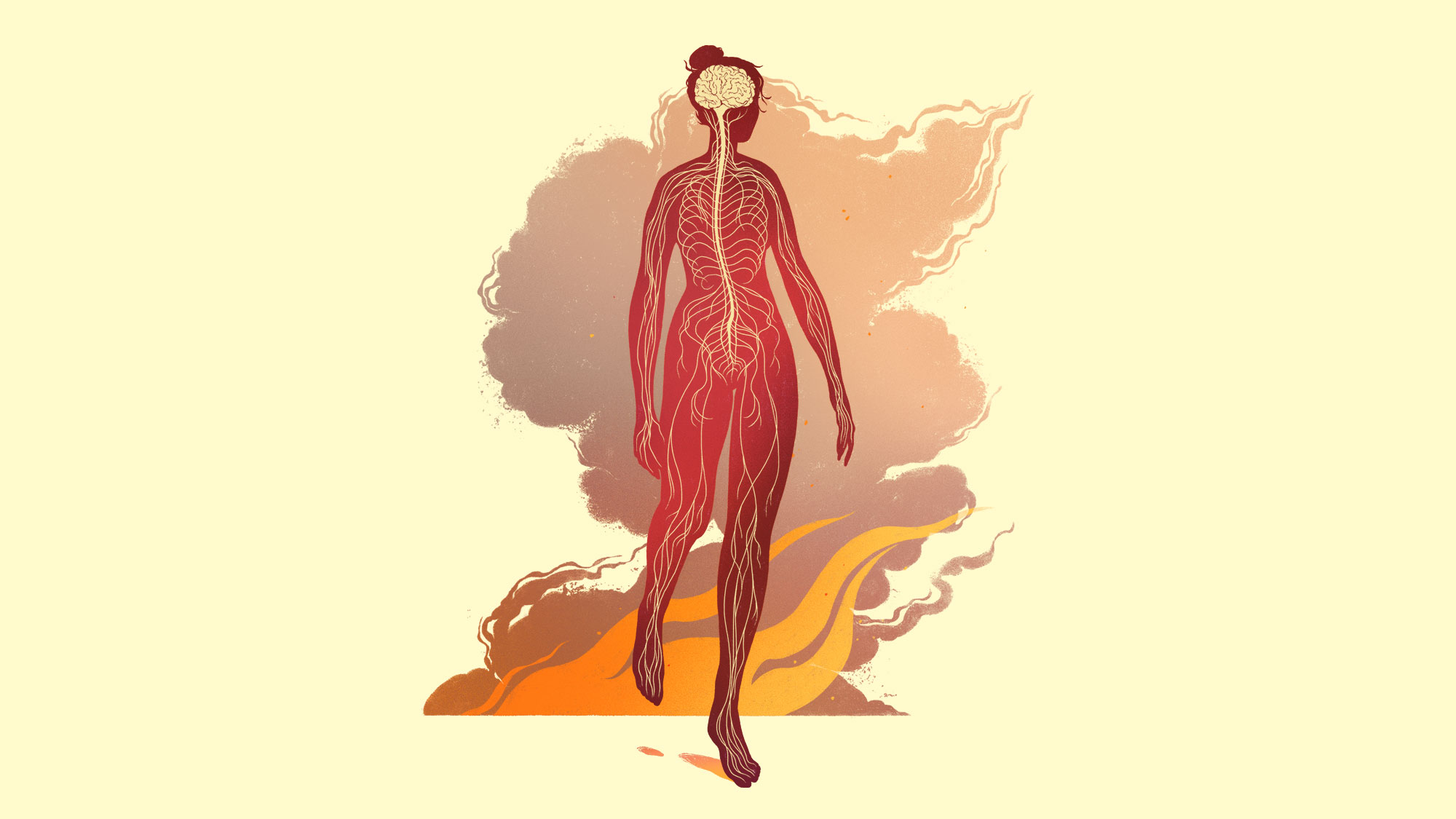
Extreme heat widens blood vessels, flushes fluid out of the bloodstream, and forces the heart to pump two to four times as much blood per minute to cool the body. The result is dehydration, heat’s unfailing sidekick, which thickens the blood and makes it harder to pump.
In the short term, extreme temperatures can lead to heatstroke — when the body’s internal cooling systems can’t keep up and core body temperature rises above 103 degrees F — and heart failure.
Continued exposure to heat waves over the span of many seasons puts repeated strain on the heart, contributing to long-term cardiovascular disease and related deaths. Extreme heat is linked to between 600 and 700 extra deaths from cardiovascular disease in the U.S. every year. These effects are most pronounced in people who work outside and are socioeconomically disadvantaged — generally people who spend more time on average exposed to the elements — though anyone who endures recurring heat waves experiences some level of risk.
Heat is commonly associated with the daytime sun, but studies show that hot nights are even more damaging to human health, robbing our bodies of a crucial window of opportunity to recover from the heat we experienced during the day.
Observational studies have found that nighttime temperatures are increasing at a faster rate than daytime temperatures in much of the world. In China, researchers estimated that hot nights accounted for roughly three times as many heat-related outpatient visits for cardiovascular disease.
A modeling study of countries in East Asia found that if greenhouse gas emissions continue along their current trajectory, hot nights alone could account for nearly 6 percent of all deaths in Japan, South Korea, and China by the end of this century.
Dive deeper