Villagers from a remote part of Malawi get the go-ahead for a legal fight with one of the UK's biggest corporate giants.
Malawian villagers are taking British multinational ABF to court for allegedly knowingly exacerbating flood risks that led to the deaths of seven people in 2022.
ABF is the second largest producer of sugar in the world and owns household brands including Primark, Silver Spoon, Twining's, Ryvita and Kingsmill.
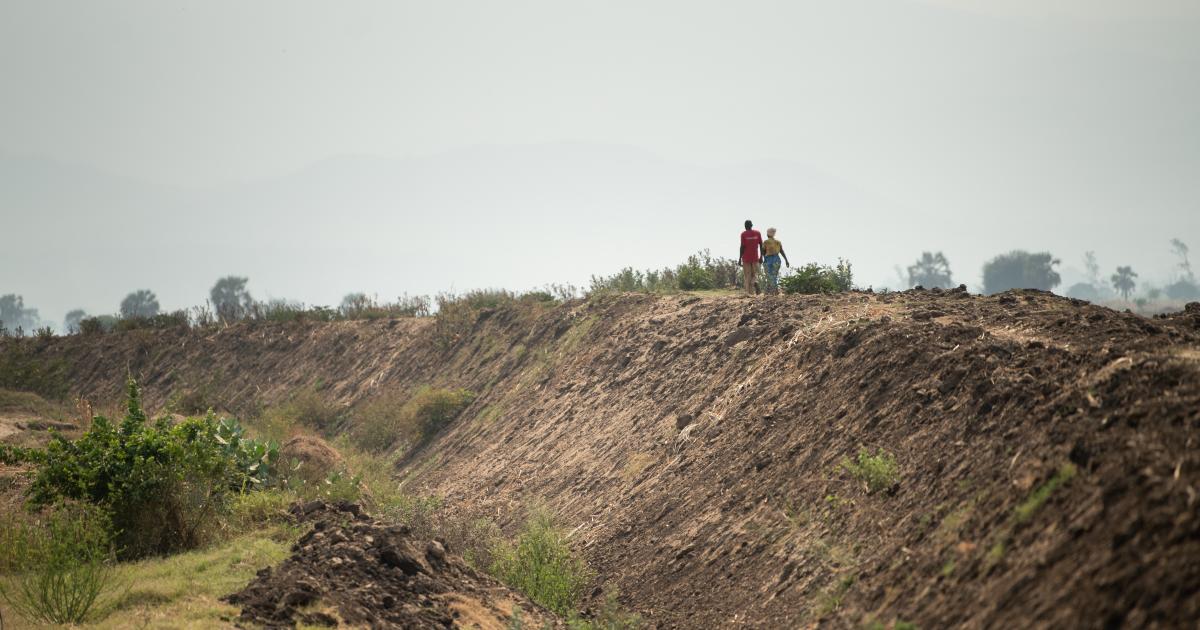
The villagers of Kanseche in rural Malawi claim that flood defences protecting the Nchalo sugar plantation owned by ABF’s African subsidiary Illova Sugar constrained the natural flow of the Mwanza River during Storm Ana, channelling floodwater away from the sugar estate and directly towards the village.
Consequences
The flooding destroyed the village and killed seven people, including two children. Farmland in the area was covered by a thick layer of sediment and rendered unusable.
More than four years later, the village is yet to be rebuilt, and 500 households still live in temporary accommodation.
The case centres on allegations that Illova Sugar was aware of the risks to villagers of raising its embankments to protect its estate.
ABF and Illovo had received advice from the UK Government-funded Climate Resilient Infrastructure Development Facility (CRDF) on how to improve their approach to flood mitigation across Southern Africa between 2014 and 2021.
A 2018 report by the CRDF stressed that the companies’ existing approach of continually raising embankments around their sugar estates had unintended consequences for the surrounding areas.
Trial
It stated: “Without looking at the bigger picture, this only worsens the situation outside of the estates and harms other growers and communities.”
The embankment already existed around the Nchalo plantation when Illova Sugar bought it in the 1990s.
The company repaired it, strengthened it and increased its height on several occasions, including just prior to Storm Ana in 2022, according to the village's Civil Protection Committee.
Modelling commissioned by UK-based NGO Water Witness found that the embankment deepened flood waters caused by the storm to above head height, strengthened their power, and channelled them directly towards the village.
London’s High Court ruled last week that the case will proceed to full trial, which should include the issue of compensation for the villagers, if they win. The case will be heard before May 2028, and likely in the next 12 months.
Significant
Oliver Holland is a solicitor at Leigh Day International, which is representing the villagers. He said: “Like many multinationals, ABF is aware of the heightened threat posed to its crops and other assets due to climate change and is actively working to mitigate those risks across its vulnerable supply chains in places like Malawi.
“In this case, local people allege that protecting the sugar plantation from flooding has come at a terrible cost to those living nearby.”
Dr Nick Hepworth, the chief executive of Water Witness, believes that it could become one of the most significant UK-based cases concerning alleged overseas environmental harms.
Responsibility
He said: “When I visited Kanseche just days after Storm Ana, I met families who had lost everything, stood among the rubble that was once their village, and heard firsthand accounts of the fear and trauma of the night of the flood.
“I heard from a boy whose father had been swept away, and about a baby that slipped from her mother's arms whilst they tried to escape into a tree.”
The case is important for securing justice for affected communities and also for setting a clear global precedent and deter other companies from cutting corners or externalising risks onto vulnerable people and environments, Dr Hepworth said.
The case amplifies the case for British business and human rights legislation to force companies to take responsibility for their actions, he added.
A spokesperson for ABF said that the claim had no merit, and that it would defend it 'robustly'.
"This claim seeks wrongly to blame ABF for a once-in-a-lifetime tropical storm that devastated communities across a vast area of southern Africa.
"The sheer scale of Tropical Storm Ana meant that serious flooding and damage would have occurred at Kanseche regardless of the presence of embankments at the sugar estate."
The spokesperson added that Illovo Sugar Malawi had worked 'intensively' with those affected as well as with the Malawian government and aid NGOs to provide essential supplies of food, water and shelter.
This Author
Catherine Early is the chief reporter for The Ecologist and a freelance writer and editor specialising in the environment and sustainability.