Britain’s present economic bind began in the winter of 2021-22. The success of the vaccine roll-out over the previous months had made it possible to ‘reopen’ the economy, even in areas such as hospitality whose entire future had once looked uncertain. But bottlenecks in supply chains and labour markets then exerted an upward pressure on prices, including wages. Recognising the revival, and alert to the inflationary forces it had unleashed, in December 2021 the Bank of England made the first in a series of interest-rate hikes, which continued until, by the summer of 2023, the basic rate had reached a level not seen since the collapse of Lehman Brothers. Mortgage rates followed suit.
In February 2022 two further economically significant events took place. At that month’s meeting of the Bank of England’s Monetary Policy Committee, it was agreed that the bank would embark on a strategy of ‘quantitative tightening’, selling large numbers of the UK government bonds (‘gilts’) it had spent much of the previous thirteen years buying, and which had kept the cost of borrowing down. Quantitative tightening would do the reverse: by reducing the demand for gilts, it would make it more expensive for the government to borrow. Later the same month, Russia invaded Ukraine. Energy prices surged, driving inflation up in many countries, Britain included.
For the past four and a half years, two things have become too expensive: satisfying the material needs of the population and the financial demands of the government’s creditors. The price of food rose by 25 per cent over 2022 and 2023, and hasn’t come back down again. The energy price cap, set by Ofgem to limit unit costs, more than tripled in the year following the invasion of Ukraine; it then fell again, but never returned to 2021 levels. Rents in the private housing sector rose by more than 6 per cent in 2023, then by a similar amount in 2024. Wages have been rising, but are far from making up the substantial ground they lost in 2022 and 2023. Meanwhile, the state, which spent much of the previous decade borrowing at a rate well below 2 per cent, is confronted by rates more than twice that level. The government currently spends over £110 billion per year to service its debt, which is more than it spends on schools.
These two affordability crises are linked in various ways. Most directly, the government’s cost of borrowing rises precisely because investors worry that inflation has become baked into the system: if their expectation is that the Bank of England will respond to inflation with future rate rises, their expectations for gilt yields rise accordingly. But underlying all this is a more material crisis of affordability rooted in the fact that access to natural resources, fuel above all, has been restricted by geopolitical disruption. Sometimes rising prices reflect a real change in the state of the world.
The troubles with affordability are also linked via political channels. The cost-of-living crisis, unabated over nearly five years, has caused deep popular discontent. Animosity towards the professional politicians of the two major parties has grown, and a far wider range of parties, voices and policy ideas has entered the mainstream from both left and right. There has been ample reflection on the fact that Britain is about to appoint its seventh prime minister since the Brexit referendum, but it may also be significant that this will be its fifth prime minister since the start of the war in Ukraine. As Britain becomes less politically predictable, there are murmurs that bond investors are adding a risk premium to the cost of debt, since it is no longer clear who will be in charge of the country from one year to the next, or how disciplined they will be in their fiscal policy.
Politicians’ response to this squeeze has been to insist on the need for economic growth. Growth doesn’t bring prices or interest rates down, but it does reduce unaffordability by putting more money in people’s pockets and the Treasury’s coffers. The catch is that growth is much easier to achieve when consumers or governments have spare money to spend or cheap ways to borrow it.
One option is to ignore the bond markets altogether and do whatever you think will kickstart growth. Britain underwent a brief experiment of this sort in September 2022, when Liz Truss and Kwasi Kwarteng sacked the permanent secretary to the Treasury, silenced the Office for Budget Responsibility, announced £45 billion of tax cuts, and made an astonishing commitment to cover household energy bills that would have cost more than £120 billion a year. The cost of borrowing shot up further, Tory poll numbers tanked, and the outcome was a return to the stifling orthodoxy of Rishi Sunak and Jeremy Hunt.
Government borrowing costs have remained high ever since, which is interpreted by political pundits as evidence that the bond markets still aren’t happy with day-to-day fiscal policy announcements, especially when they involve welfare spending. But as heterodox economists such as Daniela Gabor and Adam Tooze have repeatedly emphasised, there was another protagonist in the Truss disaster: the Bank of England, which made it clear that its policy of offloading government bonds would take precedence over supporting the constitutionally mandated (if not quite elected) government of the day. This made lending to the British state a riskier proposition, not just in the autumn of 2022 but thereafter. At present, the bank’s only mandatory task is to bring inflation down. Even the Fed is more ‘progressive’ (it also has a mandate to pursue high employment).
A second option is to focus on public and private sector investment, of a sort intended to increase national prosperity in the long term, while also meeting a set of ‘fiscal rules’ designed to convince investors that the government isn’t going to flood the market with gilts. This was the plan pursued by Keir Starmer and Rachel Reeves. Supply-side reforms, focused especially on shaking up the planning system, support for new infrastructure projects (reliant on strategic injections of public finance) and a determination to cut ‘red tape’, were put forward as the means to unleash investment. The Labour Growth Group was established a couple of weeks after Starmer’s landslide victory in 2024, when 54 newly elected MPs wrote to the prime minister to insist that he make growth his central mission. Reeves’s two fiscal rules – that all day-to-day spending must be paid for out of revenues, and that debt must be falling as a percentage of GDP within a five-year horizon – were a deliberate tying of her own hands when it came to borrowing. Whatever its economic merits, the political shortcoming of this agenda is the time it takes to succeed when faced with an increasingly irate public – too long, it turns out, to save Starmer.
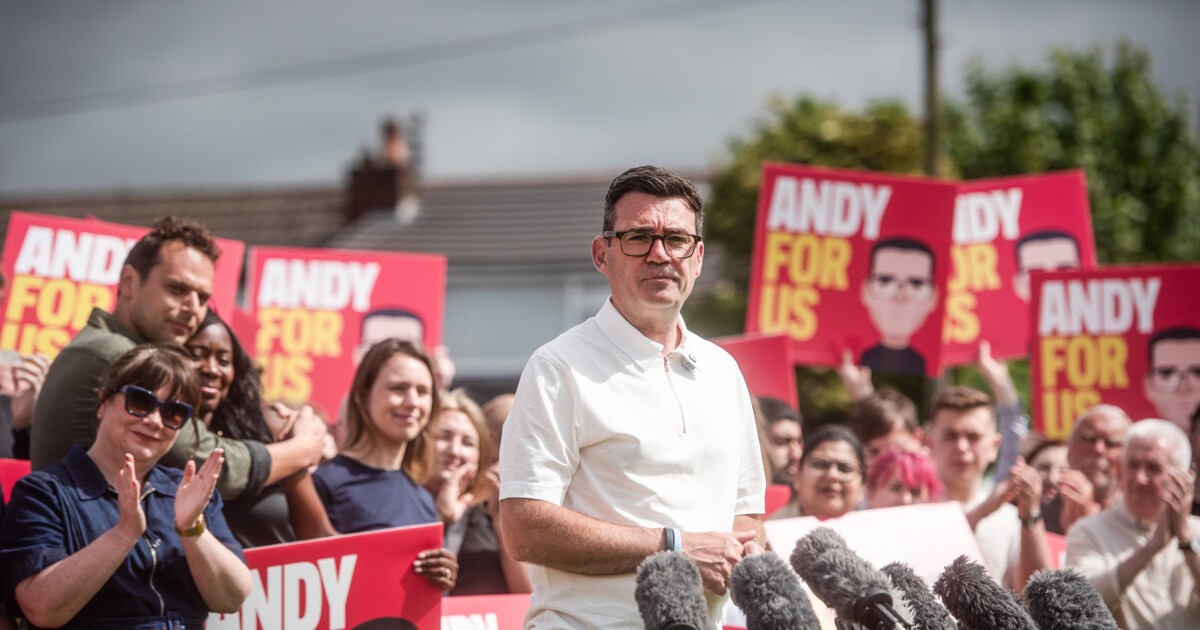
With Andy Burnham now about to enter Downing Street, the question is whether there is a third option. In an interview with the New Statesman last September, Burnham made a throwaway remark he has not been allowed to forget: ‘We’ve got to get beyond this thing of being in hock to the bond markets.’ Fund managers lined up to express their dismay, sounding dire warnings about what lay ahead if Burnham were allowed into power. Since then, the press – led by the usually more circumspect Financial Times – has been like a dog with a bone, chasing down bond market analysts for apocalyptic visions of Burnhamism, treating vox pops conducted within the Square Mile as the expression of pure economic reason.
Burnham’s allies have tried to calm things down (though the unexplained cancellation of a planned call with hedge fund managers was enough to trouble the FT’s front page). Burnham has expressed support for Reeves’s fiscal rules, assembled a new coterie of respected economists as advisers (including Andy Haldane, formerly of the Bank of England), and is likely to appoint a safe option as chancellor. But rhetorically he continues to throw caution to the wind. A favourite phrase is that ‘Britain has been on the wrong path for forty years,’ a reference to the neoliberal model established by Margaret Thatcher. His tendency to make fiscal pledges on the hoof depending on what his audience wants to hear – whether farmers wanting inheritance tax cuts, women pensioners wanting compensation for the raising of their retirement age (a commitment he has already gone back on) or the Times probing him on defence spending – isn’t on the level of Boris Johnson, but could still get him into trouble.
While the precise contours of a Burnhamite political economy are hard to predict, there are clues scattered through his speeches and the ideas of his allies. There is a focus on one Thatcherite policy in particular: the privatisation of public utilities and housing. Burnham has pledged to bring utilities back under ‘public control’ (starting with Thames Water), a term that sidesteps a commitment to full-scale nationalisation but gives a controlling share to publicly accountable independent institutions. As mayor of Greater Manchester, Burnham brought privatised bus networks under public control, allowing the municipal authority, TfGM, to set fares and run operations. During her brief stint as transport secretary at the start of Starmer’s term, Louise Haigh, Burnham’s campaign manager in the Makerfield by-election, set up Great British Railways to take over the country’s rail infrastructure and manage the process of bringing privatised rail franchises back into public ownership.
The gradual reversal (or weakening, at least) of privatisation and other policies such as rent freezes are intended as popular, even populist, ways of making life more bearable for ordinary people. To put the case generously, if Truss planned to reform the supply side in favour of the rich, and Starmer did so for property developers and infrastructure investors, Burnham aims to help people who just want somewhere warm to live and a way of getting to work. This is Manchesterism: public intervention that makes the essentials of life cheaper and more reliable. As another videogenic municipal mayor, Zohran Mamdani, has shown, the pursuit of affordability at every turn can be an effective way to build a liberal-left coalition – at least among metropolitan workers.
Deprivatisation aside, there is little as yet in the Burnham platform that suggests a significant move away from the political economy of Starmer and Reeves. But more radical ideas do circulate in Burnham’s networks. Haigh has laid out a sophisticated plan in the pages of Renewal, the journal of the soft left, for a new fiscal framework. This would include extending the time horizon within which public borrowing is judged from five years to ten, so as to capture the true long-term benefits of public investment. It also proposes stripping the Treasury of budget-setting responsibilities, in order to liberate Whitehall from the Treasury’s austerity bias, and redesigning the Bank of England’s mandate to make it more supportive of growth, much as Gabor and Tooze have been suggesting.
Mathew Lawrence, director of the left-wing Common Wealth think tank, has drawn up an ambitious agenda for extending Manchesterism to tackle the long-term pathologies of British capitalism, led by what he calls the ‘Productive State’. He makes the case for intervening wherever investment has dried up, prices are being over-inflated by rent-seeking, or primary human needs are being exploited for profit. What began as a policy for Manchester buses should become the template for housing and care, such that the basic conditions of social life can no longer be treated as an asset class. It is the kind of hopeful manifesto that makes Treasury mandarins shudder.
Given the multiple electorates Burnham has to satisfy – the people of Makerfield, the Parliamentary Labour Party, the Labour Party membership, and eventually the British electorate – it is perhaps no surprise that he hasn’t committed to a specific radical ideological direction. At present, he is a retail product: someone who appears relaxed around ordinary people and on camera, and although he has spent plenty of time in Westminster, hasn’t (yet) become reassociated with that much loathed place. Whatever rash remarks he may have made about the bond markets or spending commitments, Burnham understands something that Starmer grasped too late: the unaffordability of everyday life has become the central issue in British politics, around which everything else revolves.
In the hundred years or so since Britain introduced universal suffrage, capitalism in the global North has experienced only two periods of stable and reliable economic growth. Both were artefacts of American hegemony, whose vision of the international order provided a platform on which particular versions of capitalism could thrive around the world. The first was the three decades that followed the Second World War, the trente glorieuses, in which full employment, steady productivity growth, progressive taxation and a supportive welfare state generated mass prosperity and social cohesion. The second was the fifteen years that followed the recession of the early 1990s (and, in Britain, Black Wednesday), which came to a shuddering halt with the global financial crisis. This was the period of flexible labour markets, maximum freedom for finance capital and the entry of China into the world economy, which combined to produce the ‘great moderation’ of non-inflationary growth.
Starmer is the first Labour leader to have won a majority outside those two windows, and this – whatever his personal shortcomings as a leader – is a partial explanation of the weakness of his performance from the start. His insistence that growth be the focus, as it was for Truss before him, is understandable: growth widens political choices and sustains the basic postwar expectation that the future will be materially better than the past. But what if stable, reliable growth isn’t coming back? What if those 45 years were the exception rather than the rule? Burnham hasn’t been banging on about growth to the same extent as recent political leaders or his ex-rival for the leadership, Wes Streeting. Policies aimed at improving affordability are ameliorative as much as anything, seeking to position the state on the side of working people against rentiers and price-gougers. This is sensible left populism. But the question remains: what does progress look like, if it is not reducible to an increase in aggregate prosperity?
The Swiss critical theorist Rahel Jaeggi, in her recent book Progress and Regression, seeks to distinguish ‘progress’ from mere technological development or change. Progress entails injustice being overcome through collective action over time, with outcomes that come to appear obviously right. Jaeggi uses the example of corporal punishment in schools, something that was once treated as normal but is now considered beyond the pale thanks to a reflexive process of argument, campaigning and consensus formation. This is evidence of progress, not just policy change or modernisation. Progress also provokes the hallucinatory forces of reaction that swirl around us today, which are based on fantasies of the way life was lived in a poorly remembered past.
At a time when growth cannot simply be ‘unleashed’ or ‘kickstarted’, no matter how much political will there is, and when technological modernisation probably means data centres littering the countryside and the automation of human creativity, the left has little choice but to think about progress in social and political terms. Burnham’s enthusiasm for radical constitutional reform (he has promised to fight a future general election on a commitment to proportional representation), the devolution of welfare policy and a cap on political donations bears the hallmarks of the soft left. If, as seems likely, Burnhamism turns out not to involve a radical departure from the post-2021 economic bind, the case for Burnham getting his hands dirty doing progressive politics – making difficult trade-offs, building leftist coalitions beyond the Labour Party, confronting vested interests and, above all, combating the forces of fascist regression – will be all the greater. Let’s hope he has it in him.