The defining characteristics of our political system – a parliamentary monarchy in a union-state – emerged in the course of two fraught decades at the turn of the 18th century, between the so-called Glorious Revolution of 1688 and the Treaty of Union between England and Scotland in 1707. The revolution of 1688 was glorious largely because – unlike the earlier revolution in the 1640s – it was bloodless (in England at least) and did not require the execution of the sitting monarch. But it was still a messy business. It not only provoked civil wars in Scotland and Ireland, but also depended on two far from compelling fictions: that the sitting monarch, James II and VII, a Catholic, had abdicated and that his baby son, who should have succeeded him, was a pretender, smuggled into the apartments of James’s second wife, Mary of Modena, in a warming pan. Instead, the crown devolved to Mary, the Protestant daughter of James’s first wife, and her Dutch husband, William of Orange, who ruled jointly.
Matters were less muddied in Scotland, whose revolutionary settlement deemed James to have ‘forefaulted’ the crown. In both countries the revolution gave rise to parties that advanced differing interpretations of the events of 1688-89. Whigs celebrated the overthrow of James; Jacobite opponents of the new order bemoaned a sinful departure from divinely ordained rule; and Tories – who were just as involved in the revolution as the Whigs but subscribed to similar notions of divine right as the Jacobites – equivocated on the vexed question of resistance. The succession question exacerbated these divisions. Mary’s Protestant sister, Anne, was the heir to the childless William and Mary, but when the last of Anne’s offspring died in 1700, the English Parliament entailed the crown on the genealogically distant – but reliably Protestant – Electress Sophia of Hanover and her heirs. This provision did not apply in Scotland, an independent kingdom that happened to share the same monarch as England, but was free to make its own choice of a successor. As a means of resolving the succession crisis, commissioners from England and Scotland negotiated the incorporation of England and Scotland in a new Kingdom of Great Britain, which adhered to the Hanoverian succession. While the difficult ratification process in the Parliament of Scotland of 1706-7 was sweetened with English largesse, Scottish public opinion was largely – and passionately – hostile. These divisions compounded existing party differences between Whigs and Jacobites. The claim of the exiled Stuarts – founded initially on divine right and primogeniture – became a patriotic cause, which sustained a series of Jacobite risings in Scotland in 1708, 1715, 1719 and 1745-46, as well as plots in 1717 and 1753.
In retrospect this was an era of intense party conflict north and south of the border. The early 18th-century ‘rage of party’ provoked unrestrained polemic, obloquy and satire between Whigs and Tories. This grand quarrel also included multiple skirmishes involving the parties’ allies and proxies: vicious pamphlet wars took place between Low Churchmen and High Churchmen in England, between Presbyterians and Episcopalians in Scotland, between upholders of the principles of the revolution and outright Jacobites across these islands. A further set of constitutional disagreements both exacerbated and complicated division, because the debate in Scotland, between proponents of an incorporating union and champions of a looser confederal arrangement that preserved separate parliaments for Scotland and England, saw some Scots Episcopalians in the former camp and some Whig-Presbyterians in the latter. However, as both Marc Mierowsky and Allan MacInnes warn, we should avoid the all too plausible assumption that in this atmosphere of intense inter-party rivalry individuals were consistent in their professed loyalties. Rather, political uncertainty and the problem of communicating at a distance, especially between Jacobites in Britain and the exiled Stuart court on the Continent, supplied opportunities for amphibious behaviours of many sorts: double-crossing, spying for both sides and agile switches of allegiance.
Simon Fraser of Beaufort, the rainmaker behind the Scotch Plot of 1703, was a double agent: he was the Jacobite court-in-exile’s prime conspirator north of the border, but was also willing to share intelligence with the Duke of Queensberry, who headed Queen Anne’s administration in Scotland. Lord Seafield, the lord chancellor of Scotland and one of the commissioners who negotiated the Treaty of Union, played a prominent role in its ratification; however, in 1713 he introduced a measure in the British House of Lords calling for the Union’s repeal. More dramatically, the Earl of Mar, another commissioner, who played a significant role as secretary of state in seeing the Articles of Union through the Scottish Parliament, initially welcomed the Hanoverian succession in 1714, but, when his offers of service were spurned, masterminded the Jacobite Rising of 1715. John Ker of Kersland – a slippery figure and a self-serving confabulist – seems to have plotted during 1707-8 to bring together the opposite extremes of Scottish life, the radical Presbyterian Covenanters of the south-west and Jacobites from north of the Tay, in an anti-Union alliance; he was also reporting back to Queensberry.
That shadowy place between parties, a zone where spies and agents of influence operated, provides the main scene of action in Mierowsky’s account of the Union. It is difficult terrain for any historian: a realm of coyness and dissimulation, of ciphers and aliases, and of decidedly unreliable memoirs. Mierowsky tells a fluent and exciting story where one might expect unknowability, hesitation and narrative dead ends. His central character, Daniel Defoe, is not at this stage the pioneer novelist – of Robinson Crusoe (1719) and Moll Flanders (1722) – he became. We encounter Defoe at a troubled period, when his moonlighting as a pamphleteer had caused so much offence that he had gone into hiding, leaving his beleaguered wife, Mary – with four daughters and two sons to look after – in sole charge of what was notionally his main enterprise, their brickworks. What had brought about the threat of prosecution for sedition was Defoe’s mischievous tract The Shortest Way with the Dissenters (1702), a satire whose threat to public order resided in its all too convincing impersonation of intolerant High Church rhetoric; those angry Tory gammons it had aroused became even more incensed when they realised they had been gulled. Defoe was eventually apprehended and sentenced to an undefined spell in Newgate Prison, a substantial fine and three sessions in the public pillory, but Robert Harley, a member of the administration that had prosecuted him, recognised that such a gifted journalist might prove useful in government service. The administration arranged for his fine to be paid via an intermediary out of secret service funds. Defoe would serve the English government as a spy-cum-propagandist.
Meanwhile, Anglo-Scottish relations deteriorated. Ironically, the years immediately preceding 1707 were – leaving aside periods of actual cross-border warfare – some of the stormiest in the history of Scotland’s relations with England. The Union was not the product of an emergent sense of Britishness; that came later. In retaliation against the way England’s government and mercantile interests had frustrated Scotland’s short-lived colony on the isthmus of Darien in Panama in 1698-1700, the crew of the Worcester, an English ship that had docked at Leith, were arrested as pirates in the summer of 1704. That same year the Scottish Parliament passed the Act of Security, which stated that without rectification of Scotland’s grievances on trade, it would in the event of Queen Anne’s death confer its crown on a different successor from the one chosen by England. The English Parliament then passed retaliatory legislation, the Alien Act of February 1705, which excluded Scottish coal, cattle and linen from English markets unless the Scots recognised the Hanoverian succession. A month later, the Scottish authorities, caving to the Edinburgh mob, hanged Captain Green of the Worcester and two of his crew. But economic pressure forced the Scots to negotiate. In the summer of 1706 commissioners from Scotland and England agreed Articles of Union, the most important of which was the Second Article, concerning the Hanoverian succession; the amalgamation of the two parliaments was relegated to the Third Article. But the treaty still needed ratification by the Scottish Parliament, whose members had to brave the taunts and jostling of the mob in the streets outside.
Defoe, a Dissenter, was sent north in September 1706 to live among his fellow Presbyterians. His role involved reporting back to the government in England on Scottish affairs as well as shaping public opinion in Scotland as a pro-Union pamphleteer. Defoe – or Alexander Goldsmith, his cover name – was part of a network of agents, which included William Paterson, another propagandist, and David Fearne, a more conventional spy, whose dispatches to London were channelled through John Bell, the postmaster at Newcastle. Defoe’s pamphlets – bespoke efforts by a man on the spot – helped to ease the passage of the treaty through the Scottish Parliament. Mierowsky brings a new dimension to the historiography of the Union, emphasising back channels and espionage without endorsing the legend of outright bribery and corruption.
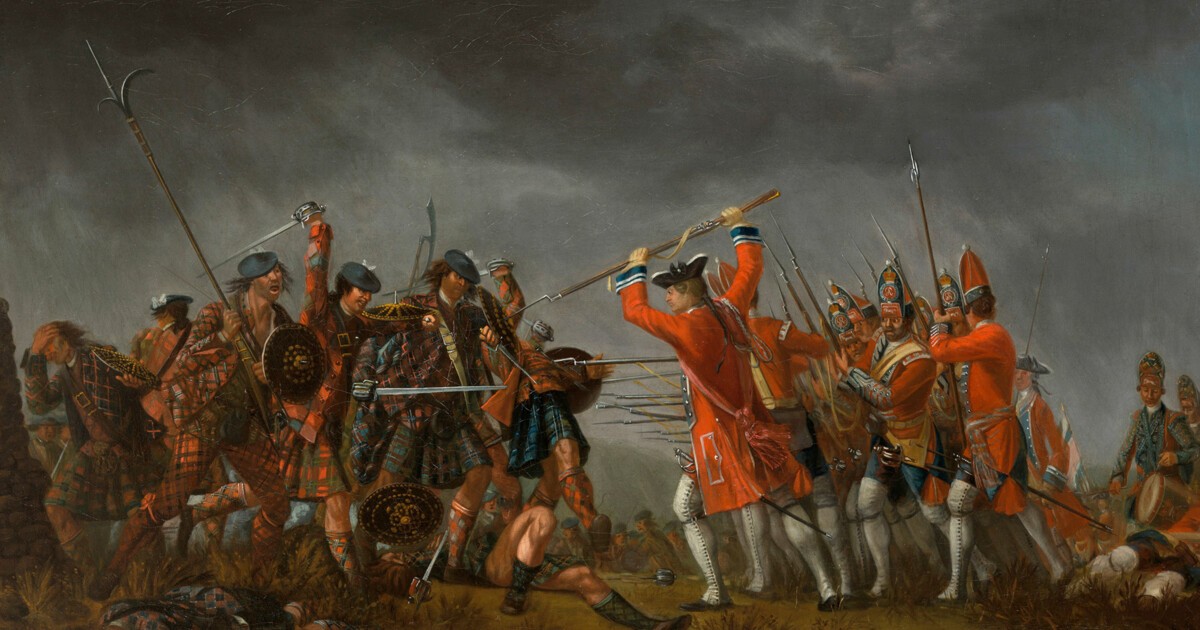
Outside Parliament, despite Defoe’s efforts, Scottish public opinion was overwhelmingly against incorporation with England. MacInnes argues that just because hostility to the Union transformed Jacobitism into a national movement doesn’t mean it was narrowly parochial or inward-looking. Rather, he examines Jacobitism through the lens of 18th-century globalisation. Most obviously, the movement in Scotland needed to communicate with the Stuart court in exile. Its plans were in turn co-ordinated with various states across Europe, whose interests differed from those of Britain and the Hanoverian dynasty, given that the Jacobite risings in Scotland forced the Hanoverian regime to divert military resources away from battlefields on the continent. Nor should we forget the diaspora of Jacobite exiles across Europe. However, MacInnes also explores networks of Jacobite soldiers and merchants across the world, in the American colonies, India and Africa. In the aftermath of the Battle of Culloden in April 1746, 22 defeated clansmen from the MacDonnells of Glengarry and Stewarts of Atholl were hustled aboard a ship in Cromarty Bay. Later, they were transferred to a ship bound for the American colonies. But their ship was captured by Turkish pirates, who killed the captain and crew but spared the ethnically distinctive, tartan-clad Gaels. Eventually, in 1748, the ship brought the Highlanders to an island off the coast of Abyssinia, where they were surprised to be greeted in Gaelic by the island’s governor, a fellow Stewart from Atholl, who had as a youth survived the failure of the Darien expedition and decided not to return to Scotland.
MacInnes is the pre-eminent historian of the early modern Scottish Highlands, and nobody has done more to revise the mythology that surrounds Jacobitism. The commercial transformation of the Scottish Highlands began before – not, as often assumed, after – the defeat of the Jacobites at Culloden. The upheavals of the civil wars in the 1640s were just as unsettling, producing a legacy of indebtedness among clan elites that forced them to adopt a more commercial approach to their land. The reality of clanship involved both a kin-based idea of trusteeship over the lands of the clan, embodied in the concept of dùthchas, and the heritable title of chiefs-as-landlords – oighreachd in Gaelic. Nor were the clans wholehearted and consistent in their allegiance during the era of active Jacobitism between 1689 and 1746. A small minority of clans were loyally Hanoverian, while others switched their backing from one uprising to another or adopted a position of neutrality. Several clans were at times internally divided on the question of taking up arms for the Pretender. More generally, MacInnes warns us not to exaggerate the differences between Highlands and Lowlands. Both regions experienced developing land markets and processes of agrarian consolidation. But hardly anybody talks about the Lowland Clearances. This is because the tempo of commercialisation in the Lowlands was more gradual and did not give rise, as it eventually would in parts of the Highlands, to a collective trauma of dispossession.
Despite its various armed uprisings, Scotland in the first half of the 18th century has reassuring lessons for those concerned about current trends towards political polarisation. It shows that less obtrusive countervailing forces have the potential to quell the intensity of party rancour. Good neighbourliness and the corporate identity of Scotland’s landed elites – as Daniel Szechi’s work has also demonstrated – helped to soften animosities and patch up partisan divisions. Whig gentlemen lobbied the state to spare the lives and estates of their rebel neighbours. During his stint at the Paris embassy between 1714 and 1720, the Earl of Stair perceived that obtaining pardons for Jacobites in exile might, as MacInnes notes, turn them into ‘passive Jacobites once home’. Scotland’s leading Whig aristocrats, the Duke of Argyll and his brother the Earl of Islay, found posts in government and the military for members of families implicated in Jacobite plotting. As a result, Jacobites came to collaborate with the Hanoverian regime; to find themselves caught in webs of obligation to their Whig neighbours; to become ever more diffident about their Jacobite allegiance. For many formerly active Jacobites, militant commitment dwindled into wishful inertia. However, enough of them would take up arms in the Forty-five for the British state to adopt a much firmer line than it had before with the rebels and their estates. Forfeiture, annexation and what MacInnes calls ‘systematic state terrorism’ that ‘verged on ethnic cleansing’ would replace the measured sarabande of intercession and indulgence that had followed the Fifteen.
Unsurprisingly, the Duke of Cumberland’s brutality in the aftermath of Culloden remains a live issue in Scotland; so too are the grubby political jobbery of 1707 and the Highland Clearances of the first half of the 19th century. The Scottish independence referendum of 2014 rekindled anti-Union passions. Robert Burns’s poem of 1791, ‘Sic a Parcel o’Rogues in a Nation’, with its famous lines describing how Scotland’s sovereignty was ‘bought and sold for English gold’, is part of the currency of Scottish popular culture. According to Mierowsky, it ‘has been repeated so often that in certain quarters it is accepted as fact.’ Nearly three centuries after its demise, Jacobitism too remains unexpectedly resonant. In the aftermath of the referendum – which produced a 55-45 split against independence – some nationalists proudly described themselves as ‘the 45’. In the UK as a whole, the travails of the House of Windsor have left the monarchy as precarious as at any time since 1688. Should public opinion demand regime change but shrink from the grey prospect of a republic with a superannuated politician at its head, the Bavarian royal family, which inherited the Jacobite claim, might offer an impeccably legitimist alternative.