Acharacter in Josh Safdie’s new film, Marty Supreme, says there are no second chances in this world. The remark is meant to sound tough and true, if a little worn out. In fact, although the character may be right about many places in reality, he couldn’t be more wrong about the world of this movie. Everyone has dozens of chances, and everyone screws up most of them.
Marty Supreme is the second film Safdie has made without his usual co-director, his brother, Benny. Still, much of their joint style remains: the energy, the crowded screen, the use of platitudes as if they were wisdom. A good example of the last effect occurs in Uncut Gems (2019), where Adam Sandler is scripted to swear at least six times a sentence so that we know how stylish and untamed his character is. All we learn is that bad habits don’t go away.
Richard Brody, in his review of Uncut Gems, has an interesting theory about this style. It’s not an attempt at messy realism; it’s a reflection on the messiness of the real. It indicates an ‘awareness that what takes place in the world is often absurd, incredible, filled with the sort of astonishing twists that people say they would never believe if they saw them in a movie’. This view doesn’t get rid of the platitudes or chaotic repetitions, but it puts them to work.
The lapses into cliché are more controlled in Marty Supreme and I would like to think more ironic. The script was written by Safdie and Ronald Bronstein. Most of the characters believe their lives are a kind of movie, and when a character speaks of ‘theatre’ he is not talking about a building but about the agitated world he lives in. But then how do you make a good movie about an imagined bad movie?
One of the strong features of the plot of Marty Supreme (and to some extent Uncut Gems) is its proximity to parable and the absence of masses of money. You could be really rich if you were lucky in your next gambling spree; if you hadn’t already pawned the pricey object you borrowed; if your boss would pay you what he owed you; if your family would do their bit.
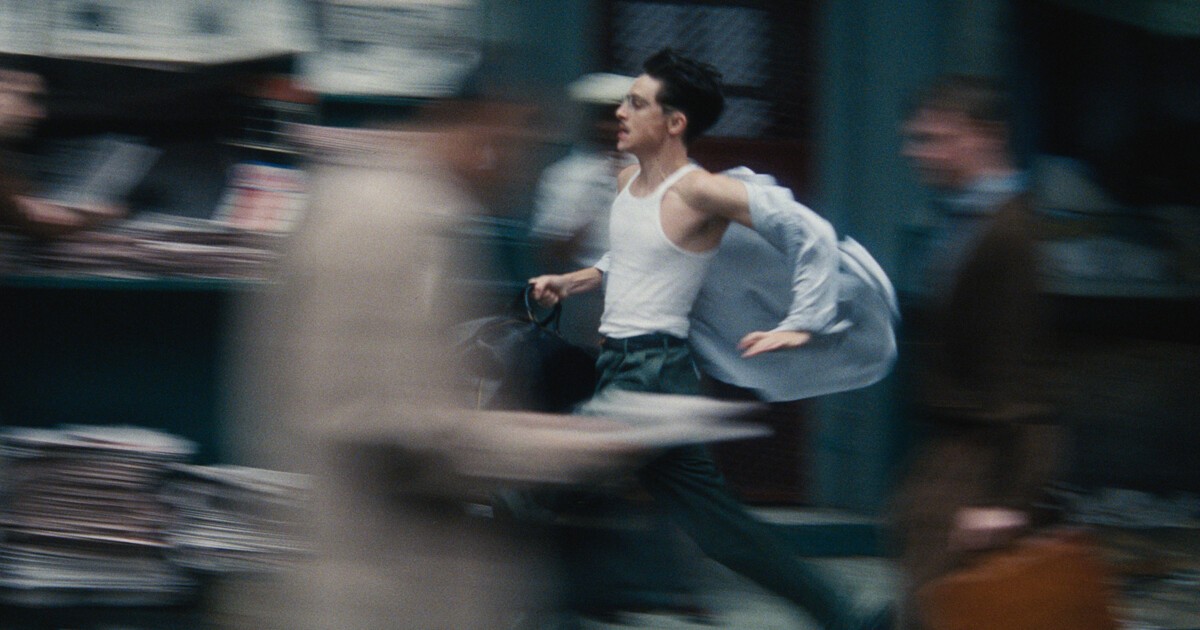
A fine example of this occurs early in Marty Supreme when our hero (Timothée Chalamet) has to hold up the New York shoe shop where he works because he needs cash for a ticket to England. He waves a gun at a colleague and talks like a gangster. Is he really threatening or just playing a game? His need is too serious for this to be an act, his act too flashy and theatrical to be serious. Marty gets the money. The double acting was well done.
Chalamet is the perfect actor for this part. He looks ridiculously young, never takes his glasses off and projects a timeless innocence. The reaction of the actress Kay Stone (played by Gwyneth Paltrow with a calm that belongs to no one else in the film) is that of many of us. She meets him at the Ritz in London, and knows he is a pest, definitely to be ignored. Then she gives in to her curiosity or his secret charm.
Marty’s reason for the trip to England is not comic in itself, but for many people in and out of the movie it’s something to snigger about. He wants to compete in the British Open table tennis competition. The element of the ridiculous never fades from the story, but curiously – this is a true tour de force of filming – it doesn’t dilute in any way the drama of the closely-fought games. It’s a smart move that Safdie shows us only the suspense of late moments in the matches and not the tiring treks that lead to their fraught, dramatic results. In this version of the game, the ball is mostly off-screen, sent there by a shot no one could possibly return – until it comes back from nowhere, and the game continues.
The results return us to parable, or exemplary tale. In London, Marty defeats the reigning champion (Béla Kletzki, played by Géza Röhrig), but is then defeated in the final by a Japanese competitor, Koto Endo (Koto Kawaguchi). For the rest of the film, Marty is seeking money to go to Tokyo for a rematch in the world championship. This quest produces several sub-plots in New York, which involve theft and arrest, a bathroom collapsing through an apartment floor and a search for a lost dog which culminates in the accidental burning down of a petrol station.
Meanwhile, the main plot continues steadily. Marty meets Kay Stone, who is trying to make a comeback in a new play (it doesn’t work), and learns that his girlfriend, Rachel (Odessa A’zion), is pregnant. She tells him he’s the father, though he denies it. Marty comes up with a plan to get to Tokyo. Stone’s husband is a millionaire who sells pens and is sponsoring a table tennis exhibition that would precede the championship event. Marty can play against Endo in Tokyo, and his travel will be covered, as long as he makes sure he loses the match. If the Japanese win, they will buy pens. Losing is exactly what Marty doesn’t want and he initially says no. When he realises he’s not going to get any other funding, he finally agrees.
Meanwhile Safdie and Bronstein have decided that table tennis can be allowed to carry a bit of allegorical history on the side. When Marty is about to defeat the Hungarian Kletzki he says he will do what Auschwitz failed to do. (‘I’m Jewish, I can say that,’ he adds.) And by the time the contest starts in Tokyo, the whole film seems invested in the idea that the match will be a sporting repeat of Hiroshima, Japan’s chance of revenge and America’s rush to repetition. Close-ups of the audience watching the match, including a crowd of GIs, enact this double story.
I need to mention the music by Daniel Lopatin, which haunts the whole film, especially the games, and feels more like a parallel opera than a soundtrack, an aural story of victory, suspense, defeat and romance for which music may well be the best possible messenger.
The story is double in another way. Marty throws the exhibition match as planned but then makes a speech explaining what has happened and pleading for the second chance no one is supposed to have. The organisers and the crowd agree, and so does Endo. The predictable close call plays out in spectacular form, and it becomes clear that whoever wins, the other result would not have ruined the movie. One implication of a victory for Marty would be that crazy persistence may be rewarded and American imperialism can be romantic. Endo’s winning would remind us of sober probability and all the other sides of empire.