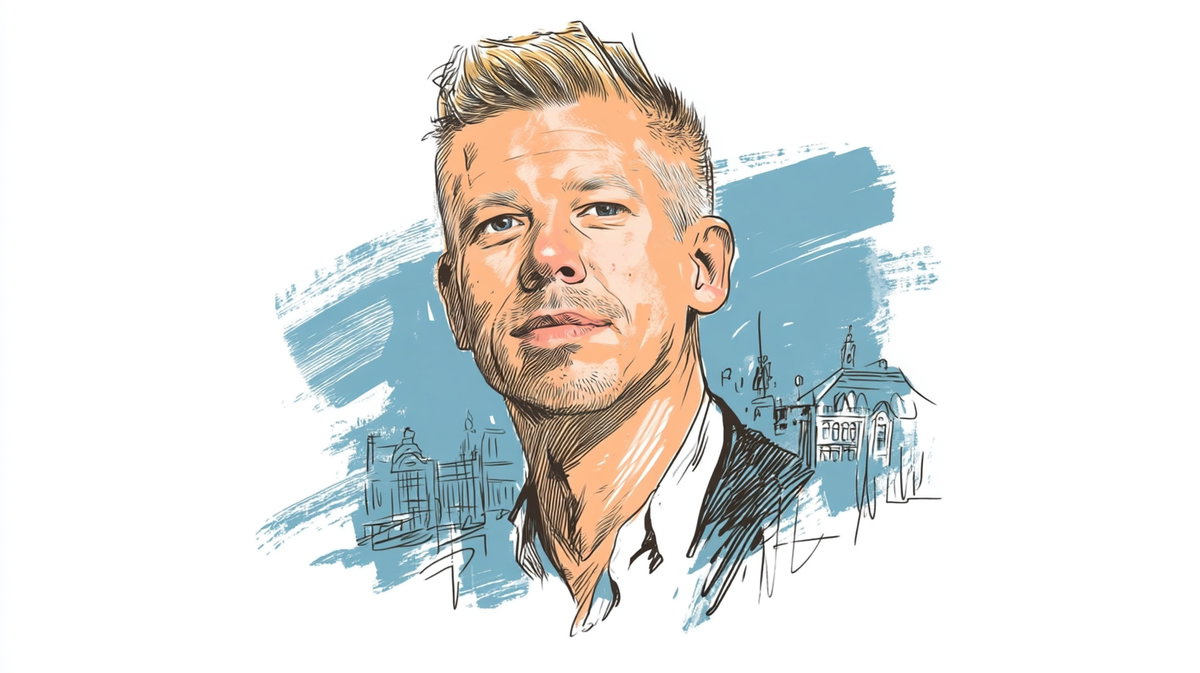
Reclaim, don’t reject: Hungary’s opposition beat Orbán not by shunning national symbols but by taking ownership of them.
An inclusive nation: Magyar wove Europe, the Roma, liberals, conservatives, and Hungarians abroad into a single national story.
Patriotism as repair: His “humane nationalism” promised functioning trains, hospitals, and schools rather than permanent war with Brussels and migrants.
A warning to the mainstream: Where parties treat national symbols as tainted — as in England, Spain, and Germany — the far right is left to speak for the nation.
Good news, with caveats: State hostility towards refugees, Muslims, and minorities is set to fade, but Budapest will still resist EU asylum policy and regional tensions may resurface.
During preparatory cross-party talks on 17 April 2026, just days after Péter Magyar’s stunning election win, Hungary’s far-right party Our Homeland proposed that the new parliament sing the Szekler anthem at its inauguration on May 9. The song, associated with an ethnic Hungarian community in Transylvania, has long divided Hungarians. To some, it symbolises solidarity with ethnic kin stranded beyond Hungary’s borders. To others, it evokes irredentist nostalgia.
Under Viktor Orbán’s illiberal government, such symbols became official state ritual. The Szekler flag was hoisted over Parliament in 2013, even as the European Union (EU) flag came down. The symbolism was unmistakable: national identity was defined against Brussels and liberal Europe.
Péter Magyar’s response to Our Homeland’s proposal was revealing. He accepted the Szekler anthem for the inauguration ceremony, but not before making additions of his own. Alongside the Hungarian and Szekler anthems, the ceremony would include the European Union’s “Ode to Joy” and a folk song widely recognised in Hungary as the Roma anthem.
The last of these was performed by Roma children inside Parliament, in what became the emotional centre of the transfer of power. Outside, the celebrations opened with a patriotic song sung by an openly lesbian Roma pop singer. The Szekler flag still flew above Parliament, but now alongside the European flag.
Progressive Thinking on the Big Issues of Our Time
Read by policymakers, academics and journalists in 100+ countries.
Hungary’s democratic opposition did not defeat illiberal nationalism by rejecting national symbols; it defeated Orbán by reclaiming them.
The implications of that lesson travel far beyond Hungary. Across Europe, the nativist right has sought to make patriotism its own language. The wider European parliamentary family to which Orbán belongs — the tellingly named Patriots for Europe, which takes in Marine Le Pen’s National Rally, Austria’s Freedom Party, Spain’s Vox, and Portugal’s Chega — presents itself as the defender of the nation. To be a patriot, these parties tell their voters, is to distrust Europe, harden borders, and hold the line against liberal influence.
Magyar’s victory demonstrated that patriotism can be organised around repair rather than resentment.
A Nation-Centred Campaign
For years, Orbán enjoyed a monopoly on the language of patriotism, tradition, and national continuity, while his liberal opponents often seemed uncomfortable with national symbolism altogether.
The pattern repeats across the continent. In England, Spain, and Germany, to name but a few, national symbols are burdened by associations of chauvinism, dictatorship, or historical guilt — a reality that lets the radical right pose as the only force unembarrassed by the homeland. Such anxieties may be justified, but treating these symbols as contaminated has allowed illiberal forces to define the nation: to decide who belongs inside it, who threatens it, and what loyalty looks like.
Magyar moved in the opposite direction. He wrapped nearly all his political messages in patriotic — even explicitly nationalist — language. A patriotic Hungary, in his account, was not a country permanently at war with Brussels, migrants, or “gender ideology”. It was one where the trains ran, the hospitals worked, the schools taught children properly, and citizens were treated with decency. His nationalism was inclusive.
The inauguration ceremony captured the strategy perfectly. Magyar did not reject the Szekler anthem or erase ethnic symbolism; instead, he widened the tent. Europe, the Roma, conservatives, liberals, and ethnic Hungarians abroad were all woven into a single national story, redefining Orbán’s divisive brand of nationalism from the inside.
The Nature of the New Offer
During the campaign, Magyar’s speeches often sounded grandiose, even theatrical. He invoked nineteenth-century statesmen, historical suffering, and national destiny. Yet in the middle of these highly charged performances, he would break off because someone in the crowd had fallen ill, pausing for long minutes until medical help arrived.
This signalled that his patriotism was also a matter of attentiveness to real human beings. In an era when Europe’s mainstream increasingly proves its seriousness through welfare retrenchment and the disciplining of the vulnerable, that mattered.
The symbolism did not stop at the election. The new government’s first cabinet meeting was held not in Budapest but at a remote site linked in Hungarian legend to the first assembly of the Magyar tribes after their arrival in the Carpathian Basin. The accompanying press conference took place before one of the world’s largest historical paintings, a depiction of the Hungarian conquest of the region.
At first glance, the spectacle looked like nationalist kitsch. But Magyar had subtly altered the grammar of Hungarian nationalism. Before the painting, he spoke more of compassion than of historical glory. Europe belonged inside the national story rather than outside it. The Roma children were not symbolic outsiders but participants in the country’s civic rebirth. In Magyar’s telling, nationalism must be “humane” above all else.
Hungary’s election suggests that nationalism is not inherently an illiberal language — not something democratic movements are obliged to cede to authoritarians. Too often, they have ceded it anyway, choosing either to cordon off these actors at the ballot box or to absorb parts of their worldview. Neither approach addresses the fundamental problem: that the far right is treated as the authentic voice of the nation.
Meeting this challenge may mean doing as Magyar has done: telling a national story that is emotionally richer, morally more compelling, and politically more inclusive than the one offered by the populist right.
Tisza’s victory is good news for the world, though not without caveats. Hate-mongering against refugees, Muslims, and sexual minorities will end in Hungary, as will support for antisemitic circles. Yet Budapest will continue to resist liberal initiatives on the EU’s asylum policy, and long-standing tensions with neighbouring countries may resurface. Magyar may not be ideal for liberal democracy, but his humane nationalism may be the best available means to resist — or even roll back — the advance of illiberal forces.