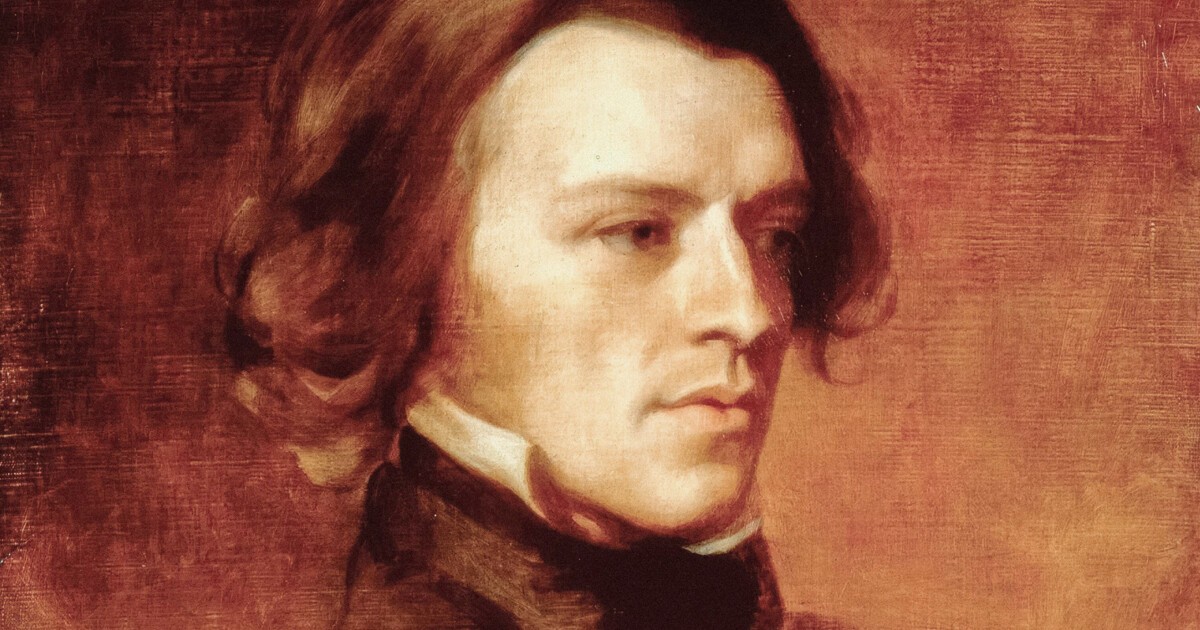
In February 1840, Edward FitzGerald came home to find Alfred Tennyson installed on the sofa, grimy and stinking of tobacco. He was in a bad way, argumentative and restless; his griping was so incessant that FitzGerald asked him to call ‘a truce’ on his complaints. As was his habit, Tennyson stayed for a few days, and then disappeared, perhaps going back to Epping Forest, where his brother Septimus was in an asylum, or to his family’s new house in Tunbridge Wells, or up to Lincolnshire and his cottage in Mablethorpe, where he could wander the long, empty beaches and the post arrived no more than once a week. Sometimes he would head to Amsterdam or Calais, ‘to Florence, or to Killarney, or to Madeira, or to some place where some ship is going – he does not know where,’ as his friend James Spedding said of another abrupt departure. Sometimes he would drop in on old friends like the Rawnsleys in Horncastle, whose daughter Sophie and her friends Rosa Baring and Catherine Franklin he had once flirted with, though Catherine was now shocked to see him so ‘unkempt and unbrushed and altogether forlorn’. Worried that he was ‘ruining himself by mismanagement and neglect of all kinds’, FitzGerald tried to cheer him up with an outing to Stratford, where Tennyson scribbled his name on the wall of Shakespeare’s house and seemed to enjoy his trip on the new railway. By the spring of the following year, though, his restless misery had returned, leaving FitzGerald anxious enough to track him down in his dubious London lodgings, finding him in Charlotte Street ‘with a little bit of dirty pipe in his mouth; and a particularly dirty vellum book of MSS on the sofa’. Sometimes he would walk over to the Carlyles and smoke, but Thomas, whose own public career was taking off, doubted how far Tennyson would rise: ‘He is often unwell; very chaotic – his way is through Chaos and the Bottomless and Pathless; not handy for making out many miles upon.’
Richard Holmes suspects that Tennyson was having a protracted nervous breakdown, whose immediate causes were not hard to discern. He had suspended his unofficial engagement to Emily Sellwood in the summer of 1840 after her father had finally forbidden the relationship, perhaps because of Tennyson’s unorthodox Christianity, perhaps because his brother Charles, who was married to Emily’s sister Louisa, was displaying signs of a serious opium addiction that signalled wider family problems. Threatened and bullied in childhood by their splenetic, alcoholic father, the seven Tennyson brothers had either drifted abroad, become addicts or developed intractable mental problems: two of them, Edward and Septimus, had to be confined to asylums. Septimus went to High Beech in Epping Forest, a humane establishment, run by the charismatic Matthew Allen, where the doctor dined with the patients, the gardens were open and the facilities comfortable. But by 1840 Allen was less interested in his patients than in tapping the Tennysons for money to invest in therapeutic wood-carving, a scheme into which Alfred, guardian of his mother and younger siblings since his father’s death, had put almost all his capital and which was now failing to thrive.
Nor was he earning anything by his writing. The dirty manuscript book was filling up with poems such as ‘Morte d’Arthur’, ‘Locksley Hall’ and the fragments based on voices from High Beech asylum that would become ‘Maud’. But Tennyson had not published a collection of poems for eight years, and kept brushing off entreaties by FitzGerald, American publishers and his English editor, Edward Moxon, to offer something new to the readers of his first volume, Poems, published in 1832. Underlying his reluctance was not only fear of reliving the mocking piece by John Wilson Croker in the Quarterly Review that had so sapped his confidence, but the fact that his ‘butcher’s book’ held drafts of the shocked, numbed poems grieving for Arthur Henry Hallam, whose vigour and confidence-giving friendship at Cambridge had shown Tennyson a larger life than the stifled gloom of his childhood, and whose sudden death in 1833 had broken his heart. Tennyson was now 31, but without a career, a marriage or a place to settle down, he seemed to be repeating in a new key the suspended, blocked lives of the subjects of his early poems, Mariana or the Lady of Shalott. FitzGerald thought he was suffering from a poet’s ‘hereditary tenderness of nerve’, a phrase that makes Holmes wonder
exactly what was the nature of that illness? Some kind of deep depressive mourning, perhaps – going right back to his childhood at Somersby. To the childhood dominated by his drunken unstable father? For Cambridge and the dead Arthur Hallam? … For the voices of madness overheard at High Beech? For worldly ambitions deferred, or the love affair with Emily Sellwood so strangely suspended? Or for other far deeper things extinguished? For the Boundless Deep itself?
The phrase ‘boundless deep’, used by Holmes for the title of his book, comes from the late poem ‘Crossing the Bar’ and concerns the soul’s journey back to death, ‘when that which drew from out the boundless deep/Turns again home’.
Tennyson’s sense of the abyss had at least one further source, however: his reading of science. His tutor at Cambridge was the polymathic philosopher William Whewell, priest and coiner of the term ‘scientist’, and the young Tennyson had followed the subsequent controversy between Whewell and his Oxford rival, the palaeontologist William Buckland, over what the fossil record really showed about the formation of the Earth. In the 18th century, geologists like James Hutton and the comte de Buffon had argued that the processes forming the Earth must have taken far longer than the five or six thousand years clerics had calculated using the human genealogies of the Old Testament. Buckland accepted that there must have been a long period between the Earth’s initial creation and the arrival of humankind, which he divided into epochs of relative stability separated by catastrophic upheavals. Whewell supported the claim of Charles Lyell, Buckland’s former student, that there was no need to imagine momentous changes, since the daily work of water, wind and volcanoes would, over large stretches of time, do the same job. Early on, Buckland was attracted to the idea that fossils found in a cave in Yorkshire were evidence of a worldwide flood, not because he was a Young Earth creationist, but because he wanted geology to provide evidence of God’s providential action in the formation of the Earth – traces of judgments made with the purpose of increasing life. Lyell’s description of creation and destruction as parallel, incremental and steady processes performed by volcanoes and coral polyps alike had no room for divine interventions and changed the moral basis of the entire story. He pictured nature as a system of balanced exchange, in which erosion levelled out what volcanoes piled up and the extinction of one species as a result of habitat loss was countered by the steady emergence of new habitats and new creatures to live in them.
Lyell did not know how the new creatures were formed, and the inability of his steady-state system to account for the increasing complexity of organic life on Earth proved a major spur to another of his readers, Charles Darwin. But where Lyell saw overall balance, Tennyson read indifference, and Lyell’s picture of an ever-shifting Earth whose processes were careless of the lives it generated held and horrified him. On the title-page of the second volume of Principles of Geology, Lyell quoted John Playfair’s Illustrations of the Huttonian Theory (1802): ‘The inhabitants of the globe, like all the other parts of it, are subject to change. It is not only the individual that perishes, but the whole species.’ To Tennyson, struggling to accept the death of one individual, the idea that whole species had been destroyed not in a catastrophe manifesting higher purpose but as part of the world’s inbuilt processes must have felt like the ground was shifting under his feet (as Lyell said it was):
‘So careful of the type?’ but no.
From scarpèd cliff and quarried stone
She cries, ‘A thousand types are gone:
I care for nothing, all shall go’
Sliding the sounds of ‘so careful’ into scarps and cries, the poem mocks its earlier line. Science is less like discovery and more like a fundamental betrayal of human faith:
Who trusted God was love indeed
And love Creation’s final law –
Though Nature, red in tooth and claw
With ravine, shrieked against his creed –
These famous rhymes discerning the law within the claw have become a shorthand for natural selection, but they were written well before the publication of On the Origin of Species in 1859 and, Tennyson told Moxon, before its sensationalist precursor, Robert Chambers’s Vestiges of the Natural History of Creation, came out in 1844. Holmes is sceptical about this, thinking that Tennyson must have been reacting to Chambers’s observation that, within evolution, ‘the Individual … is to the Author of Nature, a consideration of inferior moment,’ but the moral indignation of the lines could as well have been sparked by Lyell’s exposition of creation’s final law being the ‘equilibrium of species’. Lyell cites the Italian naturalist Augustin Pyramus de Candolle – who explained that, to prevent overpopulation, ‘all the plants of a given country … are at war one with another,’ as well as suffering the ‘ravage’ done to them by insect species – but maintains that such strife is merely an ‘illustration of the checks and counter-checks which nature has appointed to preserve the balance of power among species’. A passing description of a rhinoceros carcass recovered from the permafrost in Siberia whose teeth ‘still showed the red colour of blood’ furnishes Lyell with convenient proof that northern latitudes were once much warmer and that species are adapted to their habitats. But in the bloodstained teeth Tennyson saw the battles of extinct species that had never gone away, and never would. Lyell’s picture of remorseless equilibrium couldn’t provide a natural substrate for human justice or show evidence of divine sympathy built into the natural world. The thirteen middle lines of In Memoriam, poem 56, form one long self-interrupting sentence which catches the feeling of mounting outrage rolling into despair:
And he, shall he,
Man, her last work, who seemed so fair [ … ]
Who loved, who suffered countless ills,
Who battled for the True, the Just,
Be blown about the desert dust,
Or sealed within the iron hills?
The great merit of this scientific biography is that it sets the reading in geology and biology that upended Tennyson’s picture of the world within the homelessness of his own situation. He had been uprooted, emotionally and physically, and felt helpless. He could not finish a book of poems, he could not make Septimus or Charles get better and he could not marry Emily. All his arrangements were as makeshift as his spot on FitzGerald’s sofa. The picture of the world’s formation in Lyell’s Principles of Geology was devastating because it gave a global and cosmic dimension to the feeling of everything drifting, leaving his own life irrelevant to the world’s endless process. At the start of his account, Holmes associates the ‘boundless deep’ with Tennyson’s early and apocalyptic poem ‘The Kraken’, where the giant sea-creature sleeps through the ages ‘far, far beneath in the abysmal sea’, until the end of time, when he is doomed finally to rise before men and angels and ‘on the surface die’. The sleeping monster is a figure for ‘some dark hidden shape in his mind or personality … Scepticism or Doubt itself’, Holmes believes, ‘the symbol of a monstrous idea, which will eventually erupt among humanity: like the idea of relentless evolution; or a universe without a divine creator; or the inevitable extinction of every species on planet Earth’.
Despite its title, The Boundless Deep is careful to show that Tennyson’s reading in science was wide-ranging and sometimes inspirational. On a trip to science exhibitions in London in 1833 he had been fascinated by displays of microscope slides revealing ‘the lions and tigers which lie perdus in a drop of spring water’. He was also inspired by Herschel’s descriptions of the nebular condensation of star systems and put them into the first version of ‘The Palace of Art’:
Regions of lucid matter taking forms,
Brushes of fire, hazy gleams,
Clusters and beds of worlds, and bee-like
swarms
Of suns, and starry streams.
The switch of scale between bees and galaxies is exhilarating and accurate; later Edwin Hubble would borrow the metaphor, describing our solar system sliding through the universe ‘as a swarm of bees drifts through the summer air’. Tennyson also read Charles Babbage and Mary Somerville’s accounts of the way that wave formations pattern light and sound, an idea that binds together the imagery of a song from The Princess, published in 1847:
The long light shakes across the lakes,
And the wild cataract leaps in glory.
Blow bugle blow, set the wild echoes flying,
Blow bugle: answer echoes dying, dying, dying.
Waterfall, sunset and sound are all waves undulating as they break on the world, and complex internal rhymes enact this simultaneous living on and dying away. Some of the scientific sources identified are a stretch: if the magic mirror of the Lady of Shalott really was a ‘premonition’ of the invention of the photographic plate, as Holmes suggests, she would see the road to Camelot as a series of black and white exposures, not the moving and coloured pictures that so entrance her. I also doubt whether the arch of experience in ‘Ulysses’, ‘where through/Gleams that untravelled world whose margin fades/For ever’ derives from Newton’s analysis of the rainbow and the ‘infinite’ fading of infra-red light on the edge of the spectrum. Surely Ulysses is interested in what lies on the other side of experience’s arch, not in the quality of the light itself? The perceptiveness of the metaphor is that the boastful Ulysses cannot even dwell in his own present experience, so focused is he on glimpsing future glories through it.
There is no doubt, however, that Tennyson read widely in science and that its implications sank into his imagination; not for nothing would he be elected a fellow of the Royal Society in 1865, nominated for being ‘attached to Science & anxious to promote its progress’. As for progress, his soldier figure in ‘Locksley Hall’ (1842) fantasises about aerial navies and world parliaments decades ahead of Jules Verne or H.G. Wells, before settling for a less distant wish that progress will, like the railway, ‘let the great world spin for ever down the ringing grooves of change’. It was a factual howler; Tennyson later claimed that it had been so dark and crowded when he first saw a railway in 1830 that he had not realised the wheels ran on flanges rather than in slots, and he had clearly been so out of sorts during his later train ride with FitzGerald that he did not notice that his own line needed amending. But there is perceptiveness on another level in the form of the poem. Tennyson may have adapted the metre of ‘Locksley Hall’ from William Jones’s translation of one of the pre-Islamic poems collected in the Mu’allaqāt, about a wandering prince who praises his lovers and his horses, but as Holmes observes, its eight-stress trochaic metre is written less to the rhythm of rising and falling feet and more to the relentless rhythm of a steam train, huffing along.
Despite the moments of scientific wonder, though, the emotional centre of Holmes’s biography is the spiritual despair that the discoveries of geology and biology brought. ‘The hills are shadows, and they flow/From form to form, and nothing stands,’ poem 123 of In Memoriam laments. Tennyson wasn’t the first to complain about this, of course. After finding shells high in the Andes, Darwin wrote in The Voyage of the Beagle that ‘daily it is forced home on the mind of the geologist that nothing, not even the wind that blows, is so unstable as the level of the crust of this Earth,’ a reflection that echoes the melancholy voice of Psalm 103, which describes all humans as dust, fragile as a flower: ‘For the wind passeth over it, and it is gone; and the place thereof shall know it no more.’ What makes Tennyson distinctive, and then representative, for Holmes, is his fear that there might be no one to complain to – and so really no evil to complain about. William Paley’s Natural Theology (1802) held that the world was designed for well-being, and sought evidence that complemented biblical texts, but after Lyell natural development and human flourishing were seen to be at odds. The fossil record provided no evidence of the reparative purpose that Tennyson had trusted would overcome all ‘defects of doubt, and taints of blood’. ‘Where Darwin calmly accepts the astonishing facts as the “plainest evidence” with the greatest tranquillity,’ Holmes writes, ‘Tennyson was forced back into his own spirit, challenged and dismayed by the loss of the old Christian idea of creation, or the divine order itself, the indescribable “thing” of faith. (Or perhaps, unspoken, a more specific “thing”: the belief in Hallam’s immortality.)’
There is another story silently at work in these pages which deserves some challenge, though: the story that Victorian science was bound to prove fatal to Christian faith. ‘Tennyson was driven by the emergence – or eruption – of three new and fundamentally transformative ideas from science,’ Holmes asserts, ‘that of biological evolution, a godless universe and planetary extinction.’ Only two of these are strictly scientific ideas, since any God worthy of the name would not be a being among other beings, situated in the time and space that experiment-led testing requires. By treating them as equivalent, The Boundless Deep merges its readings of what scientific discovery meant to Tennyson with the assumption that science had to mean the loss of faith, and that Tennyson was at his most honest when he faced up to it. This is the conflict theory of Science v. Faith promoted by T.H. Huxley, John Draper and their creationist opponents, but over the last twenty years, historians of science and religion have recognised how much conflict always ran alongside more convergent options.
The Bridgewater Treatises were a series of volumes commissioned by the Royal Society in the 1830s attempting to realign science and faith. Holmes dismisses them as merely a ‘pious up-to-date scientific exposition of Paley’s Natural Theology’, but in fact they departed from Paley’s notion of the divine watchmaker in significant ways. Buckland’s volume confirmed the progressive development of geology and the regular extinction of species. Taking on what he had learned from Lyell, Whewell argued that ‘events are brought about, not by insulated interpositions of divine power exerted in each particular case, but by the establishment of general laws’ of nature. Darwin placed this quotation opposite the title-page of the first edition of On the Origin of Species in 1859, not because he was an enthusiast for natural theology, but because he saw Whewell as having paved the way for the idea of nature as God’s instrument. ‘By nature, I mean the laws ordained by God to govern the Universe,’ he wrote in the draft manuscript that was cut down to produce On the Origin of Species.
The debate in 1860 between Huxley and Samuel Wilberforce, the bishop of Oxford, brought to the fore the conflict over the relation of humans to other species. But in the next decades the majority of mainstream churches cautiously accepted some form of evolution, and scientific opposition from Darwin’s contemporaries who felt he had exaggerated the power of natural selection dwindled. Newman told a correspondent he saw nothing in Darwin that was inconsistent with the notion of ‘divine design’, not even the ‘accidental evolution of organic beings’, since their design ‘is accidental to us, not to God’. Charles Kingsley told Darwin that he had ‘gradually learned to see that it is just as noble a conception of Deity, to believe that he created primal forms capable of self-development into all forms needful … as to believe that he required a fresh act of intervention to supply the lacunas which he himself had made’. A God who made things make themselves gave a freedom and power to creation absent from Paley’s watchmaker model; the patristics scholar Aubrey Moore argued in Lux Mundi (1889) that ‘under the disguise of a foe’, Darwin actually ‘did the work of a friend’ by making the deistic God of Paley’s natural theology, a supreme being presiding over a cosmos assembled from inert elements, utterly untenable.
Most Victorian Christians could accept evolution so long as it also looked like the gradual unfolding of a divine plan. Wilberforce himself recognised evolution as a divine process, but, like many others at the time, preferred neo-Lamarckian accounts to Darwin’s, because they linked individual struggle with successful trait inheritance and favoured emergent forms of co-operation. Others were happy to accept evolution as a general principle but still believed that God formed human consciousness in a more direct way. The problem with the attempts at a full synthesis of evolution with the Bible narrative, though, was not only that they lacked any science of genetics, but that they had to skip over so much theology. If everything in the Earth’s history was tending towards the growth of moral human beings, then the human story was that we had risen, not fallen, and therefore had no need of an incarnate saviour to set humankind on a new course. Chambers had speculated in Vestiges of Creation that human beings are merely the forerunners of ‘a nobler type of humanity, which shall complete the zoological circle on this planet’. According to this scheme, Christ was a super-evolved representative of humankind, an advance marker of our present direction of travel rather than a decisive interruption to it. Collapsing salvation back into the world process produced a global optimism that would prove painfully vulnerable to the bad news about humankind from Crimea, Congo or the Western Front.
For all its flaws, this was the synthesis Tennyson came to adopt. In ‘The Ring’, ‘Aeonian evolution, swift or slow/Through all the Spheres’ is the destiny planned by the ‘Will of One who knows and rules’. In ‘The Making of Man’, man’s longing to ‘escape/from the lower world within him, moods of tiger, or of ape’ will be fulfilled as ‘aeon after aeon pass and touch him into shape’; only when all people are one will they cry, ‘It is finished; Man is Made,’ words that make the Crucifixion simultaneous with the sixth day of creation and the Last Day. Both of these late poems display versified dogma rather than real sympathy – the victims of famine and persecution are being ‘touched into shape’, while their persecutors are nowhere to be seen – but both had their origins in the writing of In Memoriam, a much better poem because the human-scale processes of loss, despair and repair were worked into the imaginative form as well as the thought. Holmes, however, scolds his man for trying to retrofit scientific discovery into this semi-Christian narrative. ‘Tennyson’s strange hope, a wholly unscientific and unDarwinian speculation, was that in the process mankind itself would evolve upwards,’ a piece of ‘evolutionary wish-fulfilment’ which he compares unfavourably to Ruskin’s confession that his faith was being chipped away by ‘those dreadful Hammers’ of the geologists, whose clink he heard ‘at the end of every cadence of the Bible verses’.
Like a fossil-hunter, Holmes wants to unearth the moments of horrified doubt from the compressed sediment of Tennyson’s religious revisions and to see in these his growing need for public respectability. In ‘The Two Voices’ (1842), for instance, Tennyson had staged the inner debate of a mourner about whether he or anyone could see any evidence in nature for human immortality and moral worth, or whether it would be more honest to accept his own irrelevance and end his life, now that the vast scope of geological time had been disclosed. An early manuscript version ended inconclusively with another vision of the boundless deep:
Heaven opens inward, chasms yawn,
Vast images in glimmering dawn,
Half shown, are broken and withdrawn.
Ah, sure within him and without,
Could his dark wisdom find it out,
There must be answer to his doubt.
Describing these lines as ‘deeply sceptical’, Holmes argues that the published version took another 120 lines to ‘reach an apparently reassuring and more traditional conclusion’, to Moxon’s relief. But even in the manuscript, these lines belong to the countering voice of faith, which wonders how, if nature is all there is, there can still be an unshakeable desire for perfection beyond mortal nature, and why he ‘knows a baseness in his blood/At such strange war with something good’, phrasing that alludes to Romans 7 and directly positions Tennyson’s yawning chasms within Paul’s description of his own inner conflicts.
This would become Tennyson’s way in both Maud and In Memoriam: bitter doubts are expressed, and then dramatised and relativised by being derived from quotations, or by being repositioned within an ongoing narrative. What we first take to be the heartbroken lover’s pleas in Maud become a case study in the psychology of the insane, while In Memoriam’s reflections on the progress of grief retrospectively discern purposes at work in earlier poems undreamed of at the time. Dramatising lyric sequences by revealing the speaker’s limited perspective gave them a kinship with older sonnet sequences, but it also linked In Memoriam to the new ideas of evolutionary process. A quotation is a piece of genetic material far older than the creature which now carries it. A short poem reabsorbed into a larger chain is a form developed in one habitat but repurposed for another, like archaea engulfing prokaryotic bacteria to produce cell mitochondria, or a whale swimming with the backbone of its land-inhabiting ancestors. Tennyson did not know much about phylogenetics, but he knew that the moral importance of trees of life wasn’t that species had diverged in the past but that so much of one species lived on in another, or in what ‘The Ring’ would call the ‘lower world within’. In Memoriam was the poem in which Tennyson felt the shock of evolution and tried to turn it into a narrative about the omnipresence of Arthur Hallam’s soul; it was also the poem in which that shock was absorbed into the method of its assembly.
By the time of its publication, Tennyson was in a better state. He had moved to Cheltenham in 1843 to take hydrotherapy cures, and when FitzGerald sought him out again, admitted that ‘the perpetual panic and horror of the last two years has steeped my nerves in poison … I have had four crisises … my nerves were so bad six weeks ago that I could not have written this … I went through Hell.’ Allen’s wood-carving scheme had collapsed, as had the man himself, and with his bankruptcy the Tennyson family fortune seemed to have been lost. But the previous year Moxon and FitzGerald had finally coaxed Tennyson into publishing Poems in Two Volumes, and Tennyson could now have regular soakings of salt water because the poems were selling rather well, and because his friend Edmund Lushington had thoughtfully taken out an insurance policy on Allen’s life. Observing the strong reviews the new volume had received, Henry Hallam, Arthur’s father, quietly intervened to procure for Tennyson a Civil List pension. ‘As FitzGerald had suspected,’ Holmes writes, ‘Tennyson’s cure would turn out to be cash as much as water.’
Despite his dread of public appearances, he began reciting new poems to friends – advance publicity, certainly, but also another form of environmental adaptation, testing the way a poem might sound in public, and what he felt about himself saying it. He met Emily Sellwood again on an unannounced visit to the Lushingtons, and they recommenced some form of correspondence. With growing financial security, critical recognition and public honour, Tennyson must now have seemed a much better marriage prospect. But Tennyson’s friends the Rawnsleys believed that Emily held back, fearful of his unorthodox religious views, while Holmes suspects that Tennyson himself had doubts about his own capacity to be a reliable husband, not least because he wanted to publish a poem that described his grief for Arthur Hallam as that of the widower reaching in the night for his dead wife. In Memoriam had to be a success for both of them, and the result, Holmes argues, is the Prologue to the poem, written last but placed at the head, ‘the most bewildering document that Young Tennyson ever wrote’, since it introduces the famous sequences of despair with a prayer asserting ‘faith, and faith alone’, and disclaims all of his scientific reading to come out with the airy dismissal that ‘our little systems have their day.’ ‘It is painful to accept this whole apologia at face value,’ Holmes admits, though ‘Tennyson surely meant it all.’ Holmes sees it as a disguised marriage proposal, written to reassure Emily and the Sellwoods of his orthodoxy, ‘in the deeply traditional rhythms of an Anglican hymn’.
The Prologue actually begins with an untraditional five-stress line (‘Strong Son of God, Immortal Love’), and this interruption of regular time before the poem has started announces that it will employ multiple time registers. One is the compression of seventeen years of writing (signalled by the date of Hallam’s death at the head of the poem) into an implied narrative of three years of mourning, marked by anniversaries, seasons and Christmases, through whose progress Tennyson finds himself reflecting on loss, and then the loss of loss, and the return of faith. At the first Christmas, he spiritlessly decides to make a wreath, reflecting that even old customs deserve their time, for ‘they too will die.’ By the third, the family have moved, and ‘change of place, like growth of time/Has broke the bond of dying use’; at the New Year that follows, he prays the bells to ‘ring out, ring out my mournful rhymes,’ and ‘Ring in the Christ that is to be.’ But running across this plotline is the intense reuse of lines from the past – his own, Hallam’s, Milton’s, Shakespeare’s Sonnets or the Bible. Poem 119 looks back at the terrible grief of poem 7 (‘doors, where my heart was used to beat/so quickly, waiting for a hand’) and finds that the pressure of Hallam’s hand comes back in memory:
Doors, where my heart was used to beat
So quickly, not as one that weeps
I come once more; the city sleeps;
I smell the meadow in the street.
The grief has now evolved into something else – yet if readers go back to poem 7, they will find that the language of faith was latent there too. What first sounded like blank resignation – ‘he is not here; but far away/The noise of life begins again’ – in fact contains an echo of the speech of the angel to the women who went to the empty tomb. By revisiting itself, and inviting readers to see future poems (including this one) germinating in earlier ones, In Memoriam maintains the double meaning of its keyword, ‘type’, used to refer both to taxonomical species (evolved from other species and themselves in the process of change) and to figures of biblical prophecy whose actions anticipate in their present the future they cannot know and whose lives only make sense in retrospect. Writing on In Memoriam’s types and typology, Matthew Rowlinson noted that Chambers fused the two meanings in Vestiges of Creation: as each species-type evolves, it contains a ‘sketch’ of future developments, becoming in the present a ‘prophecy of the higher events of animal development’ and ultimately showing that ‘the nobler orders of being, including man himself, were contemplated from the first.’ In poem 56, nature is careless of the type and lets him lie buried in the iron hills, but by poem 118 man can be ‘The herald of a higher race,/And of himself in higher place,/If so he type this work of time’, by digging the iron back out from the hills, ‘batter’d with the shocks of doom/To shape and use’. This poem was written quite late, and Holmes takes it as a sign of a ‘sudden shift’ that ‘radically altered his interpretation of evolution itself’ from indifferent mechanism towards a vale of soul-making. But the opening poems about the shock of grief do not appear in the manuscripts until quite late on, and it is hard to detect clear development between the early poems of abject despair (like 31 or 34) and the early poems of theodicy (like 30 or 36) – the last of which, written before 1836, gave Tennyson the epithet for Christ (‘more strong’) which he used in the 1849 Prologue. Tennyson did not belatedly re-Christianise what was originally a poem of authentic doubt; he took his cue from the evolutionary science he knew, and kept repurposing lines developed in one habitat for use in another.
He knew all along, though, that In Memoriam would go out of date:
A man upon a stall may find,
And, passing, turn the page that tells
A grief – then changed to something else,
Sung by a long forgotten mind.
Its synthesis of evolutionary development and Christian typology is another little system that has had its day. Lines exhorting humankind to ‘Move upward, working out the beast/And let the ape and tiger die’ confuse moral progress with evolution’s actual power to produce endless diversity and complexification. No serious theology of incarnation could accept ‘move upward’ either. And when poem 129 triumphantly addresses Hallam and/or Christ as ‘Dear heavenly friend that canst not die/Mine, mine, for ever, ever mine,’ it sounds more like gloating than faith. Tennyson sought continuity more than transformation, restoration more than resurrection’s change of ownership, which is perhaps the reason Young Tennyson was ready to become Old Tennyson, poet laureate and apologist for the Empress Victoria. But Tennyson the public figure was also Tennyson the mystic, the one who wrote that ‘my most passionate desire is to have a clearer and fuller vision of God,’ and Holmes’s title makes me suspect that he is saving the faith for the second volume. When the soul, ‘from out the boundless deep/Turns again home’, ‘Crossing the Bar’ continues, ‘I hope to see my Pilot face to face’ – a Pilot, Tennyson’s note explains, ‘who has been on board all the while, but in the dark I have not seen him’.
Between Young and Old Tennyson is Tennyson the middle-aged survivor. One of the fragments written on those lonely beach walks fixes on a shell and wonders about the creature that once occupied it:
The tiny cell is forlorn
Void of the little living will
That made it stir on the shore.
… Did he push, when he was uncurl’d,
A golden foot or a fairy horn
Thro’ his water-world?
We are often surprised, Lyell wrote, ‘when we observe the violence of the breakers on our coast, and see the strength of the current in removing cliffs, and sweeping out new channels, that many tender and fragile shells should inhabit the sea in the immediate vicinity of this turmoil’. The molluscs survive by sinking and burrowing, later to become fossils, he explained. But Tennyson’s attention remains on the creature, and his speaker wonders how fragile it really is:
Small, but a work divine,
Frail, but of force to withstand
Year upon year the shock
Of cataract seas that snap
The three-decker’s oaken spine.
The enjambed lines let the sentence persist through the breakage, just as the shell survives by rolling with the waves – unlike the mighty ship, whose oaken deck is sonically connected to ‘shock’ and ‘cataract’. Tennyson initially assigned the poem to the mad speaker in Maud, for whom ‘the shell undestroyed amid the storm perhaps symbolises … his own first and highest nature preserved.’ It is also a poem about poetry, whose small form will outlast the ferment that snaps the spine of the three-decker. Calling the shell a ‘miracle of design’, Tennyson hints that rolling with the deep can also have divine backing.