
This story was co-published with RE:PUBLIC Lands Media, an independent, non-profit news organization covering public lands.
Dan Dallas had defended these communities before. The little towns on the Karuk tribal land are nestled in a gorge along the Klamath River, amidst a million-acre wilderness of Northern California conifer and hardwood that makes up the Six Rivers National Forest. This time, August 2023, a fusillade of lightning strikes had ignited the web of steep canyons south of the town of Orleans in two dozen places, and as the fires expanded, they merged.
As an incident commander for the U.S. Forest Service, Dallas wasn’t called up until fires got big. On the drive from Colorado, he considered the recent experiences that had begun to trouble him.
“I’d been to multiple places, two, even three, sometimes four times,” he remembered in a recent interview. On each fire, he’d followed the Forest Service playbook. Keep the fire small. Contain it quickly. Box it in by throwing hardware at it, bulldozing the ridgetops and dropping fire retardant slurry or water from planes and helicopters. Don’t light the fuse on a megafire that could reach the nearest town. But he was starting to realize: Even if you don’t light the fuse, you still have the bomb.
“Finally, I figured out all I’m doing is deferring risk to this place,” said Dallas, whose day job is director of renewable resources for the Forest Service’s Rocky Mountain region. “I’m going to come back and protect it again.”
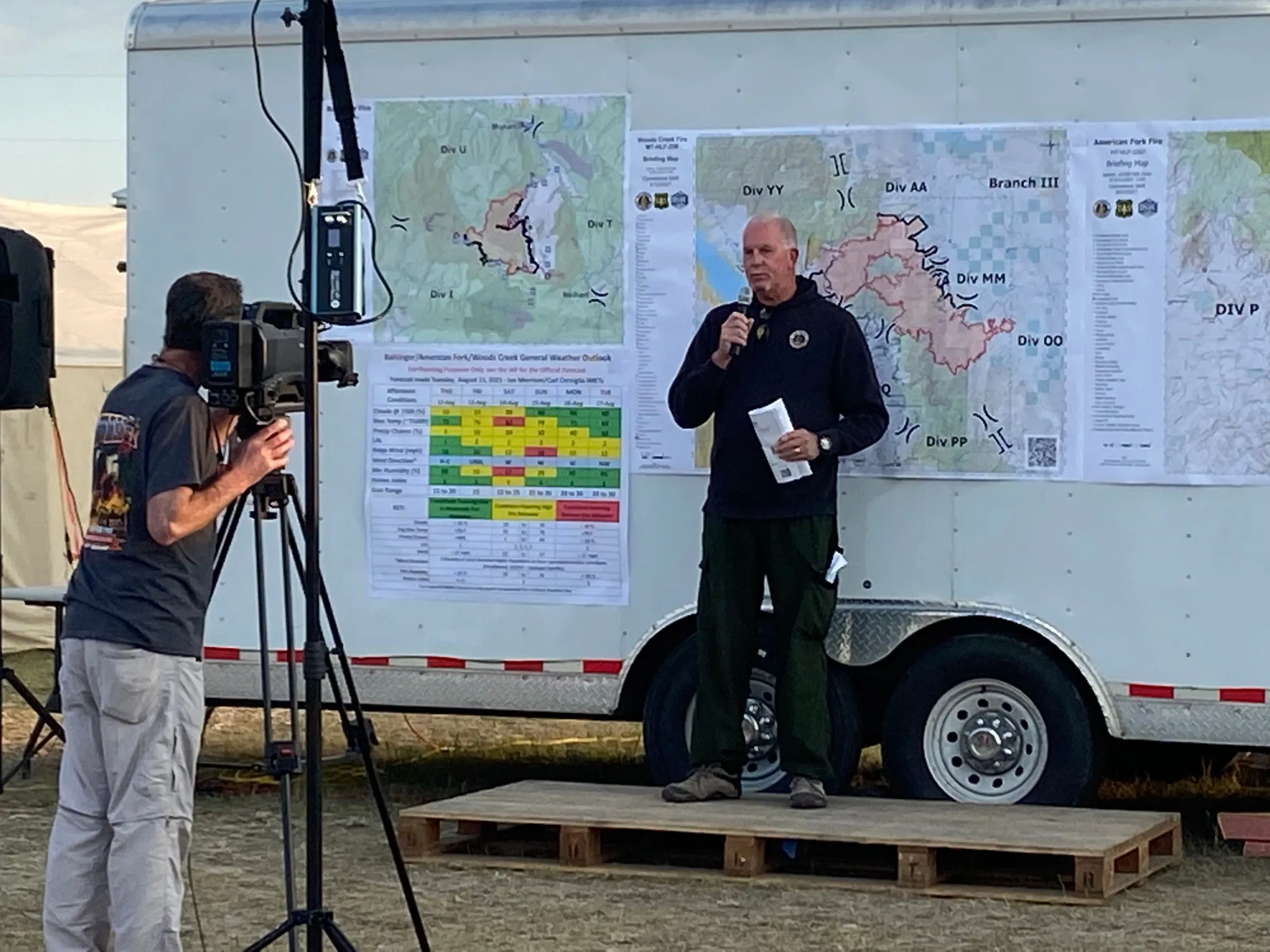
When he got to the Six Rivers, he found the local forest supervisor and the Karuk Tribe had been percolating the same idea he had. It had rained in those mountains, and the conditions were mild. Fog was rolling in from the coast in the mornings, settling in the canyon bottoms. “It actually had gone from being fire weather to basically prescribed fire season,” Dallas remembered.
What if, instead of tearing up the Six Rivers to attack this fire, they allowed it to creep along the forest floor as long as they could? There’d be less fuel to burn the next time a fire came through, and it wouldn’t burn as hot even if the weather was bad. Fifty thousand acres of fire; fifty thousand acres less fuel to burn next summer.
The strategy was a success, but a fleeting one. The opportunities to let wildfire do its job are being increasingly extinguished by hotter, drier conditions that last longer throughout the year. The Trump administration has also returned to “full suppression” — shutting down every fire, even when it doesn’t threaten human life and property — after three decades of federal policy that, at least on paper, encouraged a friendlier approach to wildfire.
The problem with putting out all fires, said Dallas, is the same one that troubled him on that drive to California. You’re leaving fuel there that could stoke the next megafire you can’t manage, or even stop. “We keep going back to the same places, and it’s more often that the fires are more severe,” Dallas said.
Over the past decade, so-called megafires — characterized not only by their size, often bigger than 100,000 acres, but by their severity, speed, and impact — have become more common. They now account for the bulk of the money spent on firefighting, with the federal government spending 10 times more on suppressing wildfires than it did 30 years ago.
This summer’s fire conditions have already been extreme. Nearly 73 percent of the Intermountain West is experiencing severe to exceptional drought, with temperatures breaking records across the country. Add to that last winter’s meager snowpack, which has left forests ready to burn. So far in 2026, the U.S. government has reported more than 53,000 wildfires that have burned over 8 million acres — about 3 million acres more than average over the past decade.
The onslaught is straining firefighting resources, with many requests for help going unfulfilled. An August 11 memo from the National Multi-Agency Coordinating group, which handles logistics for firefighting across the federal government, warned that “resource availability remains critically low, with commitments approaching all-time peak levels.”
Wildland firefighting is increasingly facing an intractable reality: We’re stuck in a vicious cycle. A doom loop.
In 2013, the U.S. Forest Service quietly convened a panel of futurists to imagine the arc of wildfire over the coming decades. The group included luminaries in futures studies — the science of systematically gaming out distant outcomes — a couple of wildfire experts, and a science fiction writer.
Over three weeks of conference calls, the futurists grilled the wildfire experts — John Phipps, a regional research station director who helped make national wildfire policy for the U.S. Forest Service, and Sarah McCaffrey, a social scientist with the agency who studied the human aspect of how it worked. Together, the group imagined possible trajectories for the American wildfire saga — carrying it forward beyond the scope of a presidential administration, longer than the span of any individual government career. Where, they asked, was all this really going?
They released their final report, “Wildland Fire Management Futures: Insights from a Foresight Panel,” in 2015. The one big takeaway: We can’t keep doing what we’re doing. “As conditions change over time,” the report reads, “the existing fire suppression approach will fail across the whole range of plausible future conditions.”
If we don’t change course, the futures panel wrote, “risk will continue to escalate until fuel-filled landscapes eventually reset catastrophically.” Translation: much of the West will burn. Today’s children will see forests converted to grass or shrublands in their lifetimes. Biodiversity will be irreversibly destroyed, along with thousands upon thousands of American homes.
This isn’t pessimism. The science behind it has been well-established for decades. In any combustible ecosystem, fire periodically clears away all but the strongest plants, allowing them to thrive and reproduce. The process enriches the soil and opens the understory to new growth. On the other hand, if you suppress fire on the landscape for a century, as the United States has done, leave trees and brush to pile up in a continent-sized pyre, then heat up the planet and take away the rain, everything’s going to burn at once. Windy, hot days and lightning strikes and accidents are bound to converge, and our expanding settlements are bound to be in the way.
It’s not that firefighting doesn’t work; federal firefighters are able to contain more than 98 percent of wildfires. The vast majority of damage to human infrastructure is done by the 2 percent of ignitions that get away, said Matt Hurteau, a forest ecologist at the University of New Mexico. The top 1 percent are responsible for more than a quarter of the total acreage burned. But those megafires happen under nightmare weather conditions — hot, dry and windy — and escape control quickly. “There is no doubt that our federal fire suppression apparatus is effective, that’s why we’re in the predicament we’re in,” Hurteau said. “It’s only under the most extreme conditions that things escape, and it’s been that way for decades.”
The more climate change extends the fire season, Hurteau said, the more chances for megafires to start. The more small fires we put out, the more fuel there is for megafires to eat up on the way to our towns. This is what the futures panel meant by “escalate.”
With the build-up of fuels that constant fire suppression causes, their report concluded, “we are self-selecting for fires we cannot control and do the greatest damage.”
Thirteen years after the futures panel, interviews with more than 20 experts in the field of wildland fire — foresters and firefighters and bureaucrats and scientists and even a lobbyist, from varying positions on the political spectrum — painted a stark picture of where our fire policy is taking us. Several of them had the same question: “What the f**k we are doing here?”
The way out of this quagmire is widely agreed upon: Somehow, we have to get rid of all that extra fuel, and once a semblance of balance is restored, make friends with natural, lower-severity ground fires by hardening human communities against them and letting them be. This plan has, in one form or another, been entrenched in federal policy since the mid-90s.
In addition to establishing programs to physically remove extra fuels and clear out forest floors through prescribed burning, that policy has included allowing unplanned wildfires to do the work, as long as it’s safe to do so. In other words, when fires pose a danger to people, including firefighters and the public, they’re generally fought aggressively. Otherwise, fire managers have had the option of allowing them to play their natural role.
Many fire scientists believe that letting more fires run their course in the backcountry, the way Dallas and his colleagues did on the Six Rivers, will have to happen if we’re going to reduce fuels at the necessary scale.
“We keep putting out fires and we’re going to get bigger and hotter fires,” said Hurteau. “It’s just true. It’s physics and chemistry.”
Dave Calkin, who recently retired from his job as a research forester with the U.S. Forest Service, where he focused on wildland fire risk management, said many fires are “inherently insuppressible;” all you can do is run.
Fires that don’t threaten people, on the other hand, are useful. “The science is clear and has been clear for decades that the answer to the problem is more fire, not less fire,” Calkin said.
A separate camp of foresters believes using wildfires to remove fuel is reckless, given the volatile conditions during fire season, and that the way forward is to clear fuels by loosening environmental regulations and opening public lands much more broadly to “mechanical thinning” — in many cases logging — launching a moonshot effort to revitalize the moribund timber industry in the process.
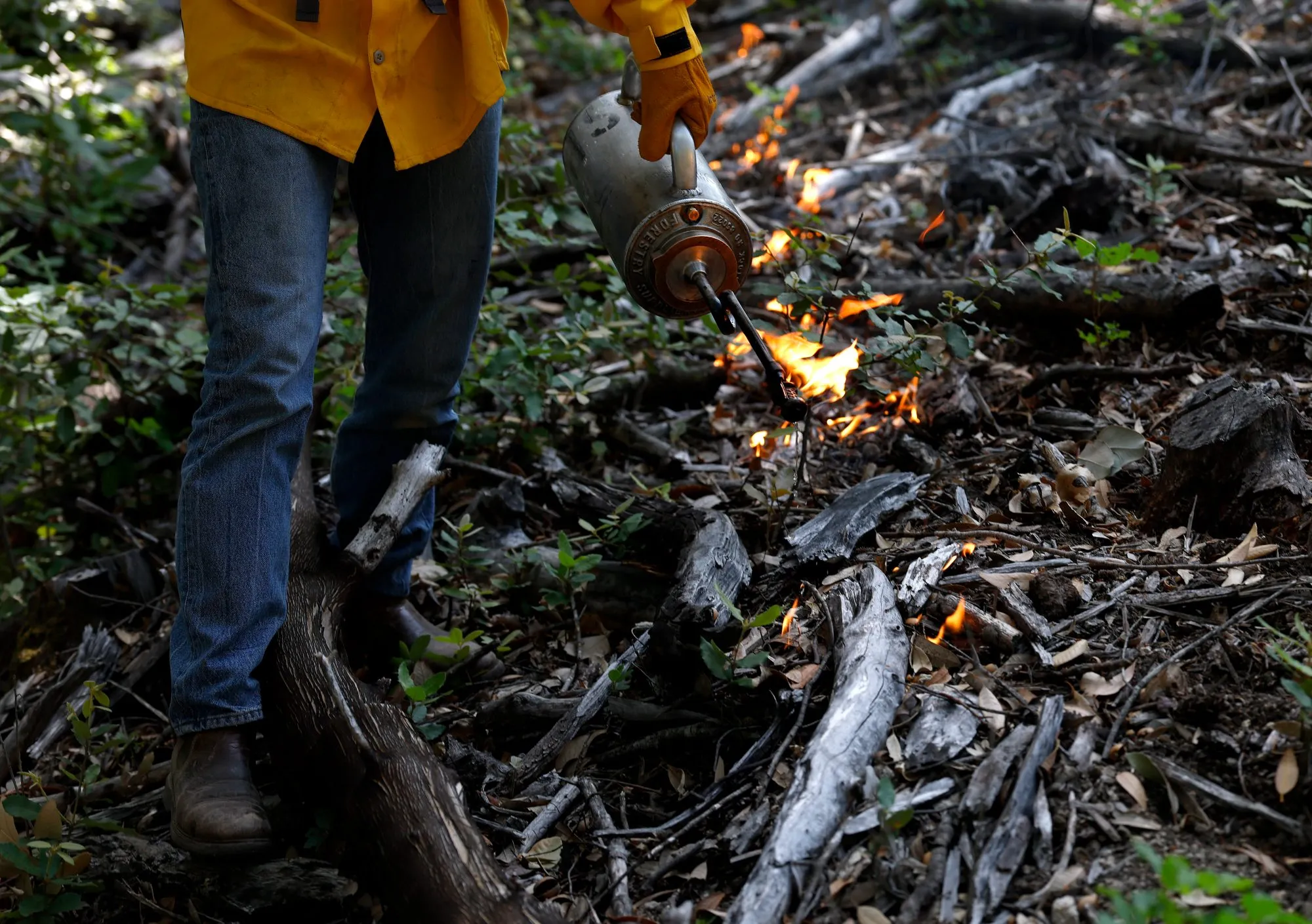
“Because the forests are all clogged up, you can’t use [wild]fire as a maintenance tool,” said Michael Rains, who helped lead the Forest Service across five administrations. “You’ve got to use prescribed fire, and you have to use mechanical treatments. And then one day, hopefully, our forest lands will be in the condition [such that], when a fire starts, we can manage it to let it burn a little longer.”
The Trump administration has sided firmly with Rains’s camp, doubling down on suppressing all wildfires — including those that don’t threaten communities — while also demanding more board feet of lumber coming off public lands. Frank Carroll, a former Forest Service incident commander and a zealous advocate for full suppression, said the decrees are like “trying to steer an aircraft carrier with a canoe paddle.” Still, he believes, they are a start.
Adam Mendonca, the Forest Service’s deputy director of Fire and Aviation Management, said the agency isn’t anti-fire. “No two ways about it. Science will tell you, you need more fire on the landscape.” But, he said, the agency’s focus is on prescribed fire.
The Forest Service did about 1.2 million acres of prescribed burning in 2025, down from 2.2 million the year before. (The agency attributes the drop to dangerously dry conditions that spring, particularly in the Southeast where it does most of its burning). Recent research shows that the Trump administration’s efforts to shrink the federal workforce — a ProPublica investigation found that more than a quarter of the Forest Service’s firefighting positions were unfilled as of July, 2025 — also contributed to the slower progress on clearing fuels last year.
Mendonca said the Forest Service needs to be doing between two and ten times more fuels reduction work to turn the tide. “We’re not doing enough,” he said, “but we continue to try to ramp up.”
Prescribed fire offers what the agency has become less tolerant of losing: control. But Tim Ingalsbee, executive director of advocacy group Firefighters United for Safety, Ethics, and Ecology (FUSEE), said a war on wildfire is unwinnable. “We’re just throwing good money after bad in these reactive, siege-like suppression spectacles, versus proactive preparation and treatments within communities.”
The wildfire doom loop has roots far beyond the current administration, and is fueled by a cycle of perverse incentives.
One problem, experts say, has to do with how fire-related funding is distributed. Every year in the hot and dry months, Congress authorizes additional funding for emergency wildland fire suppression as needed, not unlike the way it funds a war. The annual expenditure has grown from an average of about $450 million in the 1990s to well over $3 billion in recent years, with $4.3 billion spent in 2021 alone. (Research published earlier this year projected that climate change could push that number to $13 billion by the end of the century.)
“There are no consequences for spending as much money as you possibly can to put that fire out,” said Kelly Martin, a former chief of fire management for two national parks who also served on the Congressionally mandated Wildland Fire Mitigation and Management Commission during the Biden administration. When they have airplanes and bulldozers and armies of firefighters at their disposal, she said, federal fire managers are inclined to use them. “There’s not a connection in people’s brains to say, putting that fire out actually does more harm than good in the long term.”
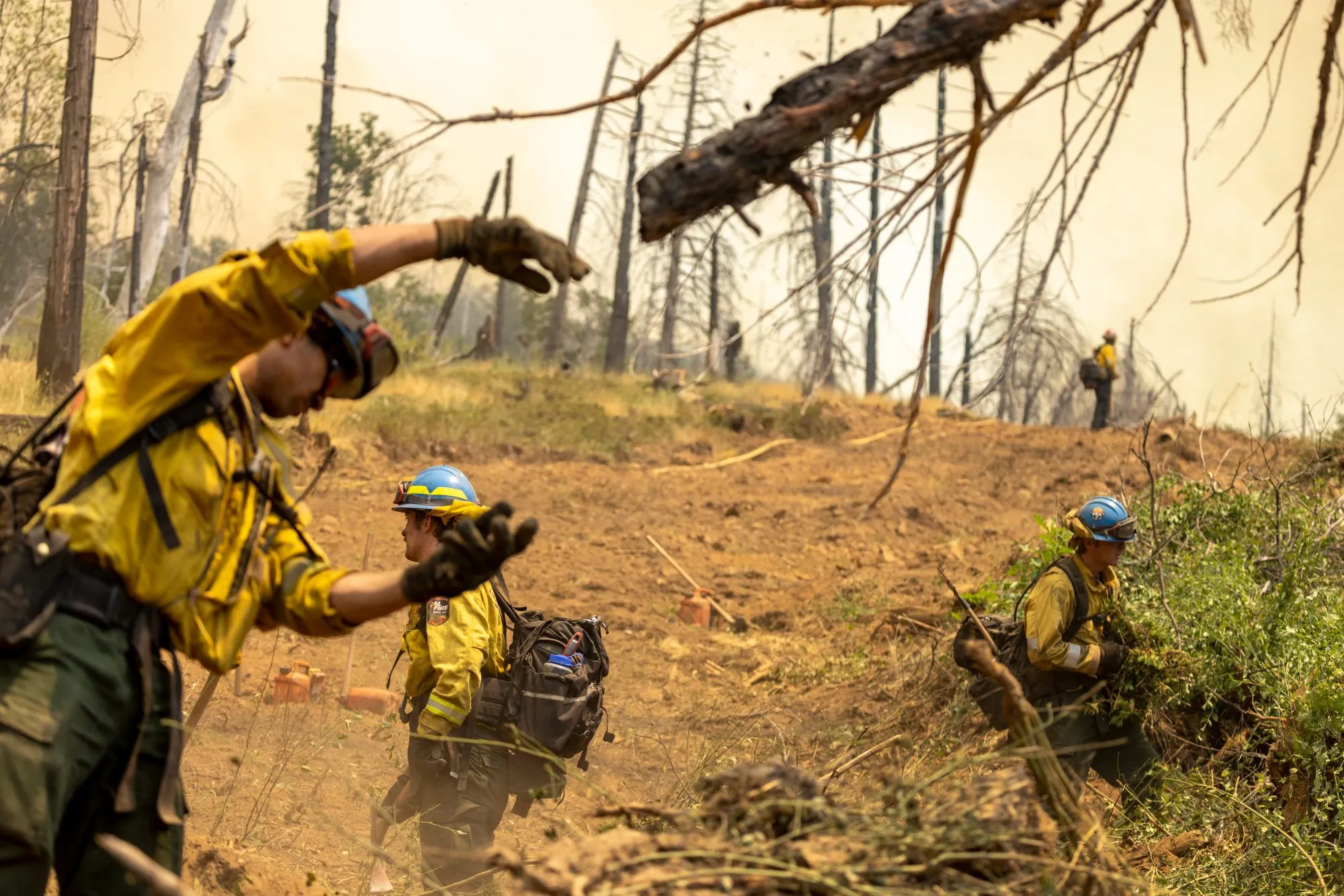
In contrast, funding for fuel-reduction initiatives like forest thinning and prescribed burns is budgeted, limited, and comes with mountains of paperwork. “Prescribed burning is discretionary — emergency management is not,” said Martin. “So, you end up with this really lopsided scale that tips the scale to the favor of suppression.”
The annual glut also creates an incentive for private firefighting contractors to lobby for as much involvement as possible while the cash is flowing. “I have clients, they’re like farmers,” said Phil Hardy, a Washington lobbyist for the firefighting aviation industry, including retardant and water tankers, which are most effective in suppressing fires while they’re still small. “They make all their money from June to September or October, and then they’ve got to wait all the way until next year to get paid again. By the time fire season starts, they’ve totally wiped out their line of credit.” Hardy said his clients would vastly prefer a steadier cash flow, but Congress only pays when pillars of smoke are looming and it’s too late to do anything but fight like hell. That means that air tankers, which are among the most costly elements of wildland firefighting, are often used even when they’re not especially effective.
A second problem is personnel — fuel-reduction work is often done by the same federal employees who get sent out to fight wildfires. One federal fuels reduction specialist, who asked not to be named because he wasn’t authorized to speak freely, said even experts who are hired to plan and conduct prescribed burns and other fuel-clearing projects often spend up to half the year fighting wildfires.
“The simple tasks that are supposed to get done to allow these projects to move forward,” he said, “go almost stagnant for like four to six months out of the year.”
Beyond budgets and workforce management and policy memos, there’s a bigger, more emotional machinery at work. After all, fire can destroy homes and take loved ones in the most terrifying ways.
Wildfires are a seasonal spectacle, with journalists dispatched to the firelines like war correspondents reporting from the front, broadcasting images of towering flames and smoking ruins that stoke the feeling in the zeitgeist that everything in the whole world is going to hell.
“When you see people’s homes burning on the five o’clock news and you know people are chasing their horses and their dogs are dying and people are losing their lives,” said Martin, “it’s hard to switch that narrative into something different.”
The fire-as-invader narrative helps drive a kind of patriotic zeal that moves everyone from firefighters to legislators to defend the homeland.
“I hate war analogies when it comes to fire,” said Riva Duncan, president of Grassroots Wildland Firefighters, a non-profit firefighter advocacy organization. “It’s not a war and firefighters are not soldiers, because I don’t want them to think that their lives are expected to be given for this.”
Mendonca, the Forest Service fire director, agrees — kind of. “We don’t treat fire as though it’s the enemy,” he said. “It’s just, how do we get there in a way that gets us to those desired conditions or outcomes with the highest probability of success for all the values involved.”
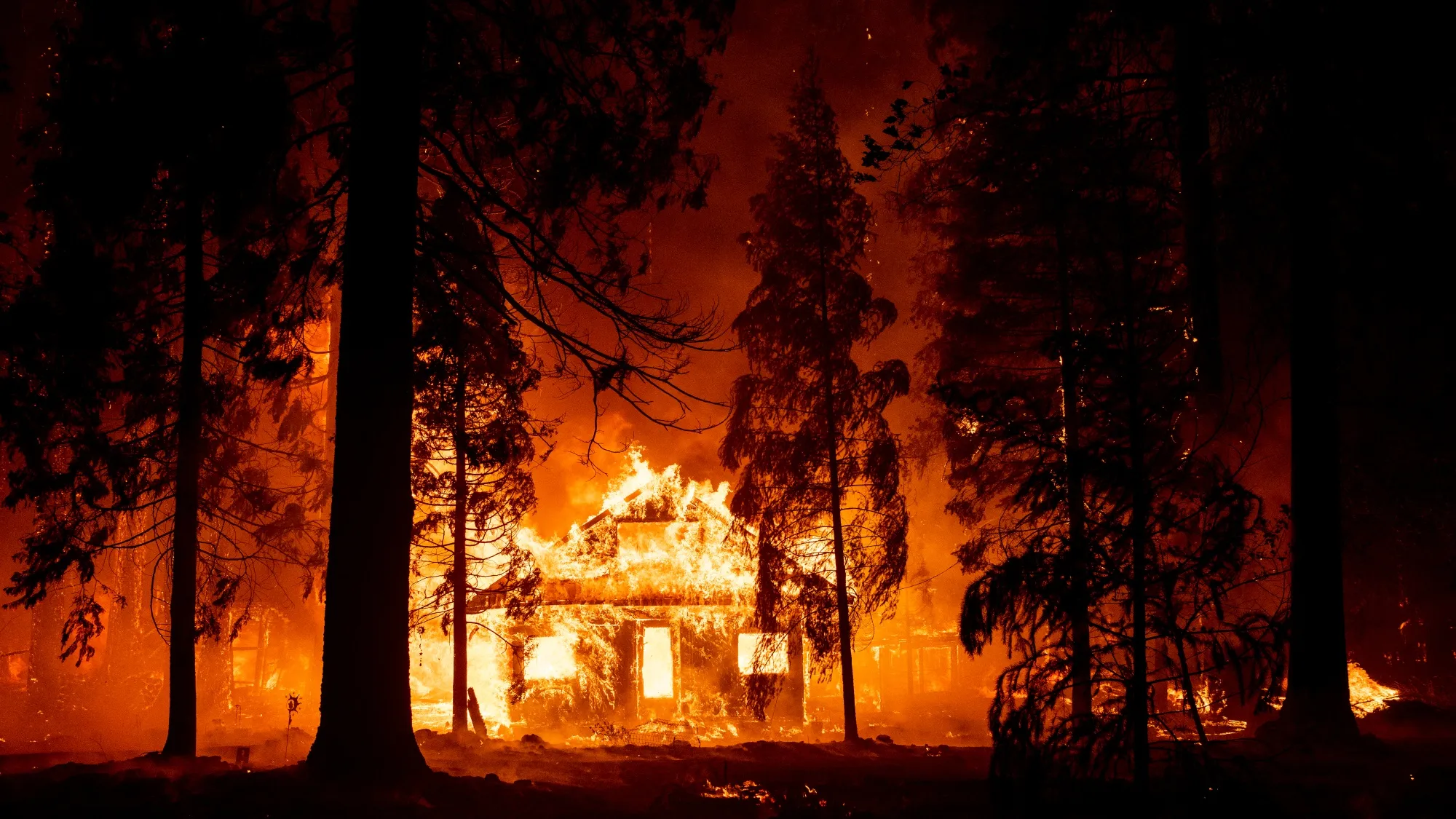
Fire, in other words, is like a wild animal. We don’t hate wild animals, but the closer they get to us the less we feel we can afford the risk of tolerating their presence.
But Calkin said there’s also a bureaucratic momentum to the status quo. “It’s the inherent human bias of like, right now, the easiest thing for me to do would be to make this fire go away,” he said. “It’s really hard for me to make this fire grow in a safe way to get good fuel treatment. And it’s risky. And if something goes bad, I am responsible. You know, if in the future it actually saved something really important, I’d never get credit for it. It’s just easier to kick the problem down the road.”
More fire isn’t the answer in every part of the country. Native plants like sagebrush and saguaro cactus haven’t evolved to burn, but invasive grasses in the Great Basin and Sonoran Desert have brought fire with them. “There are certain places where we have too much fire and we need to try and keep it out,” said Hurteau. And as long as our communities are nestled in burnable ecosystems, they’ll sometimes need to be defended. The question is whether we can find a balance we can live with.
Since that futures panel wrapped up their conference calls in 2013, we’ve had 13 years of one record-breaking fire after another. The image of burning houses is no longer the uncanny experience it was — the slash of bright orange across the country’s front pages is now part of our collective wallpaper. And the ranks of the dispossessed, the evacuated, and the dead have only grown.
Dallas, a practical man, said it would make a big difference if firefighting teams like his were allowed to back off fires, setting low-severity backburns on ground of their choosing so that the wild flames don’t blow through and annihilate everything in their path. “Right now,” he said, “that’s off the table.”
When we spoke in early August, Dallas had just come from a fire in Pagosa Springs, Colorado, that was threatening hundreds of homes. The local forest supervisor called for a Complex Incident Management Team — the big guns — and got a response that’s becoming more common across the country: no one was available. All the teams were on other fires.
“Our system is taxed beyond capacity to respond,” Dallas said. “It’s already falling apart.”
For every fire he puts out, Dallas knows he’s leaving a tinderbox behind. More and more, he said, he’s finding himself back at the same table, looking at the same map.
Next time, he could be watching a bigger, more dangerous fire escape his grasp.