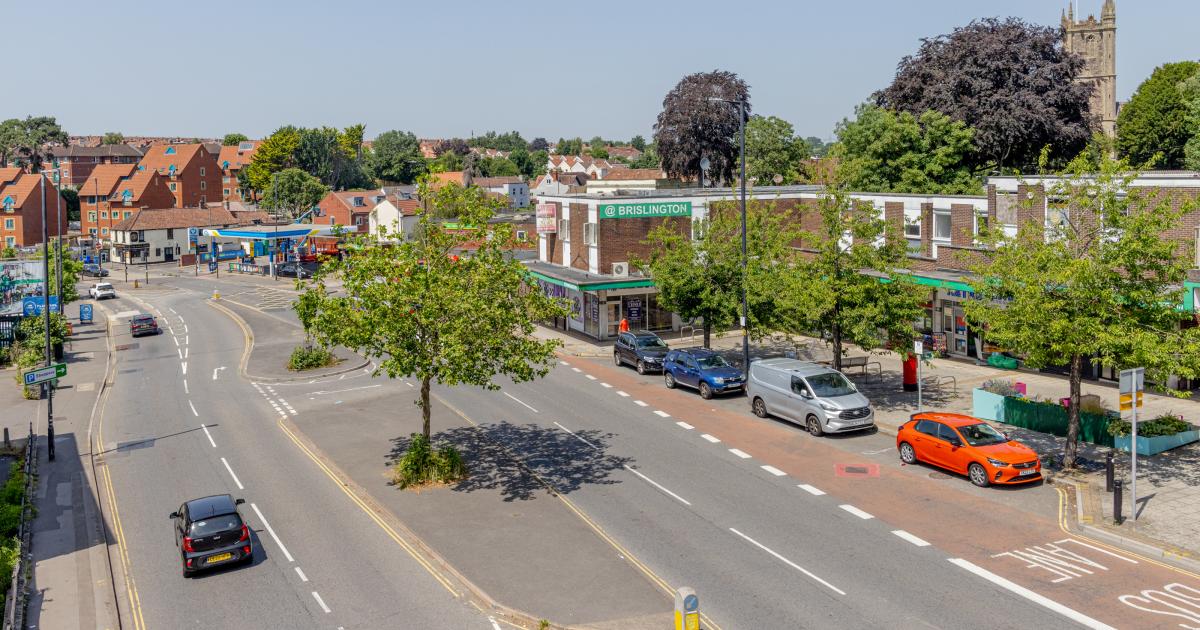
The record for highest number of trees planted in England, at 10.4 million trees, was achieved in 2025, according to the Forestry Commission's Provisional Woodland Statistic report from June of that year.
At first glance, this would appear to be a good thing. Medellín, Colombia, planted a little under a million trees and successfully reduced its average urban temperature, helping to stave off heatwaves.
READ THE FULL REPORT
But recent surveys by researcher Daisy Brasington on behalf of Fund4Trees and Wild Justice's Lost Nature report show the side of planting trees that people don't normally see— keeping the trees alive.
Encouraged
Britain is rated as one of the most nature-deprived countries on the world's index. The British Government has introduced many policies and much legislation on planting trees, many of these aimed at property developers, to ensure that they do their part in building homes for nature as well as people.
But somewhere along the way, the ball has been dropped. Developers plant the trees but are not likely to be actively involved in their upkeep, either directly or indirectly. This has led to the trees faring very poorly, or not making it through at all.
The inclusion of biodiversity enhancements and ecological considerations has been slowly growing since 1990, when the Environmental Protection Act was introduced.
In 2012, the National Planning Policy Framework (NPPF) was published, which included environmental criteria to be considered when submitting plans to the local council. In fact, the term 'net gain' with respect to biodiversity was used here for the first time.
Then 2018 saw the government publish the 25 Year Environmental Plan. The NPPF was revised to strengthen ecological considerations when applying for planning permissions. These ecological considerations were not mandatory for developers to obtain planning permissions, but heavily encouraged.
Can you imagine the injustice of this? The people living here expect a tree, but what they're actually paying for is someone to come and strimmer the tree to death.
Plant
Biodiversity Net Gain (BNG) was introduced as a part of the Environment Act 2021. It was mandated for major developments in 2024, and smaller sites a few months later.
BNG was a marked shift in habitat conservation, as it required a 10 per cent increase in biodiversity, with the base rate being the biodiversity in the site pre-development.
While this was a welcome move, it is too early to see the benefits from it yet. But development sites that were planted pre-BNG were overlooked; what is the state of those trees?
Brasington surveyed 820 trees across 48 sites situated in Bristol, Birmingham, Nottingham and Leeds. Of these, 488 trees were 'development led’ - planted by developers to fulfil their planning conditions approved and built from 2012 to 2022, in a pre-BNG era.
Brasington used the Planning Portal to download approved proposals, and shortlisted those which had promised to plant large trees.
Survival
The results of this research are staggering. Of these 488 development-led trees, Brasington found that 111 trees - so 23 per cent - had never been planted at all. Of the 377 trees that were planted, 21 per cent (78 trees) had died or been removed after planting!
The surviving trees were further categorised into poor, fair and good conditions, depending on the characteristics they were displaying.
The survey revealed that only 145 trees of the 488 promised trees were in good condition - with a full canopy, a healthy trunk and no major defects.

The results of this survey match the trend in urban tree survival seen by a study conducted in 1990 by Gilbertson and Bradshaw, which noted that 23 per cent of trees planted in Liverpool had died in the first three years of planting.
To make matters worse, they found that trees planted to replace the dead ones had an even lower chance of survival.
Bleak
Local authorities can mandate a like-for-like replantation if a tree dies. While this ensures that the developer meets the numeric criteria of the condition, it falls short in the environmental aspect. The ethical quandary of cycling through dead trees aside, this poses a bigger ecological issue.
Brasington noted: "What you might get without careful BNG regulation is, say, in year one they plant a load of trees, but in year two they perish and they're replaced. Then the trees are small again."
Crucially, canopy cover plays an integral role in achieving climate targets and providing more ecosystem services. Trees with bigger canopies can store more carbon, provide more shade, and cool their immediate surroundings. Newer, smaller trees will just not cut it.
Nurseries usually provide detailed care guides for the maintenance of trees once they're planted. But these often fall on deaf ears. Lydia Quick, from Chew Valley Trees, said: "Any tree that’s planted needs to be cared for."
I visited some developments to see the issue for myself, and it was a bleak sight.
Staked
Consistent with Brasington's report, very few trees were in good condition. The common denominator for this appears to be poor management. Protocols that should be followed when caring for a tree are discarded, leading to fatal results.
The most visible cause is failure to remove stakes. When young trees are planted, they are strapped to stakes to help support them while they establish a strong root system. Once they can stand on their own in about a year or two's time, the stake should be removed.
Unfortunately, this isn't always the case. Brasington’s survey found that over half the trees in development sites were staked incorrectly or not maintained.
Most of the trees I came across were still stuck in their straps long after they should have been removed. This leads to extreme cases of the trees being choked, with their bark becoming completely disfigured.
In fact, the trees planted as part of an up-and-coming apple orchard at one development had been staked for so long, they were overgrown with lichen, strap and all.
Promises


To make matters worse, the trees had been damaged by lawn mowers coming too close to them. The bark displayed severe strimmer damage from the blades cutting into the trunk.
While this may seem minor, it disrupts the flow of water and nutrients up the stem. The tree is then forced to expend all its energy on repairing the damage it sustained, and often dies in the process.

To top it all off? Developments have a mandatory estate management fees or service charge to cover the expenses of landscaping and maintenance of communal areas.
Brasington said: "Can you imagine the injustice of this? The people living here expect a tree, but what they're actually paying for is someone to come and strimmer the tree to death."
As of now, there are few legal avenues to ensure developers make good on their promises. Since ecological enhancements weren't mandatory up until the implementation of BNG, it wasn't feasible for LPAs to spend resources on following through.
Surprised
And BNG is still too young for councils to formulate the most convenient way of monitoring the developments.
So far, councils have never had enforcement officers specifically for this purpose. A representative of the Somerset Council said: “If the local community was noticing that things that had been promised weren't being implemented, they would report it to the local authority.”
And so it falls on citizens to not only pay for their trees to die, but be responsible for monitoring them too.
It's easy to see this as the norm and accept it. Thankfully, there are places where the developers are making good on the conditions laid out in their plans. One of these was the last site I visited on my trip across Bristol.
Here, I expected more of the same dying, poorly maintained trees, and was pleasantly surprised. Most of the trees were still staked, but they were still young enough to be on the cusp of having them removed.
Maintenance
Among these, a few were already free of the stake, ready to be independent. Suspecting that the local residents had stepped up to be good Samaritans and free the tree, I asked them if they had cut the straps.
They were quick to correct me - they wouldn't touch anything that came under the landscaper's jurisdiction.
The grass by the development's wildflower patch was seeded, to boost growth. Fresh, edible berries grew on the sides of the footpath for residents to enjoy. The trees and plants were clearly thriving. A sight for sore eyes.

One resident was quick to agree. “Heritage is doing the maintenance every Tuesday, and I think they're doing a brilliant job.”
Deserve
In a changing world where heatwaves are appearing longer and hotter, our trees are our best bet in making our cities more liveable. It's clearly possible for developers to do the work needed for this - it's just a matter of who will hold them accountable.
Recently, Maidstone Council has been a pioneer by introducing a Landscape Enforcement Officer, whose main responsibility is to follow up on development plans.
Implementing this in councils across England would be a step in the right direction to holding developers accountable.
In the meantime, if you see a tree that's choked by a stake or hacked away at by a strimmer, call your local authority and let them know. We all deserve a better, greener England, and so do the trees.
This Author
Harshitha Hebbar is a freelance journalist and science communication graduate from the University of Bristol. Read the full report.