When I was a child, my father dissuaded my mother from speaking to me in our language, or I suppose their language. He said it would make it harder for me to learn proper English. I’m not sure where he read or heard this, but my father often pulled ideas out of thin air and pretended they had been written about extensively by scholars.
Unsurprisingly, the emergence of the internet threatened the structure of power in our household considerably. I searched his ideas on Google and found he knew nothing.
I didn’t go home to D.C. for spring break. On campus, it was quiet. The air held a stubborn blue nip. I kept thinking about something Camus said about summer in Algiers: the heat was heavy and violent, and only the poor remained. For two weeks, the only other students to be found roaming around, languid, destinationless, were internationals with precarious visa situations. Precarious because they came from countries that Western governments found defiant. Precarious, built on sand.
I looked at the travel ban list. Nigeria wasn’t on it yet, and I tried not to be disappointed. It still was not defiant. I knew it was an undeserved and even reprehensible emotion, to want to make things difficult for more people for the sake of symbolism. I was not even one of the people. This was especially reprehensible. Nigerian-American: I relied on the hyphen. Still, I saw Nigeria’s absence from the list as one of a few certain signs of lasting colonial compliance. There were also the bleach creams.
My roommate was in Europe for the break (she didn’t name the country when I asked, so maybe it was all of them), and I had the dorm to myself. I sat in the empty common room and checked my email. I liked clicking and refreshing. I had begun to do so obsessively, as if waiting to learn I’d won some prize or grant I did not deserve. A respectable one, with a good sum of money attached. There were no such emails. I saw, instead, a promotion for a nearby Indian restaurant and a reminder from the registrar of upcoming deadlines.
A few weeks earlier, I’d had a meeting with my academic advisor about choosing a major. I was approaching the end of my second year, which meant the end of an unrestricted liberal arts education. If I chose wrong, I wouldn’t find out until later, maybe not for many years. The future had already happened, and a version of me was very regretful. I weighed my options, mostly based upon how a major sounded. Meaning, the name itself. I was a fan of literature but I thought that English was a strange pick for a name, almost metonymic. As though the mathematics department were called Arabic. I considered other fields of study.
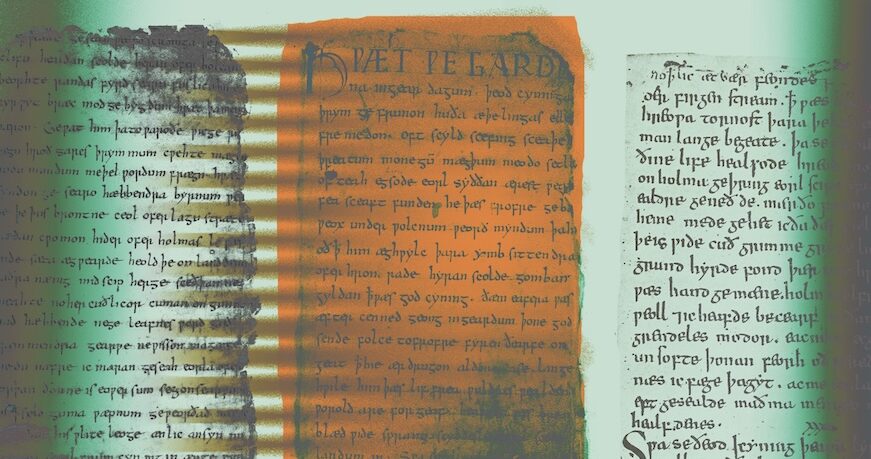
I was taking a linguistics class on Old English that semester, mostly because I knew you were supposed to come to college and read Beowulf, and I also knew I wouldn’t do so unless I was forced. There were many books I was supposed to read that I didn’t have any particular interest in. They were constantly referenced in discussion — the works of Homer, Chaucer, Faulkner — with no context provided and the assumption of collective understanding. I found this to be an unfortunate form of coercion.
The midterm assignment was to translate a famous work of Old English using an existing theory of translation. The professor was a believer in the principle of fidelity — the idea that a translation ought to be fully faithful to the source text. She said that it was wrong for translators to use synonyms, to take advantage of slight differences in connotation to push texts toward desired meanings. I thought this was what we all did, every day, when retelling stories in which we might otherwise come off as guilty or unappealing or pitiful.
I liked this type of assignment and thought maybe I would major in linguistics.
The process was relatively painless. It constituted the submission of a form and the booking of an appointment with my advisor, a morose adjunct in a cramped office.
“I want to major in linguistics,” I said.
“Are you sure? Looking at your transcript you’ve only taken one class with the LING course code.”
“There should be another one under ENGL. It was cross-listed between departments.”
He looked at me suspiciously. Maybe some students declared certain majors with secret, nefarious motives, and it was his job to sniff them out.
He scrolled the mouse of his computer and made clicking sounds, then seemed to accept that he was unable to find anything to warrant further questioning.
“You’re going to get a new advisor from the linguistics department,” he warned me, as though this were something that might make me stop in my tracks and reconsider.
“Okay,” I said.
“And I’m going to put you in contact with a peer mentor — it’s a small major, so every new student is matched with one when they declare.”
Later that afternoon, he emailed to tell me “good riddance,” but in more words. It was not considered acceptable to just say “good riddance” to your advisee. He was, however, able to say that he’d found me a mentor. A perfect match: this student was Nigerian, too.
I’m Nigerian-American, I thought to correct. It wasn’t quite the same, although I supposed it was close enough. I still worried my new mentor would be disappointed to hear my accent and learn I was a fraud — maybe believe I’d been going around claiming to be Nigerian without the hyphen, just to seem more interesting.
A week later I received an email from him — Salou was his name — and we made plans to meet at a coffee shop.
The place was locally owned and respected for its long tenure. It rarely had seats available, so there was always a tense atmosphere while you waited in line for a drink, knowing that those around you constituted your competition.
I was late, and once I ordered my tea, I saw that there was a lanky looking guy with hickory skin and sharp, West African features already sitting with a black coffee in front of him.
This was Vermont, so I took the odds. “Salou?”
He looked up at me and sat straighter in his seat. “Yes. Ifeanyi, right?”
“Just Ife is okay.”
“Okay, Ife. Come, sit down.”
I complied.
“So, you want to study linguistics?”
I nodded: that was why we were speaking.
“What do you like about it?” he asked. He looked at me thoughtfully, like I had already given a peculiar answer before I’d even had the chance to speak.
“The Sapir-Whorf Hypothesis,” I answered, then took a long sip of my tea.
Salou raised one eyebrow. “Go on.”
I did not like feeling interrogated and wondered briefly if I would have been faced with so much skepticism had I chosen English instead.
I said to him, “I used to argue incessantly with my father, and it’d feel like we were talking in two different languages, like he would never be able to understand, no matter how many words I used. Then I found out there was a theory for it, this idea of linguistic determinism: that we were doomed to never fully perceive reality in the same way, because we had two different native languages.”
“What does your father speak?” Salou asked.
“Igbo. What about yours?”
“Zarma.”
“You’re not Nigerian? Or did you move, or something?” I asked, thrown off.
“I’m Nigerien,” he said, with extra emphasis on the last syllable.
We both began to laugh.
“But my advisor said…”
“They can never get it right.”
After that first meeting, we exchanged a few friendly emails until I could no longer think of rudimentary questions to ask. Most of the information Salou gave me could be found on the university website, and occasionally the voice in his emails took on a formal tone that indicated to me he had copied and pasted something. Over spring break, the emails I sent were only to my professors, and these were met with automated replies. My computer was lagging, everything taking full seconds to load. I checked Reddit for advice and cleared files from my storage. I sat for two hours deliberating which documents and photos to sacrifice. Eventually I deleted over two hundred.\
My files still remained somewhere, on some other plane of existence that I could no longer access. Everything that had once existed still did. I did not know much about how technology worked. I once watched a video explaining the mechanisms of the internet, of I.P. and TCP and HTTP, and it left me feeling strangely unsettled.
I opened up another tab, an online article on Genesis B, an Old English adaptation of the Fall of Man. I planned to translate it for my linguistics midterm. This version of the text was supposed to portray Eve in a more forgiving light, suggesting she was tricked into thinking that the devil was an angel. The devil had threatened to rat on Adam to God for slandering him, and therefore God himself. If Eve convinced Adam to eat the forbidden fruit, all would be forgiven.
Gif þu þæt angin fremest, idesa seo betste / forhele ic incrum herran þæt me hearmes swa fela / Adam gespræc, eargra worda. / Tyhð me untryowða, cwyð þæt ic seo teonum georn / gramum ambyhtsecg, nales godes engel.
If thou fulfill this deed, o best of women, I will not tell our Lord what evil Adam spoke against me, his wicked words accusing me of lies, saying that I am eager in harm, a servant of the Enemy and not God’s angel.
It was a sympathetic interpretation, sure. But it still made Eve look like an idiot. I would’ve preferred it if she hadn’t been fooled. How could a snake possibly look like an angel? Then again, how could she have known what angels looked like? The world had only just been born.
My friend Mona, a practicing Copt, once told me about how at different points in history, parts of the Bible had been intentionally mistranslated by kings and councils seeking to push their own agendas. Words and phrases that originally referred to both men and women were newly translated to exclude the second sex. Thus, the generic masculine. Thus, man as human default.
I first met Mona in a religious philosophy course, after which we kept finding ourselves in other contentious humanities seminars together. Once class was over, we’d walk back to the dorms and continue the discussion in quiet hallways. Mona was of the belief that suffering held inherent value; for me, it was shame that did. Mona recently told me she planned to major in comparative literature, which meant I wouldn’t get to see her as often. I didn’t speak any language besides English well enough, so I could not take those courses.
Over the first few days of break, I’d grown accustomed to eating alone. The mostly deserted dining hall made me feel less self-conscious doing so. Those who remained ate alone as well. We sat like a scattered caucus for a dying political party. Our leader had fled. Headphones over our ears playing nothing and blue-lit phones and decaying paperback books next to our plates functioning largely as symbols. I almost preferred it this way. Then I saw Salou enter. He was laughing with the dining hall worker at the door, who was also African but had never much cared for me. Salou tapped his I.D. card and walked toward the buffet. I attempted to make eye contact as he passed by, but he either did not notice or pretended not to. I returned to my blue light.
Moments later, he was setting his plate of food down across from mine. “I can sit here, right?” he asked.
I nodded quickly, too eagerly. I did not say anything to compensate for this.
“So, what are you doing on campus during break?” He reached for the little canisters of salt and pepper and began shaking them over his rice pilaf with gusto.
I was almost done with my own plate and now set down my fork. “Just working on my midterms. The peace and quiet is nice.”
He made a “hm” sound, as though he did not believe this to be reasonable justification.
“And you?” I asked in turn.
“Oh, well. The international services office advised against leaving.”
“I knew that. I’m sorry.”
He shrugged. “Not your fault.”
The dining hall soon emptied out, and the windows turned black. I learned that Salou had a French passport through his mom’s second marriage and had gone to an international boarding school in Toulouse. His mom used to travel back and forth between Niger and France for business — something involving uranium — but eventually married a French colleague and moved there permanently. His dad stayed in Niger and did not have any available colleagues to marry, so he remained on his own. Salou spent school years with his mother and summer holidays with his father.
“But now I want to stay in Niamey full-time.”
“Why not Paris?” I asked without thinking.
“Niger is on its way,” Salou said simply.
We talked, loosely, about the trials of different African nations post-independence. The hungry watchdogs of the West, their malicious owners. He knew more than I did, and once he began to reference names I could no longer pretend to recognize, I drew us back to the topic of linguistics.
Salou seemed to think himself a true authority on the major now that he was a senior and about to graduate. I told him about Eve in Genesis B, and how she thought the snake looked like an angel, and he told me this was why he’d skipped Old English.
He was not eating anymore, and I was not eating anymore, and the custodial staff began to sweep around us. They were mostly black, looked like they could be our aunts and uncles, and we the precocious children, staying up past bedtime. Or maybe we looked like strangers.
I asked Salou if he had dinner plans for tomorrow, and he said to meet him here again, at the same table.
Later that night, I Googled Niger. A coup d’état in 2023. The new government kicked out the French and forbade them from mining any more Nigerien uranium. France was not terribly pleased about this shift in power, and neither was the United States. Meanwhile, Niger’s new head of state was accusing Nigeria of conspiring with France to destabilize the new Niger. Nigerian officials denied this. I didn’t know what to believe.
I wondered, not without embarrassment, what my parents might think if I brought someone like Salou home to marry. If they’d be upset that he was Nigerien and not Nigerian, or just think, like my advisor, that it was close enough.
I often thought this way about men I was able to have extended conversations about politics with. That maybe we should be married. My first year, I believed myself to be in love with an Englishman from my Marx, Nietzsche, Freud seminar. His name was Simon. Simon had managed to memorize and recite lots of lines from Das Kapital. We weren’t allowed to use computers in class, so I was never able to verify his accuracy. It was possible he was just making quotes up altogether.
At the point in the semester when most people had given up on doing all the readings, Simon and I were the only ones left offering material contributions to the class discussion. Whenever he made a point, he looked at me alone, waiting for me to respond. Each time, my ears hummed like birds. Noisy animals.
Eventually, he asked me after class if I wanted to come over to his dorm and do the next set of readings together. I said yes. When I arrived, he told his roommate to leave. The roommate gave me a dirty look as he passed, as though I were the one who had spoken. Simon then sat down on his unmade bed, and I wasn’t sure if he expected me to sit next to him. I took the chair at his desk, just in case he did not.
That night Simon talked about London, and the work his parents did, and the fact that he had gone to Eton. He mentioned the school many times, and even when speaking at a quick pace, he would slow down his sentence and draw out the word: Eton. I’d never heard of the place, but I could tell he wanted me to understand it was important.
“I’ve never been to London, or the U.K.,” I said.
“That’s surprising,” he laughed. “There are so many Nigerians there.”
I said, “I wonder why.” And he laughed even more, but it seemed like he was laughing at a different joke than the one I’d made.
After an hour, I said I was tired and went straight to Mona’s dorm. I collapsed on her rug and complained: how disappointing he had turned out to be.
“In class, he always denounces capitalism. Eloquently, too. I don’t understand. How could he not have heard himself tonight?”
That week Mona had a cold. She kept her distance on the other side of the room, coughed twice, low and guttural, and spoke.
In her eyes, it was a matter of reductionism. White-boy Marxists often thought class was everything and neglected to adequately consider the colonial context because Marx hadn’t, either. “Lenin,” she said, “is the answer.”
I did not return to Simon’s room again, or that of any other boy, for the remainder of my first year.
The next time I saw Salou at dinner, I wanted to ask his thoughts on Lenin. Then I worried this would jinx it somehow, it being something I wasn’t even certain existed in any tangible way, but was still unwilling to jeopardize. Instead, I asked him how he felt about Vermont.
“The winters are cruel. The people are nice. Relatively speaking,” he said. “But I do wish I had met you sooner. You’re a good conversationalist.” He stated this so matter-of-factly. I could not discern whether he intended to flatter me or merely believed himself to be relaying some objective truth. I was pleased with either interpretation. I didn’t say anything, so he went on: “Though I bet you only enjoy my company because everyone else is gone.”
“That’s not true. I also like that you can tell me which professors to avoid.” We both laughed — his eyes closed when he did, and I was able to watch him do it. “What are you doing for your thesis, by the way? I realize I never asked.”
“Oh.” He looked suddenly distracted. “My concentration is computational linguistics, so my research is on the effectiveness of different large language models. For cross-lingual machine learning.”
I felt my face contort. I did not think this sort of work should even count as work at all.
“This is the most disappointing thing I’ve learned about you yet.” I said this with a half-smile, but Salou did not seem amused as I’d hoped he would be. The silence grew uncomfortable, until he at last spoke.
“You say ‘yet,’ like you anticipate even greater disappointments in the future.” I did not know if this meant that he hoped not to disappoint me again, or not to hang out with me again. Dinner was grilled cheese and tomato soup. I did not like tomatoes, but I ripped apart a chunk of the sandwich and dunked it, if only to have something to do with my hands.
“I just thought you would be studying linguistics in more of a Chomsky sort of way,” I said.
“What does — what does that even mean, in your eyes? You seem very divorced from concrete reality sometimes, Ife.” He looked at me with a strange expression, as though he were reevaluating something, then continued. “I want to be able to leave a place when I get sick of it. Before me and my mother got French citizenship, we couldn’t go anywhere. The visa processes were degrading. They are meant to degrade. I want to do what’s required to leave here when I wish to and get sponsored to go somewhere else. My student visa expires in two years. They’re not going to pay me to write poetry about Adam and Eve.”
I felt I’d been punched. “What about Niamey?”
“I want to choose Niger. I don’t want it to be a thing of recourse.”
Slowly, I nodded. Whether out of understanding, or a mere wish to come into accord, was unclear to me.
He bored his eyes into my head, until I looked up again. “I’m sorry,” he said, careful now. “So what will you do after you graduate?”
“Probably something in publishing.”
Later that night, I sat at my desk and planned years ahead, searched the job boards for the Big Five publishing houses, the ones I knew were supposed to be impressive. The entry positions all paid pennies.
I closed the Google tab for “Niger 2023 coup,” and instead scrolled through different social media feeds, where suffering was hidden everywhere in plain sight. White-toothed grins. Veneers. Rotting cavities.
On Twitter, someone had found a poem taped up outside a café window. It was in Arabic, written by a Palestinian poet called Marwan Makhoul. Below it, a translation:
لكي أكتب شعرًا ليس سياسيًّا يجب
أن أصغي إلى العصافير
ولكي أسمع العصافير يجب
أن تخرس الطائرة
In order for me to write poetry that isn’t political,
I must listen to the birds
and in order to hear the birds
I must silence the plane
مروان مخول // Marwan Makhoul
I wasn’t familiar with the name. I assumed he was a writer from Gaza, and the poem was from the last year or so. But then, it could just as well have been written in any of the last seventy-odd years. The warplanes turned into drones; they never stopped flying. Sometimes the occupiers flew them to drop bombs, sometimes just to make the Palestinians think they would. The sound alone could drive you mad.
The Twitter users did not discuss this; it was assumed to be known. Instead, they discussed the translation.
The last line was the issue. Makhoul had used a phrase that didn’t quite have a direct counterpart in English. Some users said it should be translated as: “The warplanes must be silent,” or, “silenced.” Others: “The warplanes must shut up.”
This gave me an immediate, almost frightened, thrill. The minute differences in translation rendered drastically different meanings. To say, “I must silence the plane,” was to give the “I” a grave duty. If “I” didn’t silence the plane, perhaps no one would. And it was a plane, in this iteration, not necessarily a warplane. Did that mean the only planes flying overhead were planes of war? Was this supposed to go without saying? Or maybe “war” was the wrong word altogether, which was why the translator had omitted it. And why was it one plane, in this version, rather than plural planes? How did singular and plural work in Arabic? Could the translation be pointing to a grammatical difference between symbolic abstraction and observational portrayal? A theoretical one? Was one truer? “Silent” or “silenced”?
I no longer thought of my Old English assignment.
Mona’s family was Egyptian, and they had passed down their Arabic to her. The next morning I gave her a call.
“What do you think of the tweet I just sent you?” I asked.
Mona was home in New Jersey, sleeping most hours of the day. On campus, she was an insomniac, and would often text me from the library at times of night that began with single digits. She’d told me that break was her dedicated recovery period, her at-home convalescence. When she spoke, her voice was thick and groggy.
“What? Let me see. Ife, I was asleep.”
“Sorry. But you need to start getting up before noon. Check Twitter.”
After a moment, Mona spoke again. “Hm.”
“Hm?”
“I would translate it as: ‘The warplanes must be silent.’ I think that’s the most accurate.”
“What? It’s not a question of the most accurate translation; it’s a question of the most true one. What do you think is the most true?”
“Whatever’s closest to what Makhoul intended.”
“But maybe a writer’s intent isn’t about the words themselves,” I said. “Maybe it’s really about the reality the words were meant to conjure up. If I wrote a joke with the intent of producing laughter, but in another language, it only produced silence — wouldn’t I want a good translator to take liberties with my text to produce the desired effect? Or does this all require too many assumptions about a writer’s intent, allowing a translator to take away their authority?”
“Ife,” she said. “I am going back to sleep.”
I didn’t care for Nietzsche, but I considered him. I considered what he’d said about words, that there was an inherent violence to language. That inherent in the project of classifying the world around us there was a certain grasp for power and control, a will for the mastery of others’ perceptions. Nietzsche was too pessimistic. I was roused by the idea that words created reality. It was like magic. I’d read online that the word “abracadabra” is believed to have come from an Aramaic phrase meaning, “as I speak, I create.” This seemed true to me: producing different sounds from one’s mouth could alter the surrounding world. One string of words could drive a grown man to tears. Another set, ecstasy. Yet another might cause a building to collapse. This was the original reason for certain taboo words, in various cultures.
My mother and my aunts used to wave their hands over their heads and snap their fingers. The Nigerian version of knocking on wood. “God forbid!” they’d sometimes punctuate it. My father never participated in this ritual. I asked him about it once, when I was younger and still asked him questions that were not merely practical. He called it paranoid and naive. He thought women knew nothing.
To some degree, he wanted me to know nothing. That’s why he did not share Igbo with me. A purposeful denial.
Once, when I was eight years old, I stayed home sick from school, having caught a stomach virus from another child in my class. My father stayed home with me, making me bowls of starchy cereal with no milk and shoving spoonfuls of pink medicine into my mouth. It was the gentlest he had ever been with me, and I began to imagine how I could feign sickness in the future. Then he received a call on his phone. He turned away from me as he answered, speaking in the language he did not pass down — quietly, softly. Saying a name I did not recognize. He smiled almost sheepishly as he told me he had to run a quick errand but would be back soon. After I heard the door close, I vomited.
After Mona hung up on me, I went over to Salou’s dorm. He had said he had every textbook for the linguistics major’s required courses, and that I could come over anytime to take them off his hands. Granted, that’s not why I was going over, but he didn’t seem surprised when he opened the door. He had a nice face, a nice mouth. For a second, I forgot what I was planning to ask him.
“Look,” I said, at last. I shoved my phone in his face.
He glanced at me, amused. Then, his eyes trailed down my phone screen.
“It’s translated incorrectly,” Salou finally said. “But I almost prefer this mistranslation.”
“Yes, exactly!” I said. “I was thinking the same. Like maybe it shouldn’t even be called a mistranslation!”
I looked at him expectantly, wanting him to continue. He took his phone out of his pocket, checked it, then put it back.
“I have to head out soon — I’m meeting someone for drinks.”
There was quiet. I waited to see if he might begin, then asked:
“Do you think literature, itself, can be liberatory?”
“What do you mean — in what sense?”
“Like, if Marwan Makhoul writes something that is then interpreted as ‘I must silence the plane,’ or ‘you must silence the plane,’ or ‘we must silence the plane,’ isn’t that a rallying cry? What if reading that is all it takes for the right person to join the fight? Doesn’t that make the language itself a weapon of choice?”
“Hm. Maybe a degree or two separated from it,” Salou said, half-heartedly. “Still, there need to be people willing to put their physical bodies on the line. Those will be the true liberators.”
He said this so plainly, I hated it. “And what do you know?” I said at once. “You know nothing about literature. You’re going into computer science. I bet the algorithms that you train will be used to do terrible things.”
Salou laughed now, like I was a bad-tempered child.
“Not this again. You know, I get to choose the companies I want to work for.”
“And they’re all driven by the same thing.”
“You don’t think big publishers are?”
I went to lunch on my own, and claimed a large table at the center of the empty dining hall. Salou was naive, I decided. It was naive to think language and thought could be abstracted to hundreds of thousands of if-then conditionals, in order to generate new if-thens based on the old ones. The computer scientists had it all wrong. Language was more than a cause-and-effect logic. Human beings were more than if-then. How could he not see it?
Salou, too, preferred “I must silence the plane,” but he didn’t think it was enough to say it. So it wasn’t worth saying at all? Salou had spent half his life studying at fancy schools in Toulouse but claimed the only real work was on the front lines of revolution. He didn’t understand: as I speak, I create, as I speak, I create, as I speak, I create.
I took out my notebook from my bag, and wrote this in pen, over and over again, until my wrist began to hurt and my cereal grew soggy and unappealing.
In my dorm, I returned to my Old English project. I worked until my window turned dark and I could see my own reflection in the glass. I looked tired and unfamiliar. Greenish. I looked at my screen instead. I had opened a document on techniques for oblique translation: how to deal with a source language that couldn’t be directly translated without altering the original meaning, or trying to force the target language to do things it wasn’t made for. Me and my father. Houses on sand. Foolish men.
My project was losing its appeal. Eve had, perhaps, been innocent all along. What then? I was not sure I even liked this word: “innocent.” I had begun to believe it applied to everyone and no one all at once.
In the corner of my computer screen, an email from Salou appeared: he was asking if I wanted to go out with his friends the next night.
Apart from our initial coffee, we had never left campus together. I was beside myself. The memory of our disagreement was still fresh, and I contemplated, briefly, saying no just to teach him a lesson and make it clear I was not one to jump up at his call. But I could not. I compromised with myself by waiting an hour to email back.
The next night, I put on a dress with flowers and a bit of makeup. Pink blush. I recognized there were implications — Salou’s decision to invite me to this. I was not oblivious to these. But I had also learned from social media that heterosexual men would ask their friends if the girls they were seeing were ugly, and never speak to them again if the answer was yes.
Maybe these men couldn’t quite tell for themselves. And they didn’t care to factor in whether or not the girl in question was planning to do interesting work in linguistics. I didn’t think Salou was this type of person, but I wore makeup that night.
When I arrived at the pub, I was surprised to see that Salou and his friends were not outside. I had managed to arrive first, it seemed. I waited by the door with arms crossed to defend against the nighttime cold. I tried to look poised. After ten minutes of this, I emailed Salou, wishing I’d asked for his number by then.
He responded, “come we’re inside already — Sent from my iPhone.”
I entered the pub, scanned the room. There he was, at a table with three others, one of whom was a girl.
“Ife!” He stood up and said, waving me over. “You made it!”
He had never spoken to me with this sort of zeal. I wondered if he was like this when he was with his friends, or if this was a rare Salou iteration that would only be activated with the combination of me and his friends. And which iteration would be considered the most accurate. Or true. There were four stools at the table, so I had to ask a nearby couple if I could take one of theirs. They looked very pleased to oblige me, like they’d done a good deed.
I sat down. Salou smiled. “Guys, this is Ife. She’s a sophomore about to declare linguistics, so I’m her mentor now.”
His friend chuckled at this. “And you didn’t stop her? I knew it was a pyramid scheme.”
“All he does is complain to us about that department,” the girl said.
I laughed vacantly, unsure of what to say. How did some people manage to make conversation into performance art? I lacked the talent for it.
“Oh, I’m being rude! Ife, this is Mariama,” Salou said. “My girlfriend.”
“I’m at the law school,” she said with a grin, as though this were essential for me to know.
I did not meet her eyes, or Salou’s, opting instead for the gap between their heads.
“Mariama’s from Dakar. But she just got back from Geneva yesterday,” Salou took a sip of water. “Though everyone knows spring is the worst time to visit Switzerland.” I had never seen his mouth form words like these.
“I was there for a U.N. summit,” Mariama clarified, taking her hair out of its elastic band and letting it fall. “Assistant work. Completely dull.”
“What about the travel advisory for internationals?” I frowned.
She shrugged with another smile, as though of course the rules did not apply to her.
Salou’s two male friends, whose names I forgot almost immediately, were also African internationals.
“So Ife, what are you interested in with linguistics?” one of them asked politely.
“Right now, Old English poetry. At least, that’s what I’m focusing on for my midterm,” I said with an exaggerated grimace, willing them to ask more. About Eve and angel-like snakes and silent planes and abracadabra. I wondered if Salou had told them any of it.
“Oh, that’s nice,” the other one said half-heartedly.
Then they continued on with the conversation they’d been in the middle of when I first arrived at the table. Someone they knew had done something of note. I did not know this person.
Salou sat across from me but managed not to look at me more than a few times, each for no longer than a second. When he talked to his friends, it was as though he were speaking in a different language, but it was English. I couldn’t understand. Even his voice, his accent, sounded unrecognizable.
Then Mariama said something to him in French, at a lower register, and he laughed. I suddenly felt a wave of nausea.
My phone rang, and I was grateful. “My mom’s calling. I should probably go take this, in case it’s important.”
A few distracted nods, and I walked outside the pub.
I said hello to my mother, and asked her how she was. If there was anything wrong. She told me no, but that I never called. I told her I was sorry. I told her classes kept me busy, it was midterm season. She asked me how they were going, how I was doing. I said that they were going well, I was doing well. My aunties back home were getting too jealous of her, she said. She was here, in America, with a daughter at a very important university. She needed to watch what she ate when she went back to visit. She needed to make sure they ate what they served her first. “Okay, Mama,” I said. “Okay.” I said I couldn’t stay for long, and that my friends were waiting for me. Then I heard my father’s voice. I heard my father begin to shout, distantly. At length. I no longer heard my mother. She had gone silent. I heard my father shout but did not understand his words. He voiced them in rapid Igbo, as he did when it was time to drive my mother to sickness. To make her body turn skinny and then fat again. For weeks after his flare-ups she would not cry, but often stopped speaking altogether.
“What happened, Mama?” I asked now. “What did he say?”
“Don’t worry, baby,” she told me.
I asked her again, forcefully this time. Her voice changed and she told me I didn’t need to know. I hung up the phone and began to weep.
I put my phone back in my pocket and sat down on the curb. The night air was crisp on my wet cheeks. I did not wipe them. Cars streaked by and beeped at each other. People walked behind me, their voices rising through the air like steam, like bubbles breaking the surface. The sounds merged. The warm taste of salt began to reach my mouth, and it was time for me to go.
The night was black and blue on my walk home. A town unburdened by light pollution. When I was a child, I thought the blue parts of the globe were the sky. I experienced greater fear walking at night in a small town than in a big city. Small towns did not belong to us. I did not care for the moon, and I did not dread the sun. I was meant for the heat. I did not know the true difference between a small town and a village. Or an ethnic group and a tribe. Which ones were real and which ones were made up? Which ones became real after they were made up? What was the difference between a Nigerian and a Nigerien? Who had picked the word? Chosen the letters? The a or the e? Who had drawn the borders? I’m Nigerian-American, I thought to correct. What were the uses of a hyphen? When did it serve me to claim either side of the punctuation mark? I tried to open my mouth and say something out loud, but suddenly it all seemed terribly foolish.
I felt something had been stolen from me. And stolen from all those with whom I shared a face, and yet shared nothing at all. I would never know them. I would never speak to them, so I would never know them. But I’d sit and listen in the bedrooms of Englishmen who’d laugh at me, and I’d translate verses of Old English, though the language had been dead nine hundred years.
And what of Makhoul? His poetry was alive. I wanted to speak to him. No, he already spoke to me. But I wasn’t the right person, not by one degree of separation, nor by two. I thought of Nigeria’s rumored collusion with France against Niger. French promises of money in the pockets of the chosen Nigerian few. I had been offered a similar deal. I could not look those who cleaned the floors in the eye. Me and the government officials.
It was all a terrible mistake.
Students had returned to campus, ready to begin classes once again. Eve was waiting for me to clear her name.
The next day, I went to the registrar’s office and took a leave of absence.
Chidima Anekwe is a writer living in New York. Her work can be found in The Iowa Review, Pleiades: Literature in Context, and elsewhere. She also edits fiction for Decolonial Passage.