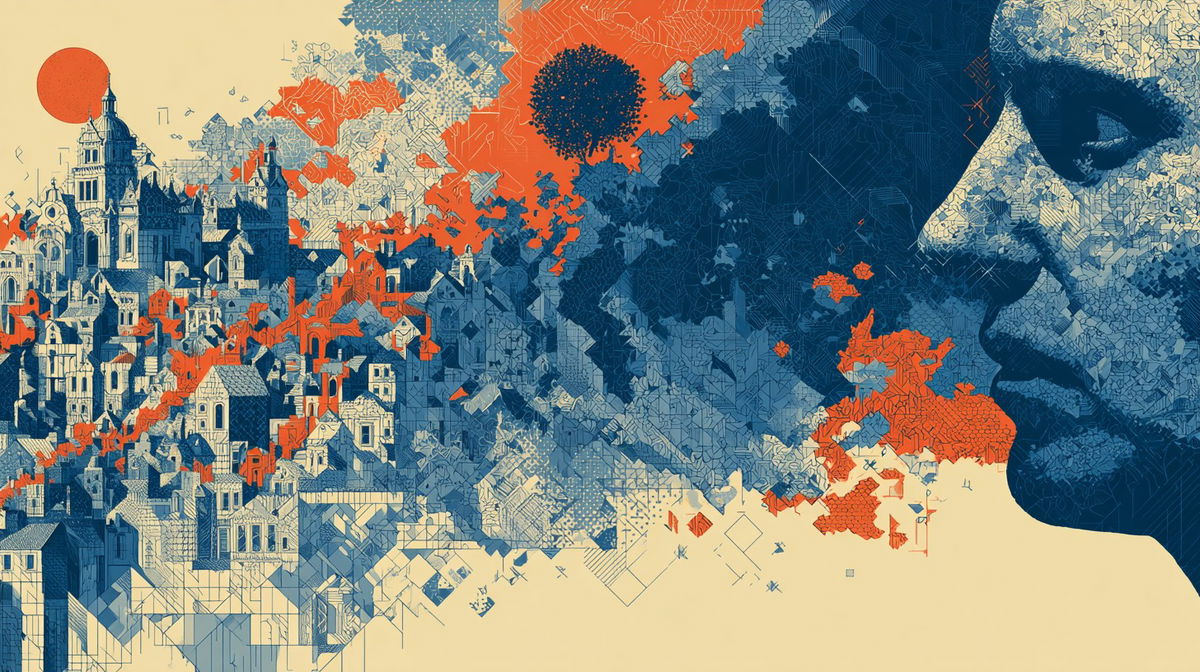
The US military operation in Venezuela involving the abduction of President Nicolás Maduro and his wife, who have been incarcerated in a notorious New York detention facility pending their trial in a US federal court, was in flagrant breach of international law. The UN Charter prohibits any violation of the territorial integrity or political independence of another state except in self-defence or if authorised by the UN Security Council. Like Russia’s brutal war of aggression against Ukraine or Israel’s disproportionate and often indiscriminate use of force in Gaza, the US’s armed intervention in Venezuela illustrates the growing disdain shown by militarily powerful states for the strictures of international law. If China has been more cautious than either Russia or the US in using armed force to achieve its goals, this reticence is likely temporary. The speed with which China is upgrading its armed forces and the massive scale of its military investment suggest that it is only a matter of time until Beijing employs overwhelming force, or the threat of such force, to achieve its strategic aims, including the annexation of Taiwan.
International legal norms investing states with rights such as sovereignty and territorial integrity are now openly flouted, while mechanisms designed to preserve or restore international peace and security are ignored. President Trump has boasted that the only meaningful constraint on his actions in the international sphere is not international law but his “own morality”, his “own mind”. An admittedly imperfect international legal regime for the maintenance of international peace and security, established in the wake of the Second World War, is rapidly giving way to an unstable, violent and fundamentally amoral world order reminiscent of the nineteenth century, composed of shifting political alliances, competing spheres of influence and powerful states largely free to pursue their interests unhindered by normative or institutional constraints.
In this “brave new world” that Trump and Putin have done so much to inaugurate, quaint but increasingly obsolete legal doctrines—the self-determination of peoples, the sovereign equality of states, the prohibition of the threat or use of force, the principle of non-intervention in the domestic affairs of other countries and the duty of belligerents to abide by international humanitarian law—can be ignored by any state that enjoys overwhelming military superiority over its adversaries. As in centuries gone by, might is once again right.
The costs of Hobbesian disorder
Even for the United States, the world’s foremost military and economic power, the likely costs of the new Trumpian world order—in reality a condition of Hobbesian disorder—are far from negligible, whether in terms of heightened insecurity, the need for increased defence spending or less stable trading relations with other countries. Robert Kagan has warned that “Americans are entering the most dangerous world they have known since World War II… with multiple great powers and metastasizing competition and conflict”.
Smart, Progressive Thinking on the Big Issues of Our Time
Join 20,000+ informed readers worldwide who trust Social Europe for smart, progressive analysis of politics, economy, and society — free.
For Europe, with its underwhelming military resources, its limited capacity for prompt and decisive political action, its growing cohort of populist, EU-sceptic politicians and mounting evidence of external (Russian, Chinese and Iranian) interference with the continent’s democratic processes, the prospects are even more alarming. Faced with these multiple pressures, there is a very real risk that Europe may fragment. It is no longer inconceivable that the European Union may founder, leaving individual European countries dangerously exposed to economic, military or other pressures exerted by hegemons.
Both Russia and the US have become quintessential “power players” with a strong preference for bilateral relationships with individual European countries who can be dominated more readily than an EU negotiating on behalf of 27 states—although the EU itself has not always acted with conspicuous resolve, particularly when dealing with the Trump administration.
A third path with impact
Fortunately, the alarming picture of Europe’s creeping decline and fragmentation sketched out above is far from inevitable. In his address to the World Economic Forum in Davos in January, the Canadian prime minister, Mark Carney, acknowledged the dangers that small and intermediate states face as a result of the “rupture in the world order… and the beginning of a harsh reality, where geopolitics… is submitted to no limits, no constraints”. However, Carney emphasised that, even though law and notions of justice or equity have been rejected by hegemons in favour of crude power politics, intermediate powers “are not powerless” and that “they have the capacity to build a new order that encompasses our values, such as respect for human rights, sustainable development, solidarity, sovereignty and territorial integrity of the various states”.
Combining idealism with genuine pragmatism—qualities almost entirely lacking in Trump—Carney outlined a potential future in which middle-ranking powers act in concert to protect their common interests and to realise their goals:
“…when we only negotiate bilaterally with a hegemon, we negotiate from weakness. We accept what’s offered. We compete with each other to be the most accommodating. This is not sovereignty. It’s the performance of sovereignty while accepting subordination. In a world of great power rivalry, the countries in between have a choice—compete with each other for favour, or combine to create a third path with impact.”
The international order inaugurated in 1945, in the wake of a devastating world war, may be moribund. Greed, perceived self-interest, extraordinary short-sightedness and a warped view of “national destiny” on the part of today’s hegemons have destroyed it. However, Carney’s vision of collective action by intermediate powers—together with his refusal to be cowed and his overriding sense of moral purpose—points the way forward for Europe, as for countries including Canada. In addressing both the politico-economic threat to Europe posed by Trump and the security and other threats emanating from an increasingly militarised and aggressive Russia, the EU must find the will and the means to overcome its admitted shortcomings and—acting in concert with other European powers such as the United Kingdom—confront the unprecedented challenges now facing the continent.
Help Keep Social Europe Free for Everyone
We believe quality ideas should be accessible to all — no paywalls, no barriers. Your support keeps Social Europe free and independent, funding the thought leadership, opinion, and analysis that sparks real change.
Social Europe Supporter
— €4.75/month
Help sustain free, independent publishing for our global community.
Social Europe Advocate
— €9.50/month
Go further: fuel more ideas and more reach.
Social Europe Champion
— €19/month
Make the biggest impact — help us grow, innovate, and amplify change.