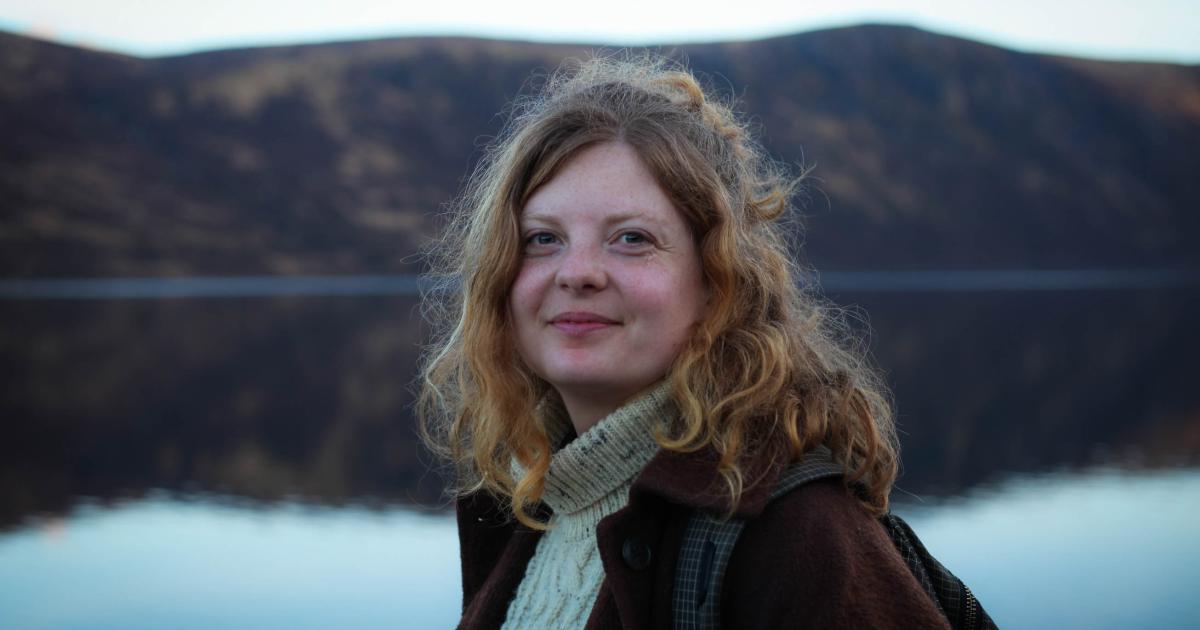
Growing up in the Cotswolds, Holly Astle, a 31-year-old illustrator, remembers the countryside not as a destination to visit but as an extension of her own inner life. “The woodland and meadows were places I could wander, think, watch wildlife, and create art,” she tells The Ecologist.
Those early wanderings shaped her sense of belonging in the natural world. A belonging she assumed was universal.
READ: BARON LAND
It wasn’t. As she grew older, she realised that much of the English landscape she loved was, legally speaking, a space she had no right to be in. “Once I learned that for many people in England and Wales those same landscapes are effectively off-limits,” she says, “it felt deeply unjust.”
Woodland
England is a country defined by its countryside, yet access to that countryside is sharply limited. The hills, rivers, forests and fields woven into the nation’s identity are out of reach for most people most of the time.
This contradiction between the idea of a green and welcoming England and the reality of private fences, restrictive laws and a legacy of enclosure sits at the heart of the Right To Roam campaign, the movement Holly has now joined.
“My commitment to Right to Roam comes from a deep rooted need for justice,” she says, “through connection, equity and a collective right of belonging to the land.”
In 2000 the Countryside and Rights of Way Act (CRoW) granted public open access to certain types of uncultivated land including many mountains but it excluded woodland, lakes and rivers.
It was celebrated by campaigners as a long-awaited victory. And it was, but only partially. The law opened up around eight percent of England. That means ninety-two percent of the country remains closed to the public for open roaming.
Ownership
Riversides, woodlands and much of the green belt remain strictly off-limits to the general public unless a designated footpath passes through them. England, for all its pastoral mythology, is one of the most restricted landscapes in Europe.
There are better ways. Scotland, just over the border from England, has some of the most progressive access rights in the world. Since the Land Reform Act of 2003 people have been free to walk, swim, cycle, and camp on most land and inland water so long as they do so responsibly.
In Norway and Finland for example, around 90 to 95 per cent of the countryside is open to the public under long-standing freedom-to-roam traditions. Sweden’s allemansrätten law means essentially everyone is allowed to walk on private land so long as they do it responsibly.
Holly’s first act of trespass took place when she was a teenager. She slipped into part of the Badminton Estate, a 52,000-acre private holding not far from where she grew up.
To see first hand the sheer scale of ownership was pivotal.
“To see first hand the sheer scale of ownership was pivotal,” she remembers. Beyond the walls stretched a world of woodland and parkland that looked like the countryside she knew. This landscape, almost unimaginably large, was the domain of a single family.
Commons
The experience was less about breaking rules than about confronting the power those rules uphold. Right To Roam argues that the narrowness of current access laws reflects a deeper worldview which sees land as a commodity rather than a shared resource.
Holly’s years campaigning on the climate and ecological crisis sharpened this perspective. Restrictive access laws, she says, “reinforce social inequality and disconnect people from the natural world that we must all play a part in protecting.” To her, expanding access is not a leisure issue but a democratic and ecological one.
England’s restrictive access culture is deeply rooted in the country's history. The most profound rupture came with the Enclosure Acts of the eighteenth and nineteenth centuries, which privatised millions of acres of common land.
Before this, there was private property but the default status of most of the land was that it was held commonly by the people. Since the enclosure acts, the vast majority of England is now private property.
Between the mid-1700s and the late 1800s, more than six million acres of common land in England were enclosed and transferred into private ownership. Ordinary people in England had relied on these commons for grazing animals and moving through the landscape without obstruction. This all changed almost overnight.
Corrupt
Enclosure redefined land as an asset to be owned. A new culture of exclusion took hold which led to fences and walls becoming symbols of power and status. The legacy of enclosure still shapes England today.
There has also always been a history in England of resistance to Enclosure. Groups such as The Diggers fought for the right for land to be held in common in the time leading up to the enclosure acts.
In 1932 a group of young hikers organised a mass trespass onto Kinder Scout in the Peak District, demanding the right to walk freely in natural land which was held by a privileged few.
This act of civil disobedience helped pave the way for the creation of national parks and helped to shape the political imagination that produced the CRoW Act. The trespass also inspired cultural resistance: folk singer Ewan MacColl later immortalised the moment in his song The Manchester Rambler.
Holly reflects that “many people still feel a sense of illegitimacy when they trespass, as if accessing land deemed private is inherently corrupt.” She sees that feeling as “an emotional inheritance from hundreds of years of fencing us out,” a psychological boundary as real as any wall.
Disconnection
Today, Right To Roam envisions a rights framework that goes further than the CRoW Act. They are campaigning for the complete opening up of woodlands, rivers and more - following the examples already proven in Scotland and Scandinavia.
“The goal is not for wandering everywhere, all the time,” Holly says, “but a clear, shared framework where access is the norm and any protections are targeted and evidence-based.”
Through its working group Access Friendly Farmers and Land Owners (AFFLO), the campaign collaborates with those who work the landscape to build recognition that access and stewardship are inseparable.
At a time of climate instability and ecological loss, the ability to connect with nature can be considered a public necessity. Holly believes the deeper fight is about reshaping how society understands land itself.
“Reclaiming the commons is ultimately about repairing our relationship with the natural world. This is a crisis of disconnection.”

Mountains
When people walk freely, she argues, they begin to see themselves not as consumers of nature but as part of it, and with that comes responsibility. “Ultimately, we’re trying to nurture a shift from viewing land as someone else’s property to seeing it instead as our shared home.”
Nearly a century after the Kinder Scout trespassers walked defiantly onto the moor, their message still reverberates through the modern Right To Roam movement. The fight is larger now but the core argument remains unchanged.
Through building a shared sense of stewardship over the land, we can be better equipped to tackle the various climate crises heading our way.
Much of the argument from the Right To Roam campaign also boils down to what many would see as the absurdity of some of the earth's most beautiful landscapes being in the private hands of individuals who, quite literally, gatekeep it from everyone else
The words Ewan MacColl wrote after the Kinder Scout trespass continue to speak to the question at the heart of England’s access debate: “He said all this land is my master’s; at that I stood shaking my head. No man has the right to own mountains any more than the sweet ocean bed.”
This Author
Ethan Rooney is a Dublin-based freelance journalist with a focus on fringe subcultures and political thought.