As EV sales boom and grids seek more energy storage, researchers are racing to develop batteries that are cheaper, more powerful, and less reliant on hard-to-source materials. Lithium-ion still dominates, but sodium-ion and solid-state technologies are moving from lab to market.
The market for batteries these days is insatiable. Demand has grown more than fortyfold since 2010, thanks mainly to electric cars: Sales of EVs hit 20 million in 2025, or about a quarter of all cars sold globally. Shipping containers packed with batteries are also being called into play to store the electricity from renewables like solar. Storage capacity for solar farms has grown twentyfold in just five years.
This boom has fed a frenzy in battery research and development. “In the past five years, innovation went very, very fast,” says Teo Lombardo, a former battery chemist and now an analyst for the International Energy Agency. “In 2024, over 40 percent of energy-related patents were on batteries. That’s never happened before. That tells you how quickly the market is evolving, and how much interest there is.”
Lithium-ion batteries are today’s gold standard for lightweight, high-powered energy storage for laptops, power tools, smartphones, drones, and electric cars. But now, says Lombardo, two new technologies are attacking lithium-ion’s dominance from either end of the cost spectrum: Cheap but bulky sodium batteries promise to run budget electric vehicles and help to power the grid; and expensive but powerful solid-state batteries offer long ranges for luxury EVs. Meanwhile, plenty of other battery chemistries are being tested in the lab, with hopes that new winners might eventually emerge to power the future.
“The battery market is becoming so large that it’s not a matter of one technology replacing another,” says Lombardo. “It’s about specializing to serve different parts of the market.”
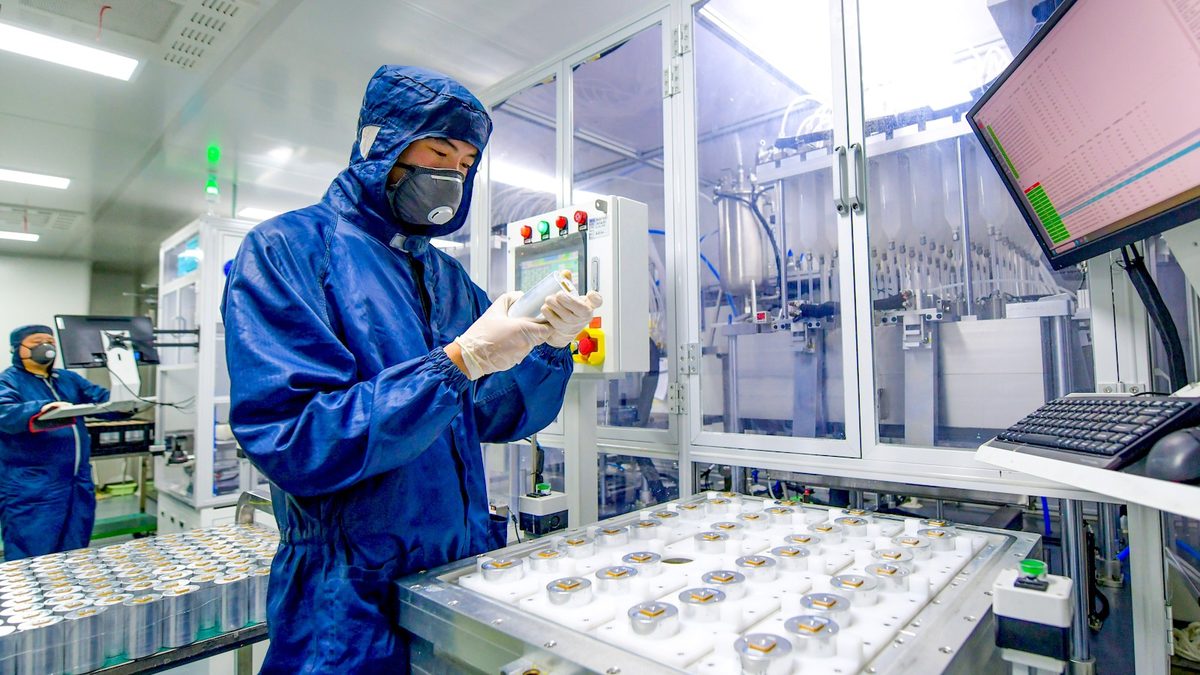
Innovations in the architecture of the battery cell have accelerated charging times — some can be charged in 10 minutes.
Making a battery is fundamentally simple: A child can create one out of a lemon, a galvanized nail, a copper penny, and a couple of wires. Chemical reactions occur between the two electrodes — the cathode and the anode — and the lemon-juice electrolyte that’s sandwiched in between them, driving electrons through the wires to light up a bulb.
But making a really good battery — one that packs a lot of power into a small package, is cheap to manufacture, survives through a decade of charging cycles without degrading or starting fires, works in the cold of winter and the heat of summer, and can be easily refurbished or recycled — is another thing entirely. Creating good batteries is such a delicate work of chemistry and engineering that it typically requires decades of research to get it right. “It’s like a symphony. Everything needs to cooperate,” says Jagjit Nanda, a materials scientist and head of the SLAC-Stanford Battery Center in Menlo Park, California.
Back in the 1970s, the oil crisis spurred investment in energy alternatives. Lithium was an obvious choice for lightweight batteries because it’s the lightest metal on the periodic table. The key innovation was designing electrodes that could safely and efficiently host lithium ions in gaps between their atomic layers, leading to the first commercial lithium-ion battery in 1991.

Source: IRENA.Yale Environment 360 / Made with Flourish
Since then, researchers have painstakingly improved lithium-ion batteries by changing the formulations of electrodes, adding small amounts of various elements to improve battery stability or ion flow, or tweaking the microstructure of interfaces between layers or the architecture of the cell. Since 1991, lithium-ion battery energy density (an important measure of how much charge can be packed into a given weight) has tripled, and the price has dropped around tenfold. Eventually those improvements will tap out — but not yet. Today’s electric car batteries are almost all lithium-ion of one type or another, typically taking your average sport utility vehicle between 250 and 370 miles on a good day.
A decade ago, most EV batteries were nickel manganese cobalt (NMC) variants (named after the primary ingredients in their positive electrode, the cathode), which boast a relatively high energy density. Recently, though, these have been overtaken by cheaper lithium iron phosphate (LFP) batteries, named after their own cathode, which are catching up in performance and contain fewer critical metals than NMCs — expensive ingredients with limited supply chains.
Although an individual LFP battery has a lower energy density than an NMC, LFPs are more heat stable, so developers have found ways to pack them closer together in a car, counteracting this disadvantage. Other innovations in the architecture of the cell have also accelerated their charging time – some LFPs can be charged in about 10 minutes.
Sodium batteries could help fill the booming market for grid storage with batteries that have easier-to-source ingredients.
But lithium is difficult to mine — often involving evaporation ponds that spread over thousands of acres — and sourced from just a handful of spots. Combine that with booming demand, and prices can spike. An enticing alternative is sodium: It’s just one step down on the periodic table, with chemistry similar to lithium, but far more common. Swapping lithium for sodium in the battery manufacturing process is relatively straightforward. As it happens, sodium-ion batteries also work well at very cold temperatures.
The main problem with sodium is that its atoms take up more than twice the volume of lithium and weigh three times more. That’s an issue when you’re trying to make a small, light battery. For now, the energy density of sodium-ion batteries is about 30 percent less than their lithium competitors, taking that average SUV only about 220 miles. But work is ongoing to optimize these batteries’ components, chemistry, and architecture. “They are going to improve; it is more or less following the same trajectory as lithium-ion,” says Nanda.
A few tens of thousands of sodium-ion-powered electric cars entered the market in China in 2023, and the first car slated for mass production was unveiled in February. For now, LFPs are price competitive with the sodium upstarts because of economies of scale. But analysts expect sodium to add a cheaper battery variety to the overall mix, with the possibility of domestic supply chains. “The more technologies you have, the more resilient the market will be,” says Lombardo.

The Changan Nevo A06, unveiled in China in February, will be the first mass-produced car powered by a sodium-ion battery.CATL
Meanwhile, sodium’s bulk is no issue for stationary applications, which makes sodium-ion batteries an obvious contender for electricity grid storage. Right now, solar farms typically use lithium-ion batteries to store energy for rainy days. The demand for this use is huge and growing: California made history in April 2024 when batteries became, for the first time, the biggest source of power to the state’s grid for a few hours after sunset. Sodium batteries could help fill this booming market with batteries that have easier-to-source ingredients. In May, the world’s biggest battery company, China-based CATL, signed a deal to provide a massive 60 gigawatt-hours of sodium batteries for energy storage in Ningde, Fujian — enough stored-up electricity to run thousands of homes for a year.
Solid-state batteries, on the other hand, are a promising way to pack more oomph into a car, potentially doubling energy densities and getting your SUV 620 miles down the road. The idea is to swap out the organic electrolyte liquid with a compact solid, like ceramic. The substitution mitigates a bunch of challenges faced by conventional lithium-ion batteries: It eliminates the most flammable component, for one, and it enables the use of electrode materials that provide a higher energy density — like lithium metal. But sticking the parts of a solid cell together is tricky and the cost of manufacturing is high.
There’s an entire alphabet soup of battery types based on dozens of elements, all with pros and cons and specific best uses.
Solid-state batteries already exist for critical, and often non-rechargeable, applications like pacemakers. Now, scaled-up production of affordable, rechargeable, lithium-based solid-state batteries for cars seems to be getting close. Toyota and Nissan both currently forecast that their solid-state batteries will be available by around 2028. Colorado-based Solid Power is working on solid-state batteries for BMW and Ford. QuantumScape, based in California, signed a deal with Honda in June. CATL is working on the concept, too. Some of the variants are entirely solid, while others, like QuantumScape’s, are hybrid systems with a little liquid, or gooey, gel-like alternatives.
“Commercialization [of solid-state batteries] by 2030 is probably realistic,” says Lombardo. But they will be expensive, making niche, high-value applications like robotics a potentially viable starter market.
These two battery types are emerging as near-term winners for EVs, but they are far from the only tech being pursued in industry or in labs. There’s an entire alphabet soup of battery types based on dozens of elements, all with various pros and cons and specific best uses. For grid storage, where space and weight aren’t an issue, flow batteries use huge tanks of liquid electrolytes to store power. In the lab, researchers are working on swapping out lithium not just with sodium but also with easy-to-source magnesium, calcium, aluminum, or zinc. Some advanced batteries ditch their anodes altogether, cutting down on weight and upping energy density. Early-days research is also pursuing entirely different ideas, including designing organic molecules that can store the energy from sunlight in chemical bonds and release it on demand.

Solid-state battery cells now being tested by BMW.Solid Power
Variants like lithium-sulfur, in which electrons move between a lithium metal anode and a sulfur cathode, have long been in the sights of battery researchers — they offer a much higher energy density than lithium-ion, with relatively cheap ingredients — but they suffer from longevity issues and they tend to swell. No one has yet cracked making a commercially viable mass market product. One even bolder option, called lithium-air, aims to “breathe” oxygen in and out to form one of the battery’s key electrodes when needed, so it doesn’t always have to carry the unnecessary weight of a metal oxide. This fiendishly difficult task might prove useful for applications that require extremely lightweight and high-powered energy — like flying taxis.
Any and all of these — just like lithium-ion, sodium, and solid-state — will take decades of work to commercialize. “Unlike other technologies, this is very incremental,” says Nanda. “You don’t expect miracles in batteries; they don’t change overnight.” Artificial intelligence has sped up the search for promising formulations for battery materials by helping to focus or speed up laborious trial-and-error experiments, says Lombardo, but it’s still a long slog.
Meanwhile researchers are also working to make batteries more environmentally sustainable, for example by eliminating toxic solvents used in manufacturing. To slim down waste, partly degraded EV batteries can still be used in energy storage for the grid or in individual homes. When fully depleted they can be recycled. We already know how to do this, but the systems need to be scaled up fast, says Lombardo. The average lifespan of a car is about 15 years, he says, and the big boom in electric cars started around 2020. That means by around 2035 we’ll be flooded with retired batteries which, if left in landfills, could start fires or leach heavy metals into soil and groundwater.
Responsible battery disposal is a matter of economics and regulation, says Lombardo, who is optimistic that both will help to create a robust recycling industry — especially since valuable metals can be extracted and re-used. There’s precedent. Lead acid batteries — the auxiliary battery used in both combustion cars and many EVs — are today one of the world’s most recycled products.
So, what does the future hold? For now, lithium-ion is still king: Solid-state batteries make up just 1 percent of the existing or funded global battery manufacturing capacity, and sodium just 4 percent. But that may change. “By 2035, lithium-ion will definitely still be the majority, sodium-ion will have very likely a share, solid-state might be there,” says Lombardo. And after that, he adds, “it’s probably too early to say.”